
Can General Mills Earnings turn a headline $2 billion loss into a buying case for income-focused investors?

Why Did General Mills Earnings Show a $2 Billion Loss?
General Mills, Inc. reported a $2 billion net loss for fiscal Q4 2026 — a dramatic reversal from the $294 million profit a year earlier. The red ink stemmed almost entirely from $1.8 billion in non-cash goodwill and brand impairments, plus a $1 billion valuation loss tied to the planned exit from Brazil. These charges were not operational — they reflected strategic portfolio pruning and accounting adjustments, not collapsing demand. Excluding those items, adjusted operating profit rose to $705 million, and organic sales held flat — a notable achievement amid persistent inflation and consumer trading down. The $4.61 billion top line surpassed FactSet’s $4.59 billion estimate, reinforcing that General Mills’ core U.S. cereal, snack, and pet food businesses remain structurally sound.
What Does the $3 Billion Efficiency Plan Mean for GIS Stock?
General Mills, Inc. unveiled a multi-year $3 billion cost-savings initiative targeting fiscal 2030 — with $750 million expected in FY2027 alone. The program includes supply chain rationalization, automation investments, and global IT consolidation. Unlike short-term layoffs, this is a capital-intensive transformation: GIS plans to reinvest roughly 40% of savings into R&D and brand remarkability, per CEO Jeff Harmening. That balance matters to U.S. investors. While peers like Kellogg (now Kellanova) and Conagra have cut deeper, GIS’s approach aligns more closely with Procter & Gamble’s (PG) ‘Productivity & Growth’ model — prioritizing margin expansion without sacrificing innovation velocity. Morgan Stanley analysts noted the plan ‘de-risks the margin trajectory’ but warned that ‘execution discipline over five years remains the key variable’.
How Does General Mills Earnings Compare to Staples Peers?
In the S&P 500 Consumer Staples sector, General Mills Earnings stand out for their mix of defensive stability and strategic ambition. Unlike Tyson Foods (TSN), which reported volume-driven weakness in protein, or Kellogg’s successor Kellanova (K), which faces cereal category decline, GIS posted growth in its North America Pet segment — up 7% organically. Its 0.32 five-year beta remains among the lowest in the NASDAQ-listed staples group, offering true ballast during equity volatility. Yet the FY2027 guidance — organic sales flat to -1.5% and adjusted EPS down 8–13% — trails both PG and Kimberly-Clark (KMB), whose guidance implies mid-single-digit EPS growth. That gap explains why GIS trades at 16.2x forward EPS versus KMB’s 20.1x — a valuation discount that could narrow only if the Remarkability strategy delivers measurable shelf-impact by late 2026.
Is the Dividend Safe Amid the General Mills Earnings Turmoil?
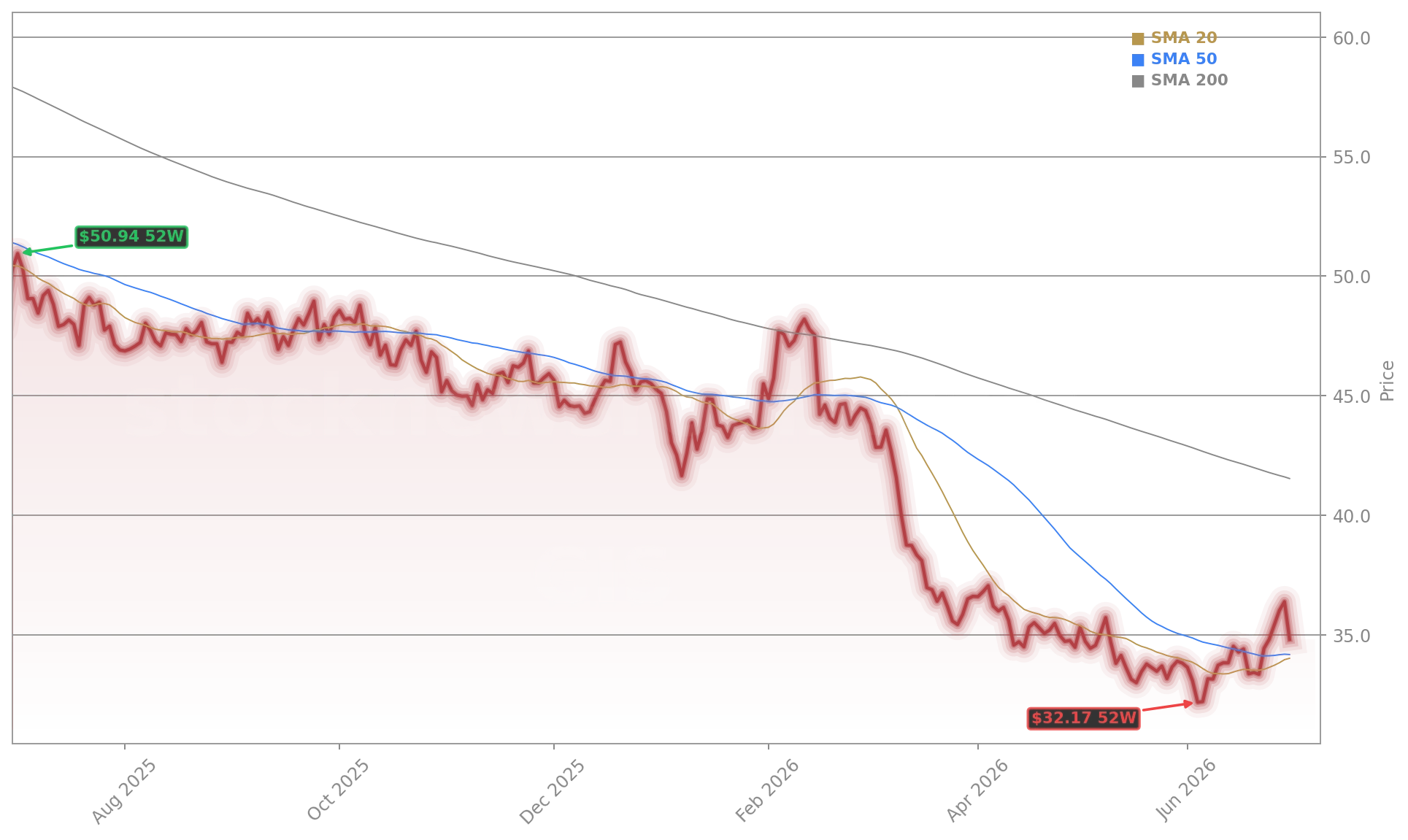
Yes — unequivocally. General Mills, Inc. maintained its $0.61 quarterly dividend, extending its unbroken 127-year payout streak — the longest in the S&P 500. The payout ratio on adjusted EPS stands at just 69%, well within the 75% safety threshold for consumer staples. Free cash flow totaled $2.1 billion in FY2026, covering the dividend 3.8x. That resilience matters to income-focused ETFs like the Consumer Staples Select Sector SPDR Fund (XLP), where GIS is the third-largest holding. RBC Capital Markets affirmed its ‘Outperform’ rating, citing ‘the dividend’s fortress-like durability’ and GIS’s ‘pricing power in core categories like cereal and yogurt.’ With inflation still elevated, GIS’s dividend yield of 6.6% (based on $37.04) remains one of the highest among blue-chip staples — a key draw for retirees and 401(k) investors seeking inflation-hedged income.
What’s Next After General Mills Earnings?
We have the fiscal year 2026 positively concluded and delivered fourth-quarter adjusted results in line with our expectations, while further strengthening our foundation to position General Mills for long-term success.— Jeff Harmening, CEO of General Mills, Inc.
The market’s immediate reaction — a 6.4% intraday gain — signals relief that the core business is intact. But the real test begins now: proving that $3 billion in savings translates to sustainable EPS growth without eroding brand equity. Investors will watch Q1 FY2027 results closely for early signs of Remarkability-driven shelf velocity, especially in Cinnamon Toast Crunch and Nature Valley. Meanwhile, Citigroup raised its price target to $42, citing ‘the compelling risk-reward at current levels’ and GIS’s ‘underappreciated pet food optionality.’ For U.S. portfolios, General Mills Earnings reinforce a critical truth: in uncertain markets, not all consumer staples are created equal — and GIS is betting its future on becoming the most remarkable one.