
Will SpaceX Nasdaq-100 Inclusion unleash a passive-buying wave strong enough to justify one of the market’s boldest valuations?

What Does SpaceX Nasdaq-100 Inclusion Mean for Index Funds?
Beginning before market open on Monday, July 7, SpaceX will be added to the Nasdaq-100 Index—triggering mandatory rebalancing across hundreds of ETFs and mutual funds tracking the benchmark. With a current market cap of $2.25 trillion, SpaceX is projected to represent ~1.2% of the index, making it one of the top 10 constituents by weight. That implies roughly $12–$15 billion in forced passive buying over the next 2–3 trading days, according to Nasdaq Index Services estimates. Unlike the S&P 500, the Nasdaq-100 has no float-adjustment filter—so even with limited public float, SpaceX Nasdaq-100 Inclusion will drive outsized liquidity demand. For investors holding Nasdaq-100 ETFs like QQQ, this means immediate exposure—whether they like it or not.
Why Is Wedbush So Bullish on SpaceX?
Wedbush analyst Dan Ives launched coverage of SpaceX with an Outperform rating and $190 price target—6% above current levels—citing a ‘demand flywheel’ powered by Starlink, Starship, and AI infrastructure. He emphasized that Starlink’s 12 million subscribers generate ~$66 average revenue per user and remain under 1% of the global broadband addressable market. Crucially, Wedbush’s $190 target relies on a sum-of-the-parts valuation using fiscal 2028 forecasts, assigning $2.48 trillion in enterprise value. Ives called SpaceX ‘one of the most differentiated assets within the tech market’—a vertically integrated platform spanning launches, connectivity, and AI compute. That contrasts sharply with NVIDIA, which dominates AI chips but lacks orbital infrastructure, and Tesla, which co-develops AI hardware via Terafab but lacks launch or satellite capabilities.
Can SpaceX’s AI Ambitions Justify Its Valuation?
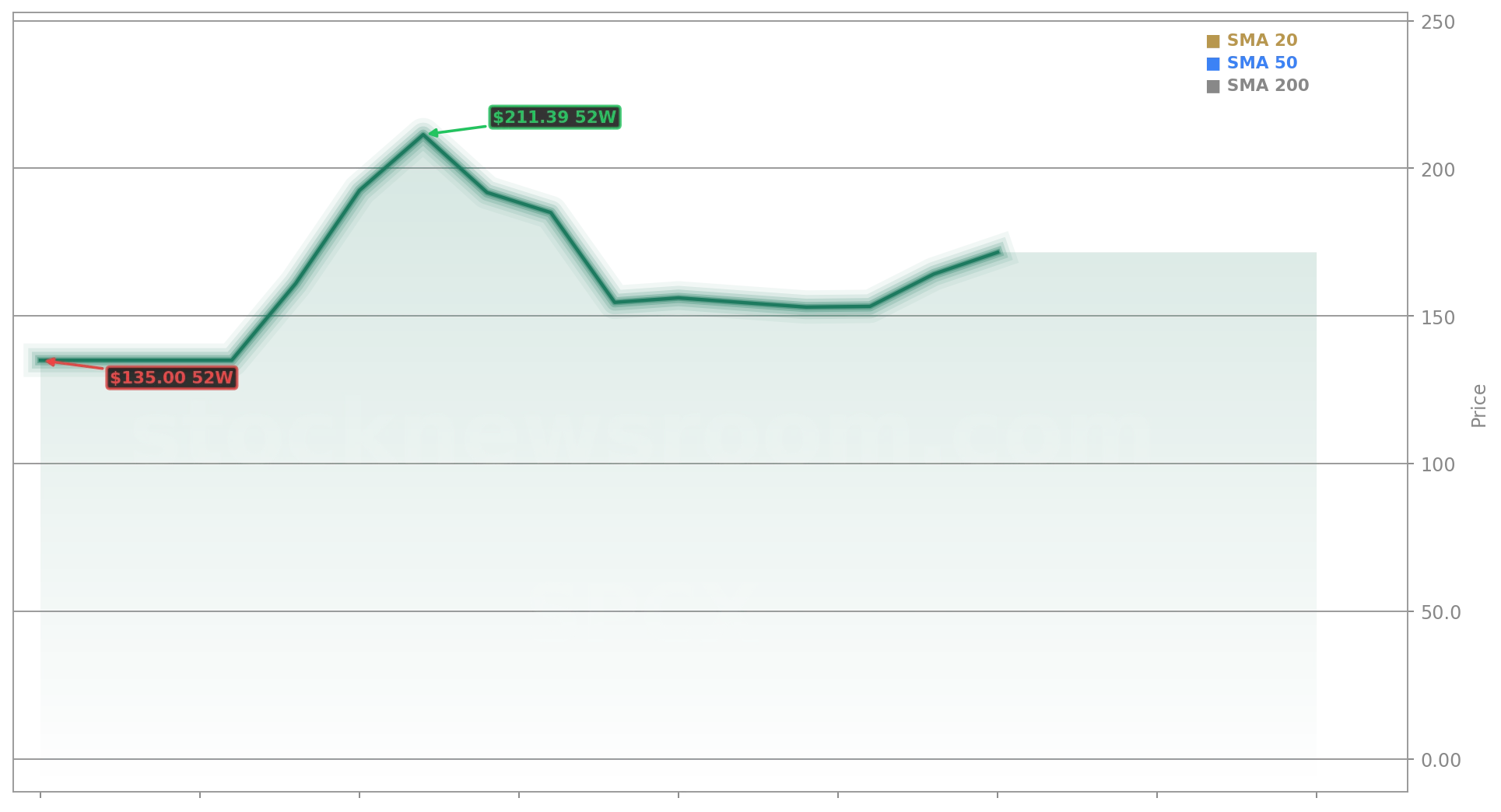
At $171.93, SpaceX trades at 116x trailing-12-month sales—a multiple more than double Palantir’s (54x) and nearly 40x the S&P 500 average. Critics—including Evercore Senior Chairman Roger Altman—question whether traditional models apply to a company with $4.9 billion in 2025 net losses and a $28.5 trillion TAM claim anchored largely in orbital AI. Yet Wedbush and Defiance ETFs CIO Sylvia Jablonski argue the math shifts dramatically in 2027: three AI compute deals (with Anthropic, Google, and Reflection AI) alone add $27.8 billion in annual revenue starting in October. Combined with projected Starlink revenue of $22–24 billion and $6 billion from launches, 2027 revenue could reach $59 billion—slashing the P/S ratio to ~38. That’s still premium, but no longer absurd—especially next to Apple’s 32x forward P/E or NVIDIA’s 28x forward P/E.
How Is SpaceX Nasdaq-100 Inclusion Impacting Tesla and the Broader Musk Ecosystem?
Since SpaceX’s June 12 IPO, Tesla shares have surged 14%—with analysts explicitly linking the rally to ‘Musk ecosystem’ sentiment. Wedbush’s Dan Ives now assigns an 80–90% probability to a SpaceX–Tesla merger by early 2027, driven by shared AI infrastructure (Terafab), Starlink-X integration, and regulatory synergies. Oppenheimer analysts remain skeptical, arguing separation preserves strategic agility. Still, the SpaceX Nasdaq-100 Inclusion adds another catalyst: passive funds now holding both stocks may accelerate cross-ownership—and amplify volatility correlation. That dynamic matters for S&P 500 and NASDAQ investors alike, as Tesla alone accounts for ~2.3% of the S&P 500’s total return YTD.
Related coverage includes SpaceX Nasdaq-100 Inclusion +6.6% as Forced Buying Looms, which breaks down the technical mechanics of the index rebalance and short-squeeze risk, and SpaceX Nasdaq-100 Inclusion +6.6% as Forced Buying Looms, examining how defense and telecom peers like Lockheed Martin and T-Mobile are reacting to SpaceX’s dual threat in space-based connectivity and AI compute.
I don’t think anybody understands, at least I don’t, how to value companies like SpaceX or Anthropic.— Roger Altman, Evercore Senior Chairman
The SpaceX Nasdaq-100 Inclusion is a pivotal moment—not just for SpaceX, but for how Wall Street values convergence plays across AI, space, and infrastructure. Investors should treat the July 7 rebalance as a catalyst, not a conclusion. For long-term portfolios, the real test comes in Q3: Starship Flight 13, Starlink’s direct-to-device rollout, and the first revenue from xAI’s Colossus cluster will determine whether today’s premium holds—or collapses under the weight of execution risk. Position accordingly.