Can Lockheed Martin’s massive THAAD win finally turn defense skepticism into a sustained rally for the stock?

What Does the Lockheed Martin THAAD Contract Mean for S&P 500 Defense Exposure?
The $35.3 billion THAAD contract isn’t just another Pentagon procurement line item — it’s a strategic inflection point. With production slated across four U.S. facilities including the newly built $9 billion Troy, Alabama, THAAD-dedicated plant, Lockheed Martin Corporation is now positioned to deliver approximately 2,800 interceptors at an estimated $12.7 million per unit. That’s nearly $5.9 billion in annual revenue — a 7.8% lift to its $75.1 billion 2025 top line. For context, the S&P 500’s Defense & Aerospace subsector has underperformed the broader index by 12% year-to-date, pressured by political uncertainty and war powers resolutions. Yet this Lockheed Martin THAAD Contract delivers near-term earnings clarity and long-duration visibility — exactly what institutional investors seek in a volatile macro environment.
How Does This Compare to Competitors’ Munitions Backlogs?
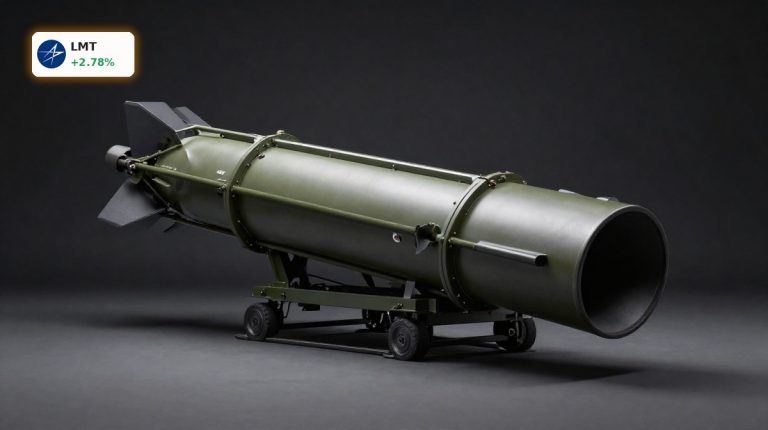
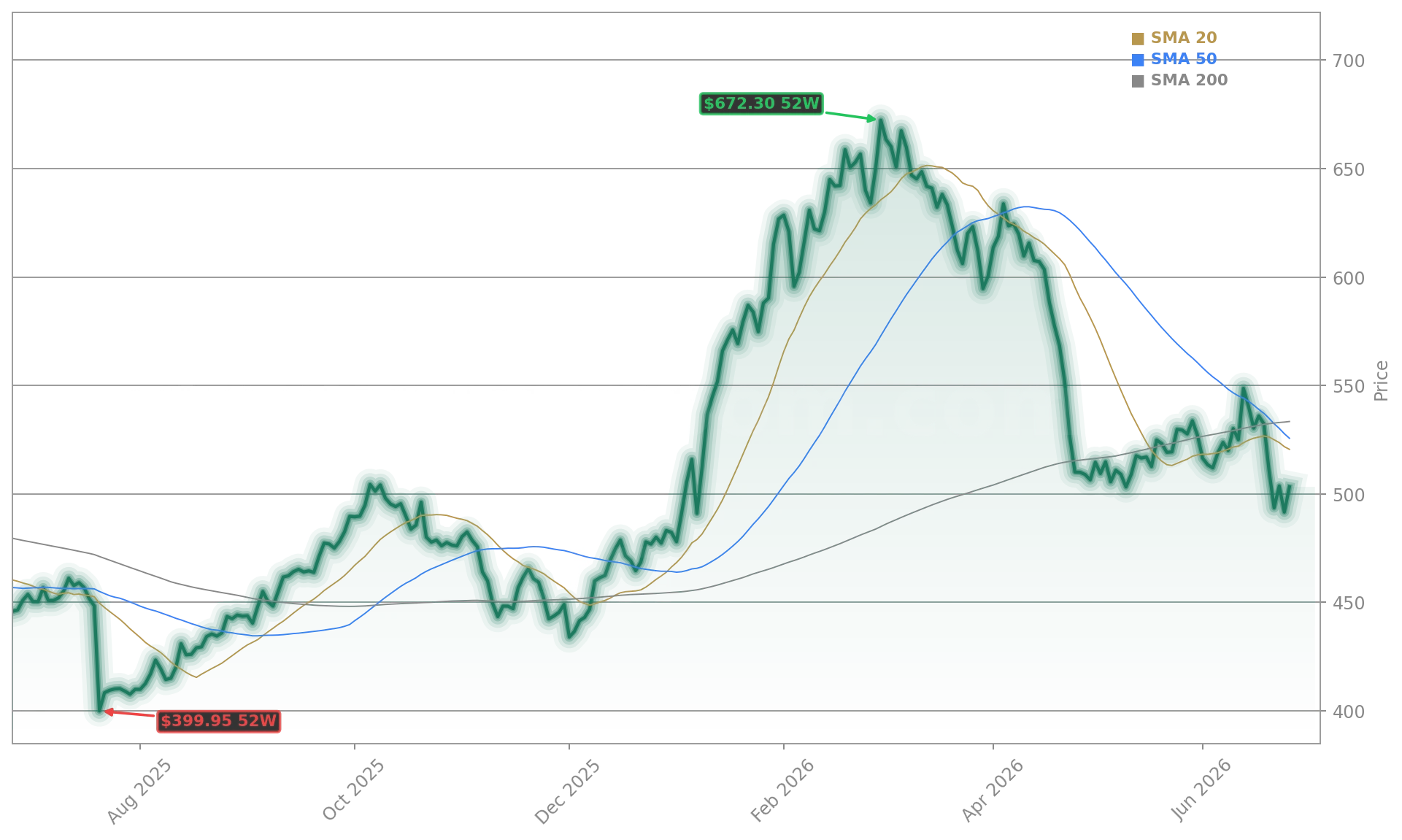
While Northrop Grumman and L3 Harris saw weekly declines of 3.5% and 2.6%, respectively, Lockheed Martin Corporation surged 2.78% to $505.32 on Thursday — outperforming the IBD Aerospace/Defense industry group, which fell 4.8% this week. The contrast highlights a key divergence: Lockheed Martin’s sole-source and duopoly franchises — including THAAD, PAC-3, F-35, and Aegis — are structurally insulated from near-term budget volatility. By comparison, Kratos Defense and Security slid 11.5% this week amid drone demand uncertainty, and space-focused names Rocket Lab and Firefly Aerospace dropped ~20% on soft commercial launch demand. Citigroup recently upgraded Lockheed Martin Corporation to ‘Buy’, citing its ‘unmatched munitions execution capacity’ and ‘backlog durability’ versus peers with heavier exposure to discretionary programs.
Why Did the Stock Lag After the $8.4 Billion PrSM Deal?
Just two days prior, Lockheed Martin Corporation announced an $8.4 billion Precision Strike Missile (PrSM) contract — yet shares fell 2.4%. The market initially misread the timing: investors weighed near-term margin pressure from factory ramp-up costs against long-term revenue. But the $35.3 billion THAAD contract changed the narrative. Goldman Sachs analysts noted the combined $43.7 billion in new munitions awards ‘reaffirms the Pentagon’s structural shift toward high-volume, high-readiness production’ — a trend that benefits Lockheed Martin Corporation’s vertically integrated manufacturing model far more than asset-light peers. RBC Capital Markets raised its 12-month price target to $535, emphasizing ‘THAAD’s near-zero cancellation risk and its embedded 7-year visibility.’
What’s Next for Lockheed Martin Corporation’s Cash Flow and Dividend?
With FY 2026 free cash flow guidance of $6.5–6.8 billion — and $9.1 billion in remaining buyback authorization — the Lockheed Martin THAAD Contract strengthens the company’s capital return discipline. Its 23-year consecutive dividend increase streak remains intact, with the current quarterly payout at $3.45 (2.64% yield). The THAAD contract’s long-term, fixed-price framework reduces program risk versus earlier classified overruns — a key concern after the $950 million Q2 2025 reach-forward charge. As CEO Jim Taiclet stated on the Q1 2026 call, ‘Our munitions production is now up over 60% from 2024, and these framework agreements lock in volume, pricing, and schedule certainty.’ That predictability directly supports both buybacks and dividend growth.
How Is the Pentagon Mitigating Contractor Risk?
Our munitions production is now up over 60% from 2024, and these framework agreements lock in volume, pricing, and schedule certainty.— Jim Taiclet, CEO of Lockheed Martin Corporation
Historically, defense contractors hesitated to expand capacity without guaranteed orders — fearing Washington could pivot mid-cycle. This time, the Pentagon restructured its procurement process, offering multi-year, fixed-price, firm-fixed-quantity contracts like the Lockheed Martin THAAD Contract and the $8.4 billion PrSM deal. The result: $43.7 billion in new munitions awards in just 48 hours — the largest two-day defense procurement surge since 2019. The Department of Defense’s FY 2027 budget request includes $52.9 billion specifically for critical munitions — a 22% increase year-over-year — validating this new, more reliable contracting model. For Wall Street, it means less earnings volatility and more confidence in Lockheed Martin Corporation’s ability to convert backlog into consistent cash flow.