Can General Motors Defense Partnership turn Detroit manufacturing muscle into a serious new growth engine for GM and Lockheed Martin?

What Would the General Motors Defense Partnership Deliver?
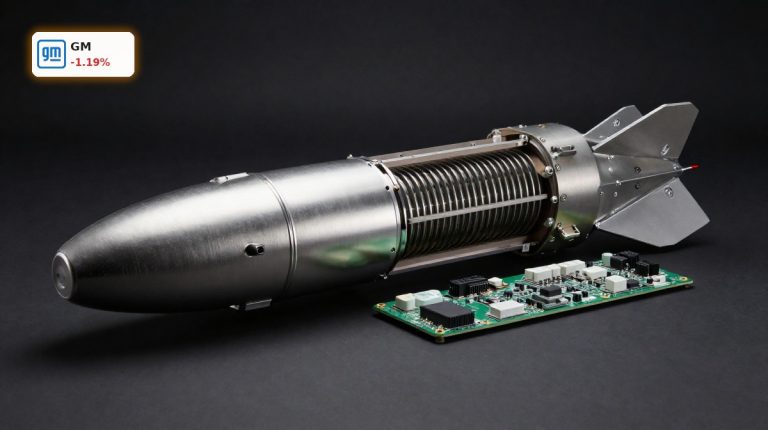
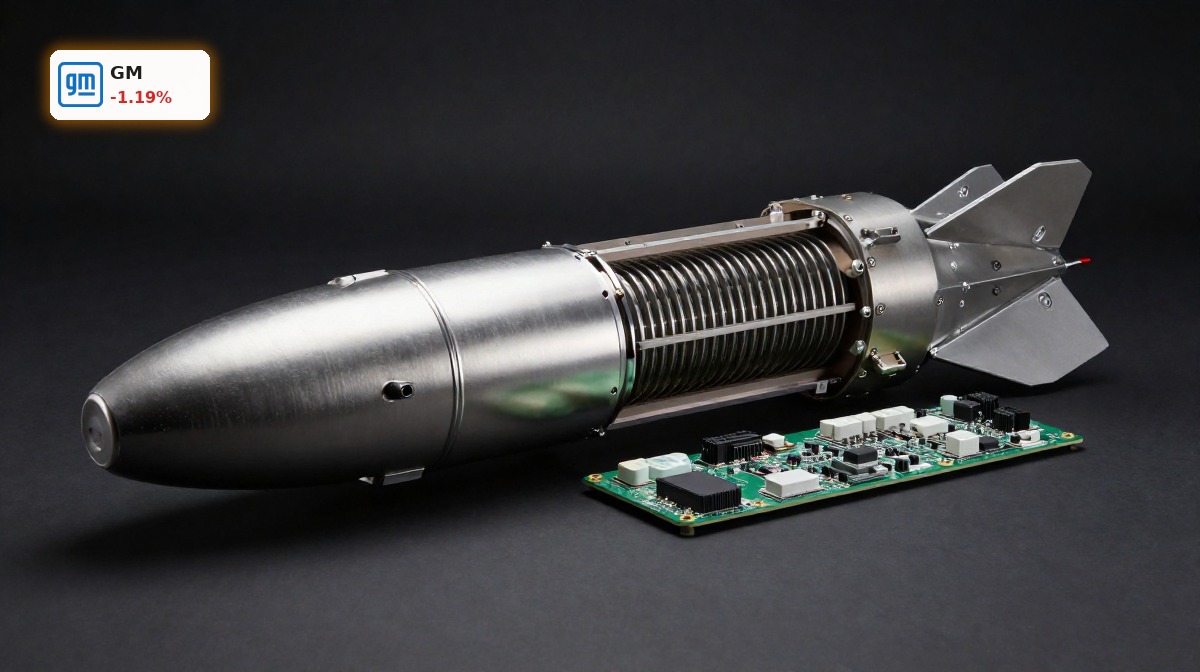
The General Motors Defense Partnership would leverage GM’s advanced industrial capabilities—particularly in high-volume precision machining, battery-grade thermal management systems, and modular electronics integration—to support Lockheed Martin’s urgent production ramp-up. According to the Wall Street Journal, the Pentagon approached GM CEO Mary Barra earlier this year as part of a broader initiative to enlist nontraditional defense contractors. GM Defense, reestablished in 2017, already holds contracts for armored infantry vehicles and has invested heavily in scalable manufacturing infrastructure in Michigan and Indiana. Unlike traditional defense subcontractors, GM brings proven capacity for rapid scale-up—critical as Lockheed Martin works to quadruple Precision Strike missile output and expand Patriot production to 2,000 units annually.
Why Is This Timing Critical for Lockheed Martin?
Lockheed Martin faces mounting pressure to deliver amid documented delays in F-35 sustainment and Black Hawk modernization—and now, intensified demand for missile systems following sustained operations in Ukraine and the Persian Gulf. LMT’s stock remains 23% below its March 2026 record high of $692, despite a 10% year-to-date gain, reflecting investor concerns over execution risk. Citigroup analysts noted in a June 12 report that ‘LMT’s margin pressure is increasingly tied to production bottlenecks—not R&D or program wins,’ and added that ‘partnering with an industrial-scale manufacturer like GM could materially de-risk near-term delivery targets.’ The Pentagon’s $1.5 trillion 2027 defense budget request prioritizes munitions and drone manufacturing—making GM’s capacity especially relevant.
How Does This Shift GM’s Strategic Position?
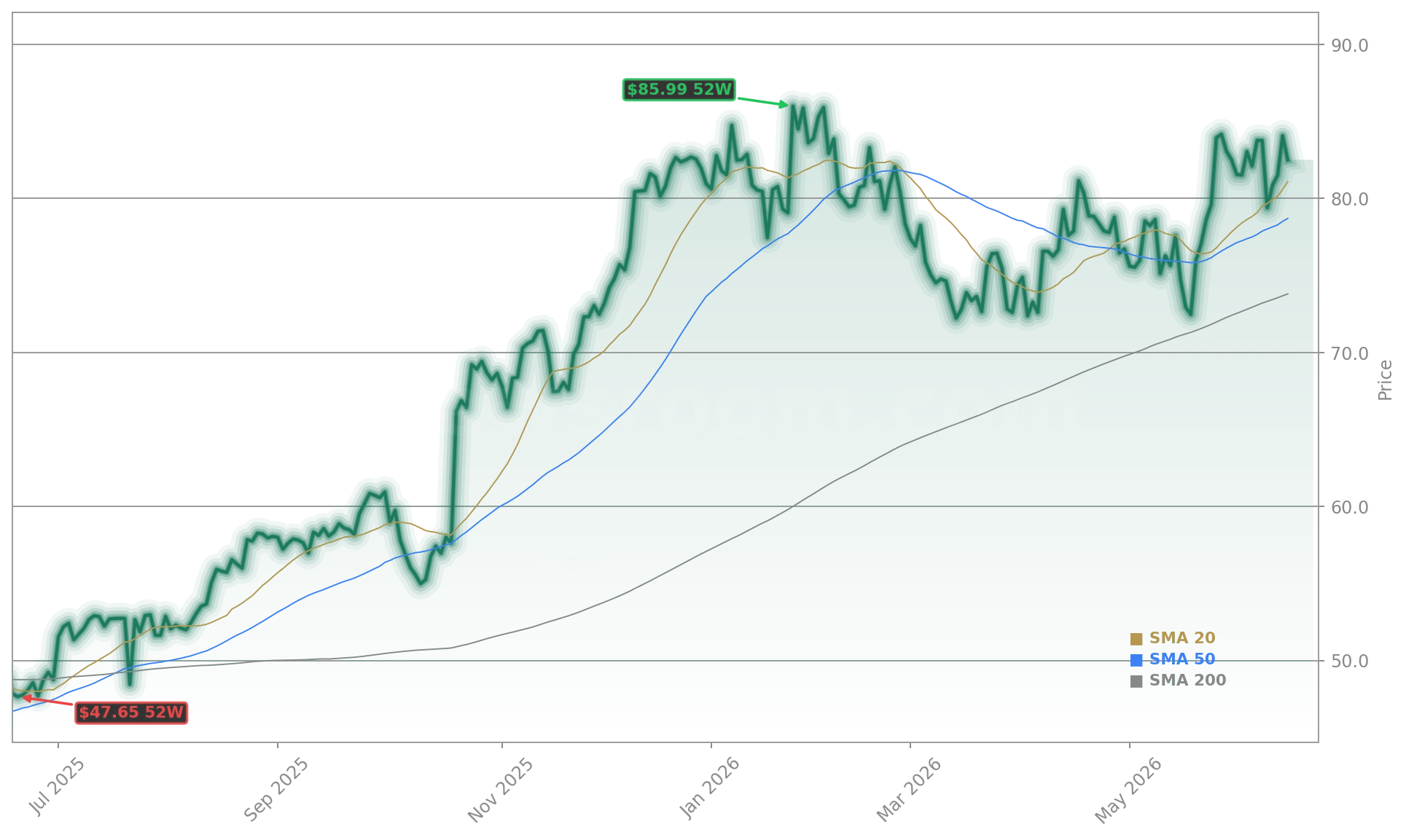
For General Motors Company, the General Motors Defense Partnership represents a meaningful diversification beyond its core automotive business, which faces near-term headwinds from shifting consumer demand. As GM’s North American chief Duncan Aldred acknowledged at an automotive conference Tuesday, rising gas prices are already accelerating buyer migration toward sub-$30,000 vehicles—pressuring margins on high-margin trucks like the Silverado. With the next-gen 2027 Silverado launching amid reliability concerns over prior V8 engines, GM’s defense initiative provides a stabilizing revenue pillar. RBC Capital Markets upgraded GM to ‘Outperform’ on June 10, citing ‘increasing optionality in defense and commercial mobility segments,’ and raised its 12-month price target to $92. GM’s after-hours gain to $83.07—up 0.68%—suggests investor confidence in this pivot.
How Does This Compare to Other Industrial Defense Plays?
Unlike aerospace-focused peers such as NVIDIA, which supplies AI chips for defense computing, or Tesla, which has explored drone autonomy but lacks defense manufacturing infrastructure, GM brings proven high-rate production expertise directly aligned with current Pentagon priorities. Ford Motor and Oshkosh have also engaged in similar defense talks, but GM’s scale—operating over 30 U.S. manufacturing facilities and employing 75,000 domestic workers—gives it unique leverage. General Motors Defense Partnership discussions are distinct from the legacy defense work of companies like Boeing or Northrop Grumman; instead, they mirror the industrial mobilization model used by GE Aerospace in jet engine component supply. Morgan Stanley analysts highlighted in a June 14 note that ‘GM’s entry into munitions support represents the most consequential industrial repositioning among legacy automakers since Ford’s WWII B-24 bomber production.’
What’s Next for Investors?
GM’s entry into munitions support represents the most consequential industrial repositioning among legacy automakers since Ford’s WWII B-24 bomber production.— Morgan Stanley analysts
Both companies are expected to issue a joint statement by June 25, following a scheduled meeting with Pentagon acquisition leadership. While no financial terms have been disclosed, sources indicate GM would supply precision housings, thermal management subassemblies, and power distribution modules—components requiring tolerances comparable to those used in GM’s Ultium battery systems. The General Motors Defense Partnership could generate $300–500 million in annual revenue for GM by 2028, according to internal projections cited by Investors.com. With GM up 4% year-to-date and LMT up 10%, the collaboration may catalyze broader sector rotation toward industrials with defense optionality—especially as the S&P 500 defense index trades near its 52-week high. For investors, the General Motors Defense Partnership isn’t just about diversification—it’s about resilience in a volatile macro environment.