Can Intel 18A-P Production turn foundry hype into real profits, or will execution fears keep crushing the stock?

What Does Intel 18A-P Production Mean for Foundry Ambitions?
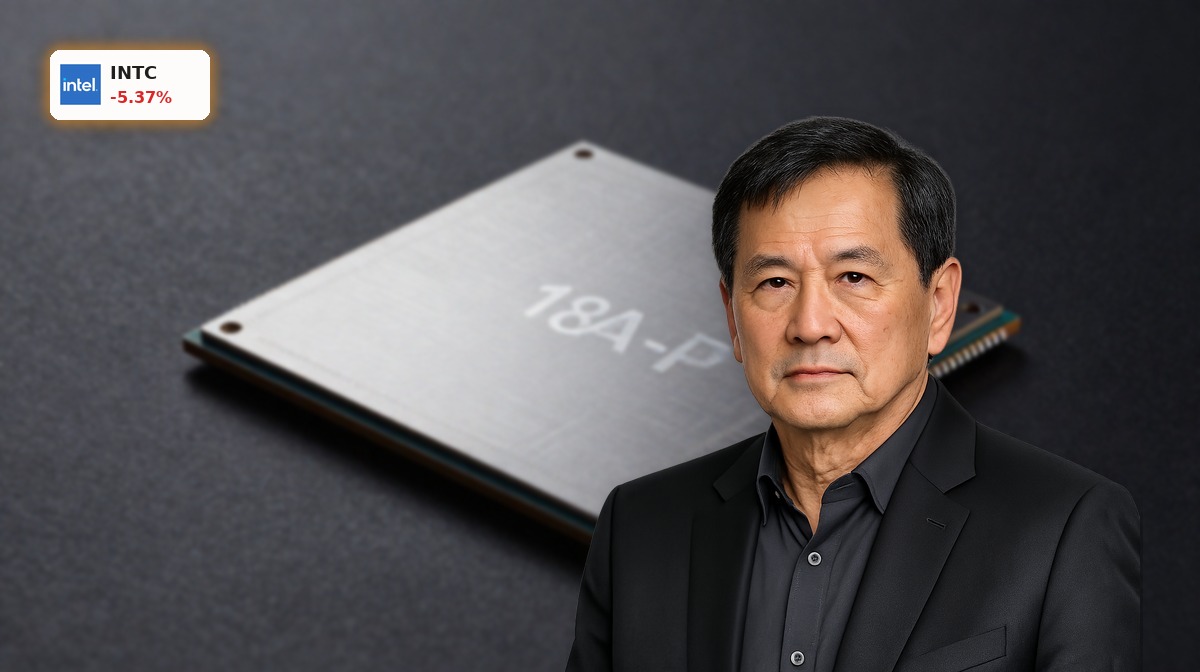
Intel 18A-P Production marks the first performance-enhanced iteration of Intel’s 18A node—and the first to enter risk production, meaning early customer chips are now being fabricated for validation and qualification. According to Intel Foundry, the process delivers up to 9% higher performance at the same power or 18% lower power at equivalent performance, alongside improved thermal characteristics and design flexibility. Crucially, existing Intel 18A designs can migrate to 18A-P with minimal modification—a key enabler for rapid customer adoption. This milestone arrives just as Intel seeks to prove its foundry model can credibly challenge NVIDIA-fueled AI chip demand and Apple’s growing need for diversified, U.S.-based advanced-node capacity.
Why Did Intel Shares Drop Despite the News?
Intel Corporation fell sharply overnight—not because of the 18A-P announcement, but due to macro-driven pressure. The Philadelphia Semiconductor ETF (SOXX) dropped 5.92% on Tuesday as investors rotated out of high-flying tech names ahead of the Federal Open Market Committee’s two-day meeting. Intel’s 8.5% decline mirrored AMD’s 7.3% pullback, reflecting broader sector profit-taking after five consecutive up sessions. While Intel 18A-P Production signals technical progress, Wall Street remains focused on execution risk: Can Intel achieve TSMC-level yields? Will its foundry unit turn profitable before 2027? Analysts at RBC Capital Markets maintain a ‘Sector Perform’ rating, citing ‘encouraging progress but unresolved cost and timeline questions.’
How Does Intel 18A-P Production Compare to TSMC and Samsung?
Intel 18A-P Production positions the company within striking distance of TSMC’s N2 node and Samsung’s SF2 process—both expected to ramp in late 2026. Intel’s Power Boost transistor option, backside power delivery research, and 11% smaller chip area (per Eric Karl, VP and Fellow at Intel Foundry) suggest meaningful gains in efficiency and density. Yet TSMC still holds a decisive edge in volume manufacturing maturity and yield consistency—something Counterpoint Research’s Neil Shah explicitly called ‘the decisive benchmark’ for Apple’s potential engagement. Meanwhile, Tesla and Apple continue to diversify foundry partnerships, making Intel 18A-P Production less a standalone win and more a necessary entry ticket into high-stakes negotiations.
Is Apple Now a Realistic Intel Foundry Customer?
Yes—but conditionally. CNBC reported that Apple is ‘likely trialing Intel 18A-P for a future M7 chip,’ avoiding the higher stakes of iPhone SoCs for now. Chip analyst Ben Bajarin confirmed Apple would ‘wait for 18A-P before making any serious foundry decisions.’ That cautious, phased approach—first a lower-volume, lower-risk chip—aligns with Apple’s historical supplier onboarding. Still, Intel’s ability to deliver consistent, high-yield output remains the gatekeeper. As Goldman Sachs notes: ‘A successful 18A-P ramp could catalyze $2–3B in annual foundry revenue by 2028—but only if yield curves match projections.’
What’s Next for Intel Corporation’s Stock?
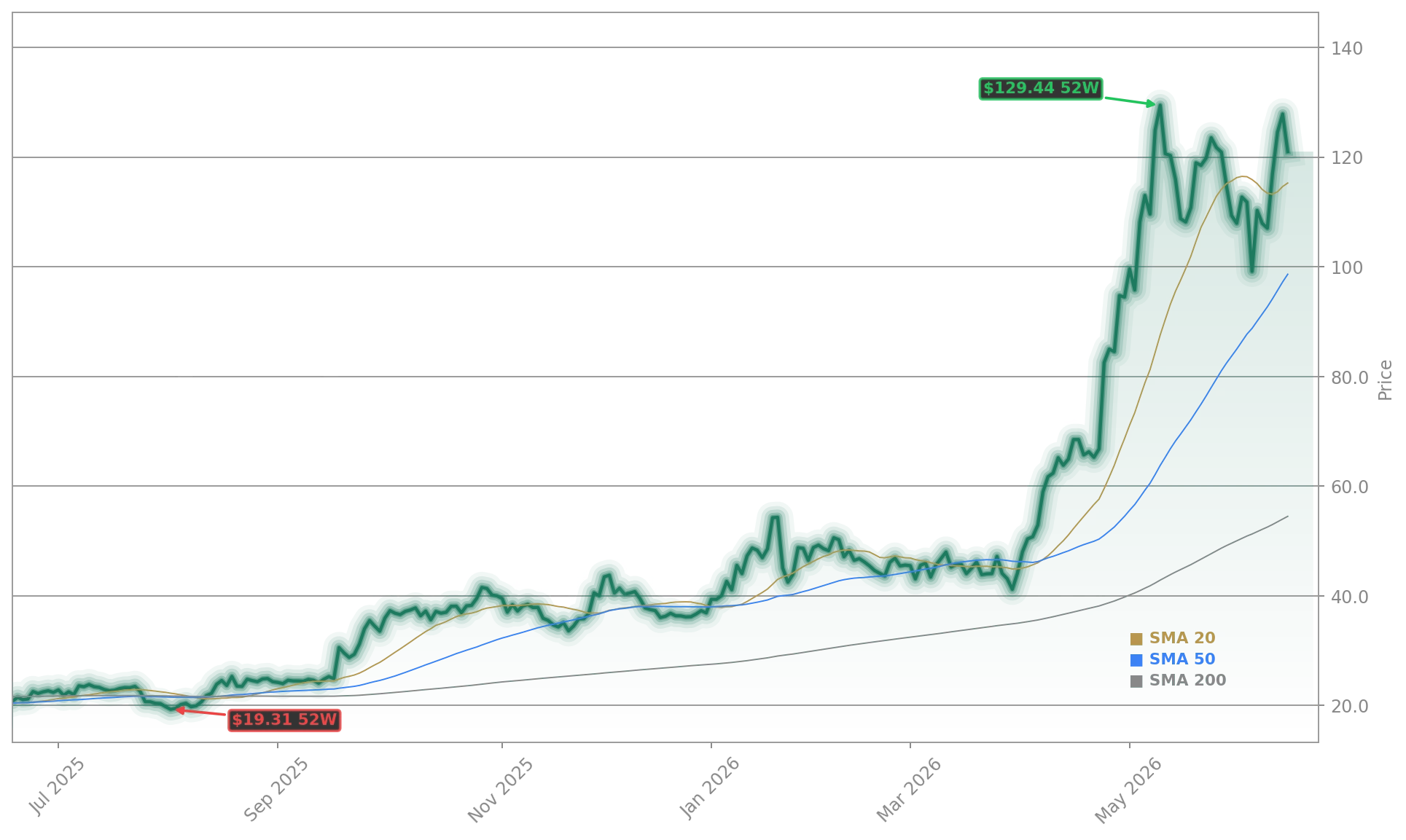
Intel Corporation trades at $121.00—down from its May all-time high but still up nearly 700% from its April 2025 low of $18.84. Institutional interest remains strong: Fullerton Fund Management increased its stake by 124.3% in Q4, now holding $32.72 million in Intel shares. Yet O’Connor, a UBS unit, reduced its position by 21.9%, reflecting divergent views on timing. With Q2 2026 earnings due in late July, investors will scrutinize foundry segment losses, capital expenditures, and any forward guidance on 18A-P customer wins. The NASDAQ-listed stock remains a key S&P 500 bellwether—and Intel 18A-P Production is now the single most watched catalyst for its next leg up.
Our news and presentations at VLSI signal to customers and partners that we are fully committed to innovation in cutting-edge process technology.— Naga Chandrasekaran, Executive Vice President and General Manager of Intel Foundry
Related Coverage: Intel’s AI CPU momentum continues to build—Intel Forecast +5.5% After Hours as AI CPU Demand Surges highlights how surging server CPU demand is reshaping the competitive landscape beyond just NVIDIA and AMD. Meanwhile, analysts at Zacks Investment Research note Intel’s growing relevance in the $170 billion AI server CPU market—Zacks Analyst Blog Highlights Advanced Micro Devices, Intel, Arm Holdings, NVIDIA and QUALCOMM details how Intel’s Core Ultra and Xeon 6+ processors are gaining traction in next-gen AI infrastructure. For deeper technical context on Intel 18A-P Production, Intel Foundry Details Process Milestones and Future Innovation at VLSI Symposium offers the official roadmap and engineering benchmarks.