
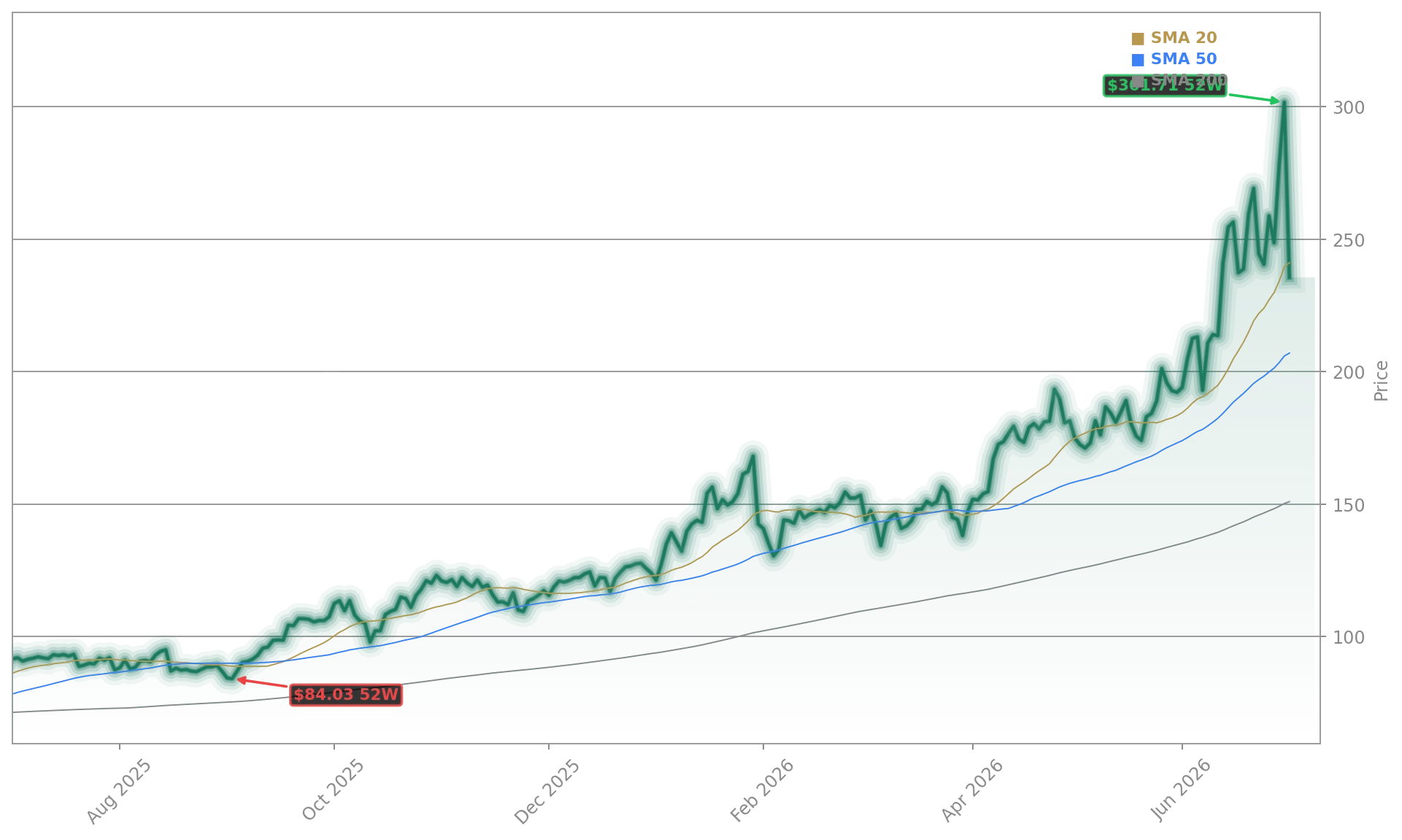
Are KLA insider filings flashing quiet confidence just as the stock suffers its sharpest one-day sell-off in months?

What Do Recent KLA Insider Transactions Reveal?
On July 2, multiple senior executives at KLA Corporation filed simultaneous Form 4 and Form 144 disclosures with the SEC — revealing a nuanced picture of insider sentiment. CFO Bren Higgins registered 27,701 restricted shares for potential sale under Rule 144, yet on June 30, he surrendered 30,567 shares at $278.39 to cover tax liabilities tied to equity vesting. Similarly, VP Virendra Kirloskar registered 196 shares for sale — a negligible amount versus his total direct holdings — while VP Brian Lorig surrendered 12,222 shares to retain 12,429 net shares. These aren’t open-market sales; they’re tax-driven share surrenders tied to compensation plans — a key distinction Wall Street analysts are now weighing against KLAC’s recent price action.
Why Did CEO Wallace Acquire 46,627 Shares?
CEO Richard Wallace’s June 30 acquisition of 46,627 shares — following vesting of 92,478 shares and surrender of 45,850 — stands out as the largest net insider buy this quarter. His direct ownership now totals 668,176 shares, up from 71,383 after prior small-scale Rule 10b5-1 sales in May and June. That strategic timing — amid KLAC’s steepest single-day drop since Q4 2025 — aligns with Morgan Stanley’s recent note highlighting KLA’s structural advantage in AI chip inspection demand. “Wallace’s net acquisition reinforces confidence in KLA’s position as the gatekeeper for advanced packaging and EUV metrology,” said Morgan Stanley’s semiconductor equipment analyst. The move also contrasts sharply with recent insider behavior at NVIDIA, where multiple executives trimmed positions ahead of its Q2 earnings release.
How Do These Moves Compare to Peers?
Unlike peers such as Applied Materials (AMAT) or Lam Research (LRCX), where insider selling has accelerated ahead of Q3 guidance, KLA Corporation insiders are consolidating ownership. Officer Ahmad Khan acquired 31,085 shares net; VP Mary Beth Wilkinson sold 14,392 shares — but her remaining direct stake still exceeds 53,000 shares. Meanwhile, Applied Materials reported 12 insider sell transactions totaling 182,000 shares in June, per Bloomberg data. RBC Capital Markets recently downgraded AMAT to “Sector Perform” citing near-term margin pressure, while maintaining “Outperform” on KLA Corporation — citing its higher exposure to AI-driven wafer inspection growth. That divergence matters for S&P 500 tech investors balancing cyclical exposure with structural growth.
What’s the Market Impact on Semiconductor Equipment Stocks?
Wallace’s net acquisition reinforces confidence in KLA’s position as the gatekeeper for advanced packaging and EUV metrology.— Morgan Stanley Semiconductor Equipment Analyst
KLA Corporation’s 11% intraday decline — dragging the PHLX Semiconductor Sector Index down 2.3% — triggered broader concern about Q3 2026 capex pullbacks among memory and foundry customers. Yet the KLA Insider Transactions suggest leadership sees the dip as tactical. With KLAC trading at 28x forward P/E — below its 5-year median of 34x — and still up 50.7% annualized over five years, the insider activity adds a layer of conviction. Citigroup analysts reiterated their $285 price target, noting “KLA’s order book remains resilient amid AI inspection demand, and insider net buys reinforce our view that current weakness is overdone.” The NASDAQ Composite, down 0.8% on July 2, saw semiconductor stocks lead losses — but KLAC’s insider-driven signal could catalyze contrarian buying.