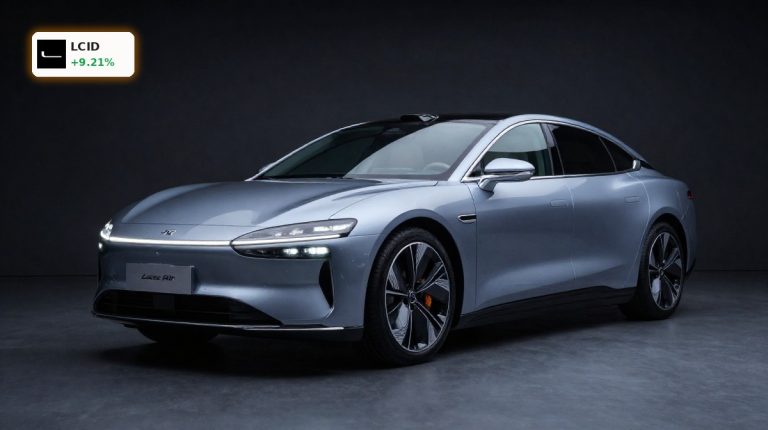
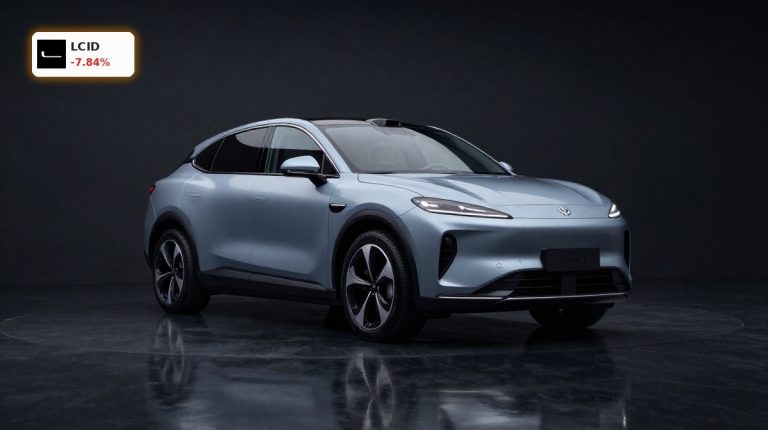
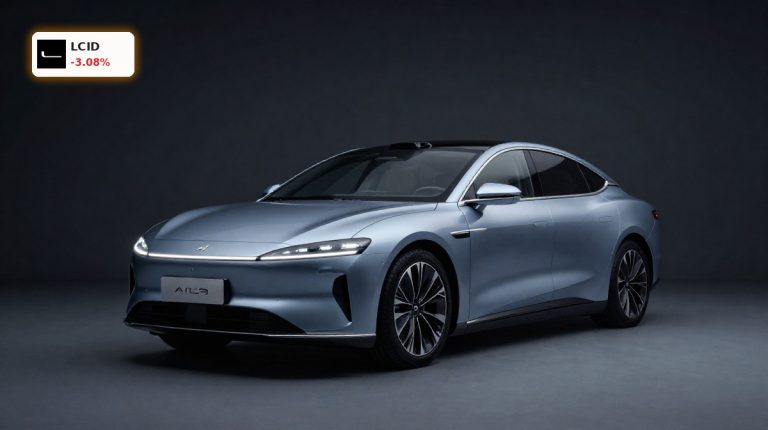
Can a new CEO, fresh Saudi and Uber cash, and a bigger robotaxi bet finally pull Lucid out of its deep stock slump?

How does the Lucid Group CEO Change reshape the story?
The Lucid Group CEO Change formally ends the short interim tenure of Marc Winterhoff and hands the reins to Silvio Napoli, long‑time executive and former CEO of Schindler Group, a global escalator and elevator manufacturer. Napoli, who spent more than three decades at Schindler and also serves on the board of power‑management specialist Eaton, will become Lucid’s second permanent CEO after founder Peter Rawlinson departed abruptly in early 2025. Winterhoff will return to his role as chief operating officer once Napoli completes his relocation from Switzerland and U.S. visa process.
Lucid’s board is betting that Napoli’s reputation for operational discipline, capital allocation and industrial scaling can stabilize a company that still loses money on every vehicle sold and has struggled to ramp production of its Air sedan and upcoming Gravity SUV. Chairman Turqi Alnowaiser highlighted Napoli’s track record in turning advanced technology into repeatable, high‑quality manufacturing performance, a skill set investors typically associate with mature industrial names like Tesla or Apple rather than early‑stage EV startups.
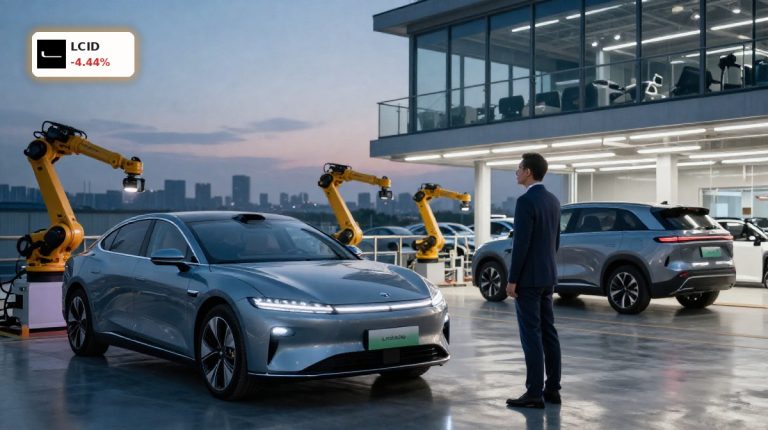
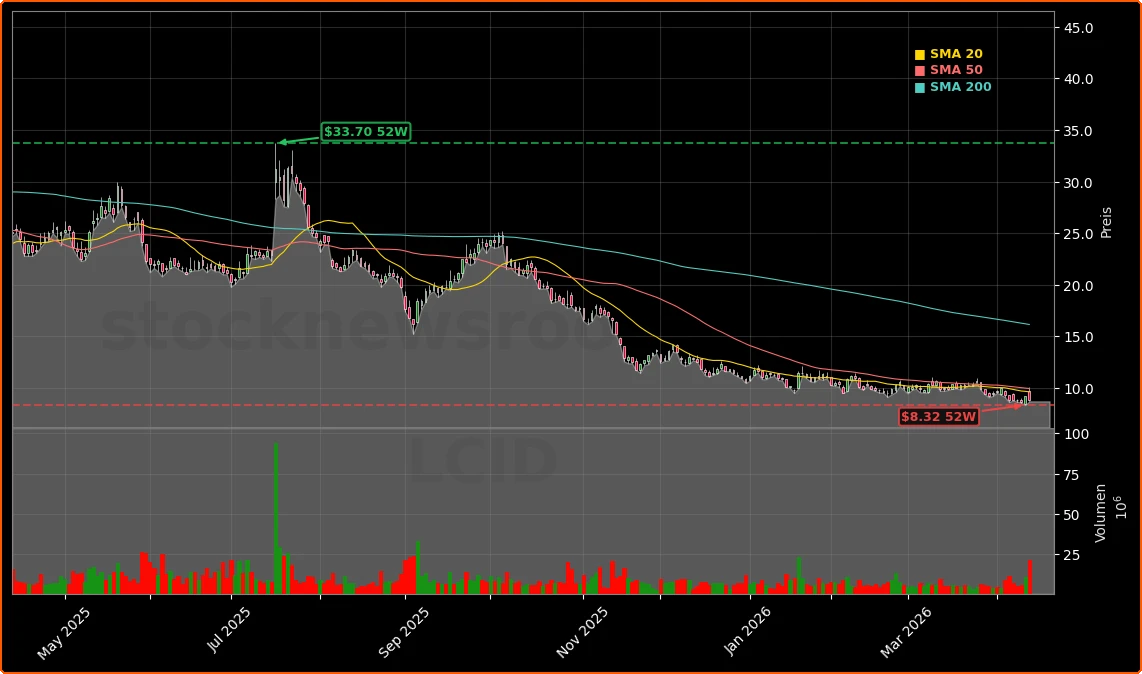
For U.S. shareholders, the timing is pivotal: LCID closed at $8.83 on Monday, down 4.44% on the day and roughly 60% over the past year, after recently printing new 52‑week lows in the $8–$9 range. That slump has been reinforced by cautious analyst sentiment, with RBC Capital recently cutting its price target from $10 to $8 and keeping a “Sector Perform” rating, while MarketBeat data shows a consensus “Reduce” stance and an average target around the low‑teens.
What does the PIF and Uber funding really change?
Alongside the Lucid Group CEO Change, management unveiled $750 million in new funding that effectively extends Lucid’s runway as it ramps production and invests in new platforms. Ayar Third Investment Company, an affiliate of Saudi Arabia’s PIF and Lucid’s largest shareholder, will purchase $550 million of preferred stock. Uber, via subsidiary SMB Holding Corporation, is adding $200 million through common stock, deepening a relationship first announced in mid‑2025.
The capital injection is particularly important given Lucid’s deeply negative gross margin – around minus 90% by some recent estimates – and heavy cash burn. While the company reaffirmed full‑year 2026 production guidance of 25,000 to 27,000 vehicles after Q1 output of 5,500 units and 3,093 deliveries, it continues to face supply‑chain snags, including a recent issue with second‑row seats that weighed on Q1 deliveries.
The fresh PIF money underscores Saudi Arabia’s dual bet on Lucid and Uber as it pushes into both EV manufacturing and future autonomous mobility. It also comes as LCID stock has been under pressure from recalls, including more than 3,600 Air vehicles for a drivetrain defect that could cause sudden power loss. For investors worried about dilution, the deal extends Lucid’s liquidity horizon toward its planned mid‑size EV launch around the $50,000 price point, aimed at moving the brand closer to mass‑market territory and into more direct competition with NVIDIA‑powered autonomous systems at rivals and mainstream EV players.
How big is the expanded Uber robotaxi commitment?
The Uber partnership is evolving from a simple fleet sale into a multi‑year robotaxi platform. Uber initially invested $300 million and agreed to buy at least 20,000 Gravity SUVs over six years for an autonomous ride‑hailing service using Nuro’s self‑driving software stack. Under the new agreement, Uber’s total commitment rises to at least 35,000 Lucid vehicles globally, now covering both the Gravity SUV and Lucid’s upcoming mid‑size model, all outfitted with Nuro autonomy.
The companies plan to launch commercial robotaxi operations in San Francisco later in 2026, followed by expansion to dozens of global markets over the subsequent six years. For U.S. investors, this offers two key implications: it gives Lucid more visible demand for its future production capacity and ties the company directly into Uber’s long‑term autonomy roadmap, an area where peers like Tesla and Apple have been pursuing their own strategies.
However, the economics remain uncertain. Lucid has yet to demonstrate positive unit economics even on high‑priced premium vehicles; loading those vehicles with expensive sensor suites and autonomy hardware may pressure margins further unless manufacturing scale and software revenue sharing can offset costs. Execution risk is high, but the Uber deal provides a narrative counterweight to recent bearish headlines around recalls, missed delivery targets and analyst downgrades.
Where does the Lucid Group CEO Change leave LCID on Wall Street?
The Lucid Group CEO Change, new funding and robotaxi expansion arrive just days after LCID hit fresh 52‑week lows amid negative sentiment on EV demand and high interest rates weighing on capital‑intensive growth stories. Investing.com recently flagged the roughly 62% share price decline over 12 months and a still‑negative gross margin, even as some models and the Gravity SUV received product‑level praise. Trading ideas on platforms like TradingView emphasize the importance of PIF’s continued backing for long‑term bulls who see current levels as a possible accumulation zone, albeit with significant volatility.
Against a backdrop where the NASDAQ and S&P 500 have rotated toward profitable tech and mega‑cap names, a speculative EV manufacturer like Lucid must now convince investors it can transition from story stock to operating business. Napoli’s industrial background, the $750 million cash infusion, and Uber’s larger fleet commitment collectively buy time for that transition, but they do not erase the fundamental challenges of scaling production, fixing quality issues and competing against entrenched players from Tesla to established automakers.
Related coverage on Lucid and the EV sector
For a deeper look at Lucid’s financial backdrop, including a 123% revenue jump alongside widening losses and liquidity concerns, readers can review Lucid Quarter: Revenue Jump of 123% Faces Loss Surge, which analyzes whether the company can fund its ambitions through 2027. To understand how sector peers are navigating the same macro and demand headwinds, the article Rivian Forecast Warning as Crucial R2 Launch Meets EV Slowdown examines whether Rivian’s high‑stakes R2 launch can succeed in a slowing EV market and what that might signal for other growth‑stage EV names including Lucid.
In summary, the Lucid Group CEO Change, combined with $750 million from PIF and Uber and a larger robotaxi pipeline, gives LCID a clearer strategic path and additional runway at a time when its stock is trading near 52‑week lows. For U.S. investors, the key questions now are whether Silvio Napoli can impose industrial discipline fast enough and whether the Uber partnership can translate into profitable scale rather than just headline growth. The next few quarters of production, margin progress and autonomous rollout milestones will show whether Lucid can turn today’s reset into a sustainable recovery story.