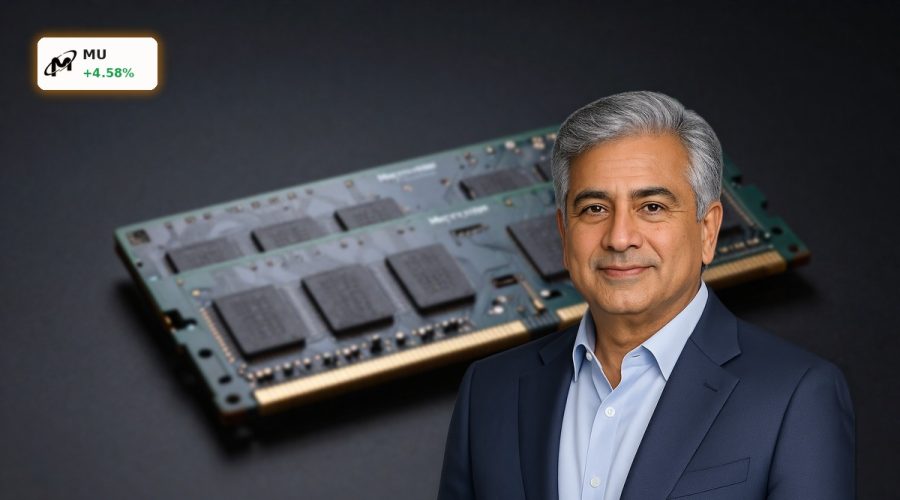

Is the Micron Forecast calling the start of a decade-long AI memory supercycle or the top of a classic chip boom?

Why does the Micron Forecast suddenly matter so much?
Micron has become a central pillar of the AI trade on the NASDAQ, moving from cyclical laggard to one of the strongest performers in the S&P 500 technology cohort. On Monday, shares jumped again after Melius Research initiated coverage with a “Buy” rating and a $700 price target, implying roughly 35–40% upside from current levels. The call reinforces a bullish Micron Forecast that sees the current AI memory upcycle lasting through the end of the decade, driven by severe shortages in HBM and data center DRAM.
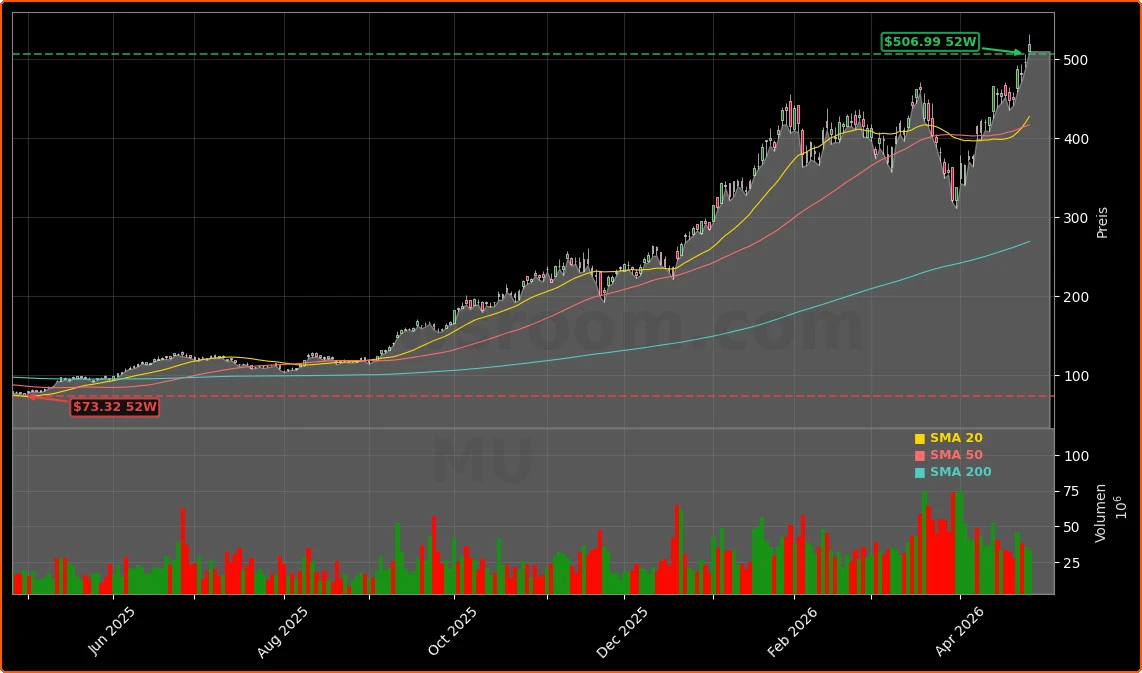
Recent trading action shows how aggressively investors are positioning. Micron has gained more than 500% over the past 12 months, yet still trades at a forward price‑to‑earnings multiple below 10, a level many growth managers consider inexpensive given earnings estimates. Wall Street’s Micron Forecast now rests on two pillars: sustained AI‑driven demand from hyperscale cloud providers and continuing pricing power as supply remains constrained.
How strong are Micron’s AI fundamentals?
Fundamentally, Micron Technology, Inc. is delivering numbers that match the hype. In its most recent fiscal quarter (ended Feb. 26), revenue surged to about $23.9 billion, nearly triple the roughly $8.1 billion generated a year earlier. Earnings per share are expected to multiply several fold this fiscal year as memory prices rebound from the last downturn and high‑margin HBM products mix higher.
Micron has repeatedly signaled that its HBM capacity for 2026 is fully booked, underscoring visibility into data center orders from AI leaders like NVIDIA and major cloud platforms. TradingKey highlighted that Micron exceeded Q2 2026 expectations and issued upbeat guidance, reinforcing the bullish Micron Forecast for near‑term demand. AI infrastructure buildouts, including systems running advanced models such as GPT‑5.5 on next‑generation accelerators, are driving unprecedented requirements for bandwidth and capacity in memory subsystems.
External rankings echo that optimism. Zacks assigns Micron a Rank #1 (Strong Buy), while The Globe and Mail recently grouped Micron with NVIDIA and Broadcom as top‑ranked AI semiconductor “behemoths” positioned for short‑term price upside. Barron’s likewise reported that analysts see roughly mid‑30% further appreciation potential, citing AI as the core growth engine for memory.
What risks does the Micron Forecast ignore?
Despite the bullish backdrop, the Micron Forecast is not without controversy. Memory has historically been one of the most cyclical corners of the semiconductor industry, whipsawing between boom and bust as capacity swings and end‑market demand shift. Even bullish analysts acknowledge that today’s extraordinary margins are unusual and may attract new supply over time.
Consensus modeling already reflects this cyclicality. Street projections call for strong revenue growth through 2027, with some forecasts pointing to a roughly 33% top‑line increase that year before a potential 10% revenue decline in 2028. If pricing cools as capacity catches up, investors may no longer be willing to assign even a high‑single‑digit forward P/E, pressuring valuation even if earnings remain well above pre‑AI levels.
There are also near‑term trading risks. After a parabolic move, Micron’s chart has shown bouts of sharp pullbacks, with bearish candles earlier this year signaling that high‑beta chip names can sell off quickly when sentiment toward AI or megacap tech sours. Some technical strategists note that the stock has already broken out of multiple consolidation bases; historically, the third or fourth breakout in a steep uptrend often carries a higher probability of failure than the first two.
How does Micron stack up vs. NVIDIA and other AI leaders?
Within the AI ecosystem, Micron plays a different role than compute‑chip leaders such as NVIDIA, AMD, or Broadcom. While those firms monetize the AI “brains,” Micron’s value proposition lies in providing the memory bandwidth that prevents GPU clusters from becoming bottlenecked. Recent coverage from 24/7 Wall St. framed Micron and Applied Optoelectronics as “AI bottleneck stocks” because both are essential to unlocking incremental throughput from advanced accelerators.
For U.S. investors, that distinction matters. Whereas NVIDIA and other GPU players have already seen valuations stretch to premium multiples, Micron’s earnings power is only now inflecting higher, leaving room for multiple expansion if the Micron Forecast of sustained AI demand proves correct. Hedge fund interest, including from high‑profile managers like Ken Griffin, underscores that institutional capital increasingly views Micron as a core AI infrastructure holding rather than a purely cyclical DRAM name.
Related Coverage
For a deeper dive into how the latest research calls may signal either a late‑cycle warning or the start of an even larger uptrend, readers can review this detailed analysis of Micron’s recent upgrade and AI memory rally. The piece explores how institutional sentiment, price targets, and AI build‑out dynamics intersect to shape the current risk‑reward profile for Micron shares.
Overall, the Micron Forecast points to a company sitting at the heart of the AI data center build‑out, with tight HBM supply, surging earnings, and fresh Buy ratings like Melius Research’s $700 target reinforcing the bull case. For U.S. investors, Micron now represents a high‑conviction way to play AI infrastructure, but also a high‑volatility name where any sign of a 2028 slowdown could trigger sharp multiple compression. The next few quarters of orders and guidance will determine whether today’s Micron Forecast proves too conservative or too optimistic for one of Wall Street’s most closely watched semiconductor stocks.