Why did NVIDIA Infrastructure deliver billion-dollar breakthroughs while the stock barely moved?

What drove NVIDIA’s flat price amid record infrastructure news?
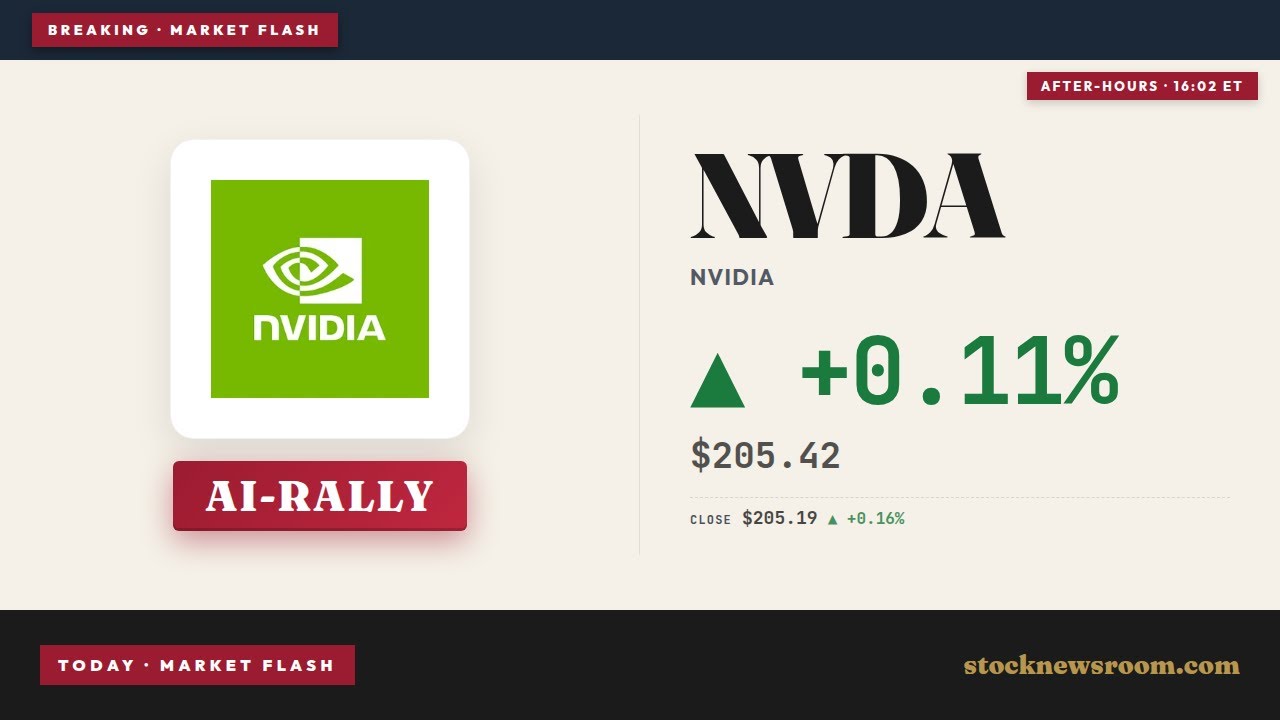
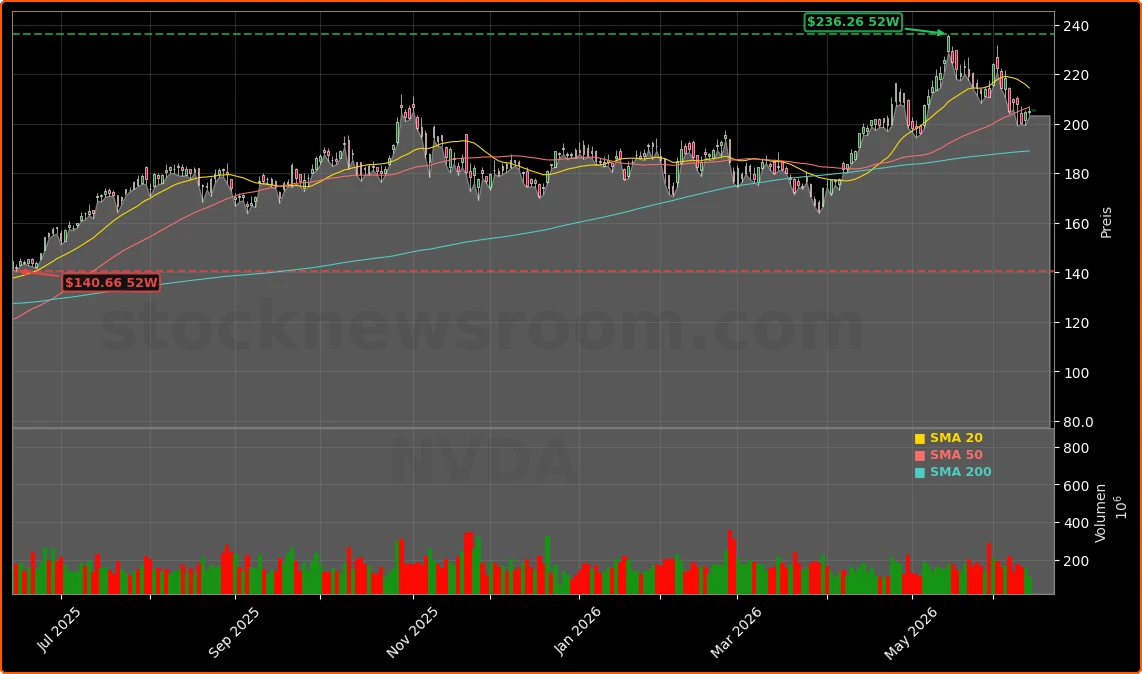
This week, NVIDIA Corporation closed at $205.19, unchanged from the prior Friday’s $205.10—a +0.0% weekly performance. The stock traded between a weekly low of $199.34 and a weekly high of $214.87, reflecting consolidation after a 7.8% monthly pullback. Price action was muted not due to lack of catalysts, but because the week’s defining developments were strategic, long-term, and capital-intensive—not quarterly earnings or near-term guidance. Monday’s 1.75% gain ($208.69) followed the South Korea announcements and a broad tech rally, while Wednesday’s 1.44% dip ($205.20) aligned with macro-driven semiconductor selloffs and Fed-rate concerns. Thursday and Friday saw modest recoveries, as the market digested Helix’s launch and Vera CPU news—both reinforcing NVIDIA’s infrastructure moat. The flat week masked extraordinary progress: a +0.0% price change belied a +100% surge in announced infrastructure capital, a credit upgrade, and 10+ new sovereign and hyperscaler partnerships.
How did Korea cement NVIDIA Infrastructure’s global footprint?
South Korea emerged as the week’s geographic anchor for NVIDIA Infrastructure. CEO Jensen Huang’s high-profile visit yielded coordinated, gigawatt-scale deals with SK Telecom, SK Hynix, and NAVER. SK Telecom will build Korea’s first gigawatt-scale AI cloud using the NVIDIA DSX platform, with the first AI factory scheduled for 2027. SK Hynix signed a multiyear technology agreement to co-develop next-generation HBM for AI factories—and confirmed it remains NVIDIA’s largest memory partner. NAVER will scale its GAK Sejong AI infrastructure from 55MW to gigawatt capacity on the DSX platform, targeting sovereign AI models and agentic services. Counterpoint Research analyst Tom Kang noted SK Hynix controls 57% of the global HBM market, making this partnership critical for supply-chain resilience. The Lee Jae Myung administration’s deployment of 260,000 NVIDIA GPUs for national AI infrastructure further cemented Korea as a sovereign AI linchpin.
What does Helix Digital Infrastructure mean for NVIDIA Infrastructure?
The launch of Helix Digital Infrastructure was the week’s most consequential infrastructure development—and a direct validation of NVIDIA Infrastructure as a system-level standard. Backed by $10 billion+ in long-duration capital from KKR, the Kuwait Investment Authority, and Vistra, Helix will serve as a single coordination point for hyperscalers’ data centers, power, and connectivity needs. Crucially, NVIDIA Corporation is not just an investor—it is the cornerstone strategic partner, deploying its DSX AI factory-aligned infrastructure to maximize tokens per watt and accelerate time-to-first-token. Helix CEO Adam Selipsky, former AWS CEO, stated: “Large users of digital infrastructure have an urgent need to reduce complexity and unlock new capacity.” This isn’t a chip deal—it’s an infrastructure orchestration play. S&P Global Ratings explicitly cited Helix’s formation as evidence of NVIDIA’s sustainable competitive advantage in its ‘AA’ upgrade—the highest rating ever assigned to a semiconductor company.
Why did analysts raise price targets amid flat price action?
Despite the quiet price action, analyst sentiment strengthened. Citigroup reiterated its $300 price target, citing Helix’s capital commitment as a “de-risking catalyst” for long-term infrastructure monetization. RBC Capital Markets lifted its target to $315, emphasizing that “NVIDIA Infrastructure is now a repeatable, bankable asset class—no longer just a chip story.” Needham raised its rating to Buy with a $270 target, noting the Vera CPU rollout and Korea deals “expand the TAM beyond data centers into physical AI and sovereign clouds.” BofA Securities highlighted NVIDIA’s 20.4x forward P/E—below the S&P 500’s 20.8x—as “a structural value signal for the AI infrastructure leader.” The consensus price target rose to $323.83, with 48 Buy and 10 Strong Buy ratings against just one Sell.
What catalysts dominate next week’s agenda?
Next week brings three high-impact catalysts. First, SpaceX’s IPO on Friday, June 12, will test investor appetite for AI infrastructure—and NVIDIA’s role as its foundational chip supplier. Second, SharonAI’s 72MW NVIDIA-powered AI factory in Australia launches, expanding sovereign AI infrastructure into the Asia-Pacific region. Third, NVIDIA’s Vera CPU becomes orderable by Chinese clients as early as August, directly targeting the $200 billion AI server CPU market and intensifying competition with Intel and Advanced Micro Devices. Investors will also monitor macro signals: the June NFIB optimism index (Tuesday), and any Fed commentary on rate policy following the 98.2% probability of no June hike.
Without SK’s partnership, today’s AI industry would not have developed as wonderfully as it has.— Jensen Huang, CEO of NVIDIA Corporation
Related Coverage: The NVIDIA Export Controls -6.2%: Senate Heat Hits Shares analysis details how U.S. policy risks are being offset by sovereign AI wins in Korea and the UK. Meanwhile, Broadcom Earnings at $22.2B: Record AI Revenue, Stock Tanks shows how NVIDIA’s full-stack approach contrasts with merchant-chip peers facing margin pressure. This week’s flat price action masked a profound acceleration in NVIDIA Infrastructure execution—where scale, sovereignty, and system integration now define the next phase of growth. For investors, the message is clear: NVIDIA Infrastructure is no longer a speculative bet on AI demand—it’s a globally deployed, capital-backed, credit-rated foundation for the next decade of intelligence. The +0.0% week was not stagnation. It was the calm before the infrastructure inflection.