
Could Palantir’s latest AI alliance turn federal security demands into the company’s biggest growth engine yet?

What Does the Palantir AI Partnership Enable?
The Palantir AI Partnership integrates Nvidia’s Nemotron open AI models with Palantir’s Sovereign AI Operating System — a hardened, air-gapped environment built on Foundry and Apollo. Unlike commercial cloud AI, this architecture ensures zero data exfiltration, real-time model governance, and agency-owned fine-tuning. For agencies managing nuclear infrastructure, intelligence analysis, or healthcare data for 2 million federal workers, it eliminates the trust gap between frontier AI capability and regulatory compliance. The solution is already in pilot at three U.S. Department of Defense components and two civilian agencies — with full-scale rollout expected before Q4 2026.
How Does This Shift the AI Competitive Landscape?
While Tesla and Apple focus on consumer-facing AI, and Meta builds open models for public research, the Palantir AI Partnership targets a $42B federal AI software market — one where security certification, not speed-to-market, dictates winners. Competitors like Palantir’s long-time peer C3.ai (AI) lack hardware co-engineering depth, and startups like Anduril struggle with enterprise-scale data orchestration. Nvidia, meanwhile, gains a strategic wedge into classified AI — a domain where AMD and Intel remain sidelined. RBC Capital Markets recently upgraded Palantir Technologies Inc. to ‘Outperform’, citing ‘unmatched federal AI integration velocity’ and raising its price target to $158.
Why Is This a Wall Street Inflection Point?
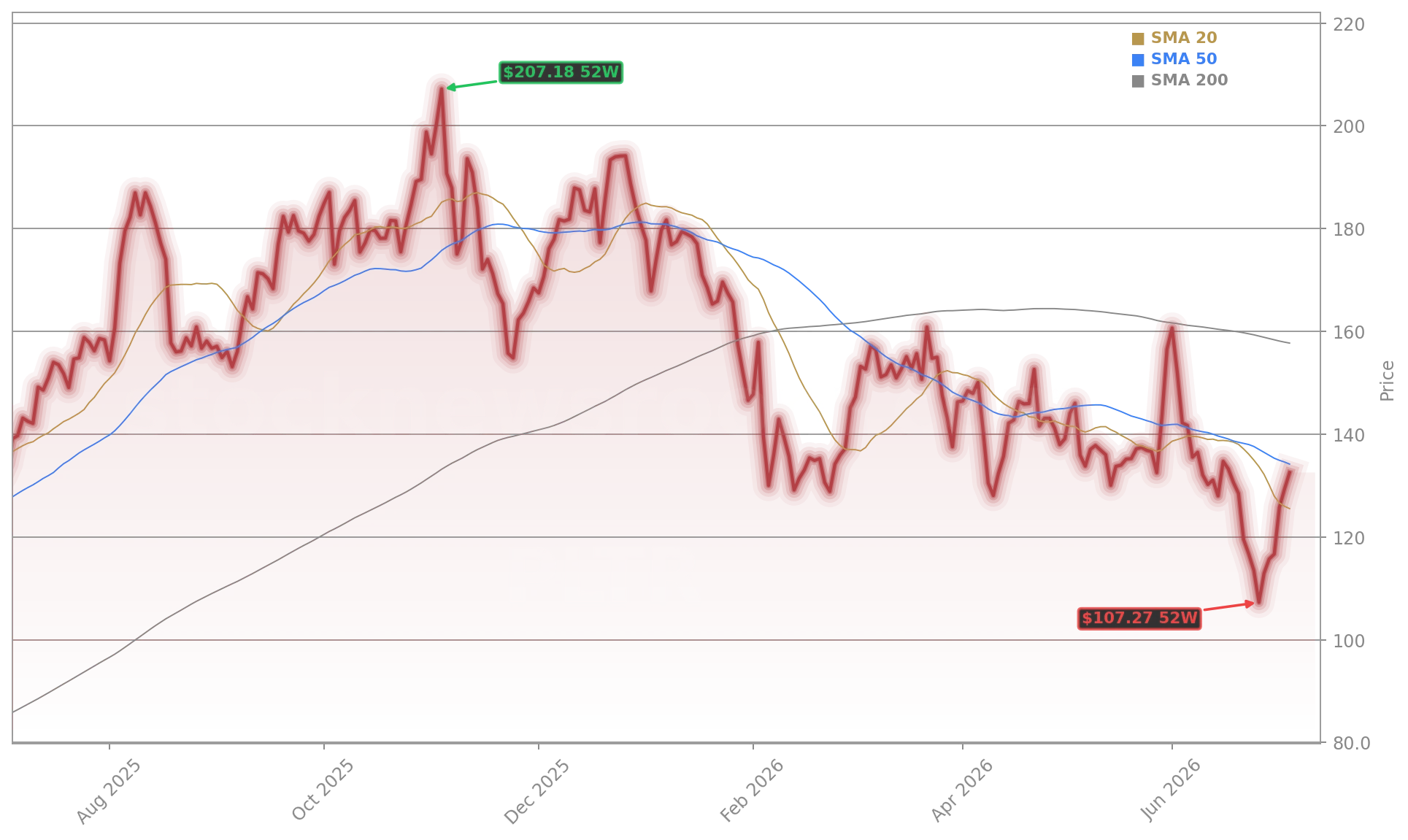
Palantir Technologies Inc. has shed over 20% year-to-date — despite $1.6B in AI-driven revenue — reflecting investor skepticism about monetization timelines. But the Palantir AI Partnership changes the calculus: it shifts revenue from services to high-margin, multi-year platform licensing. Goldman Sachs notes that sovereign AI contracts carry 70%+ gross margins and 5–7-year renewal cycles — a stark contrast to the 12–18-month cloud AI deals dominating the S&P 500’s tech cohort. With over 300 U.S. federal agencies eligible for adoption, even 15% penetration implies $6B+ in recurring revenue by 2028. That’s why Morgan Stanley added Palantir Technologies Inc. to its ‘Top Idea’ list last week — calling the Palantir AI Partnership ‘the most consequential federal AI contract framework since the launch of AWS GovCloud.’
What’s Next for Palantir and Nvidia?
The next phase includes joint certifications for FedRAMP High and IL5 — expected by September 2026 — unlocking access to intelligence community and nuclear command systems. Simultaneously, Palantir is embedding its AIP into legacy defense systems like those used by Lockheed Martin and Northrop Grumman, enabling AI-augmented mission planning without data migration. Bloomberg reports that the Department of Energy has already allocated $340M in FY2026 funding for sovereign AI pilots — with Palantir and Nvidia as the sole pre-qualified vendors. Citigroup analysts project that Palantir Technologies Inc. will capture 40% of classified AI software spend through 2027 — a 12-point upward revision from its prior forecast.
Related Coverage
AI companies are obsessed with selling tokens instead of delivering ROI, and enterprises are pushing back on rising AI costs.— Alex Karp, CEO of Palantir Technologies Inc.
For deeper analysis of the financial implications, see Palantir AI Partnership: $1.6B Revenue Fuels AI Repricing, which breaks down how classified contracts are reshaping Wall Street’s revenue models for sovereign AI. The article also explores why this Palantir AI Partnership may trigger a sector-wide repricing of defense AI software — especially for firms lacking Palantir’s operational integration depth.