Can Pfizer convince Wall Street this CFO change is about continuity, not a deeper warning on execution and growth?

What Does the Pfizer CFO Transition Mean for Wall Street?
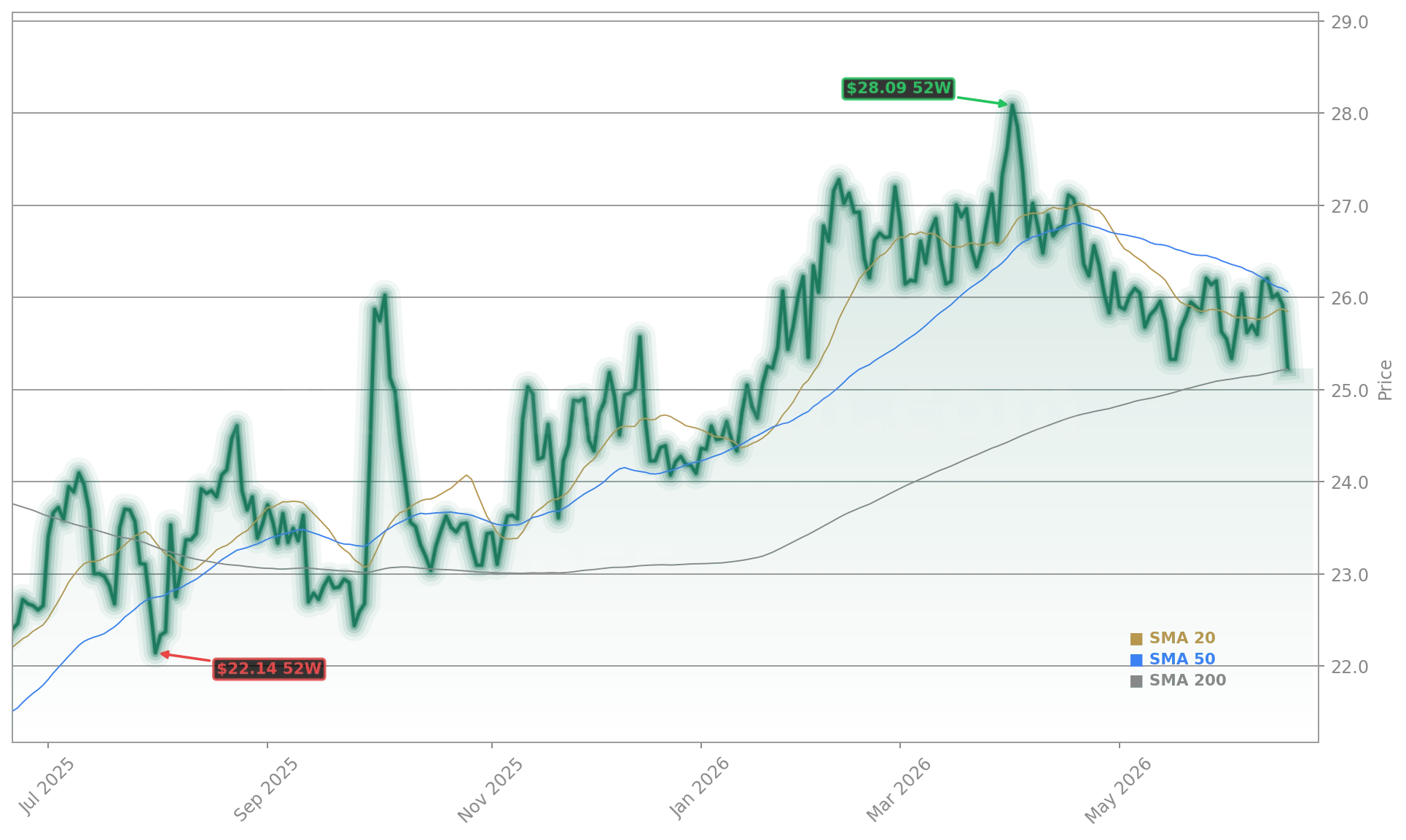
The Pfizer CFO Transition triggered an immediate 2.87% intraday decline in Pfizer Inc. (PFE) to $25.23 — its weakest level since December 31, 2025. With the stock down 12.45% from its 52-week high of $28.55 and trading 91% of the average analyst target ($29.19), the move reflects more than routine leadership change. It underscores investor concern about execution continuity amid three major acquisitions — Seagen, Biohaven, and Metsera — all integrated under Denton’s watch. While Denton helped stabilize post-pandemic revenue streams, his departure coincides with slowing momentum in key growth vectors. The S&P 500 healthcare sector has underperformed the NASDAQ by 140 basis points year-to-date, intensifying pressure on capital-light pharma models like Pfizer’s.
Who Is Cecile Guegan — and Why Does Her Profile Matter?
Cecile Guegan brings over two decades of institutional knowledge, having joined Pfizer in 2005 and risen through finance roles in R&D, regional operations, and the biopharmaceutical business unit. Since 2022, she has overseen financial reporting for Pfizer’s largest therapeutic segment — including oncology, rare disease, and immunology — and led the financial integration of Seagen in 2024. Her appointment signals continuity, not disruption: she’s already embedded in the company’s most complex growth engines. Still, investors are watching closely whether her deep operational experience translates to strategic financial leadership — especially as Pfizer navigates the $62.5 billion full-year 2026 revenue target amid pricing pressure from the Inflation Reduction Act and intensifying competition from Novo Nordisk and Eli Lilly in obesity therapeutics.
How Does This Compare to Peer CFO Moves in 2026?
Unlike recent CFO exits at Merck (where Robert Davis moved to a board role) or Johnson & Johnson (which promoted internally), Denton’s move to consumer goods is rare in Big Pharma — and mirrors a broader trend of finance leaders migrating to sectors with stronger margin visibility. Compare this to Bristol Myers Squibb’s CFO transition in Q1 2026, where the new leader emphasized R&D capital efficiency; or AbbVie’s 2025 CFO appointment, which prioritized pipeline monetization. Pfizer’s search for a permanent CFO will be closely watched by RBC Capital Markets, which recently reiterated its ‘Outperform’ rating citing ‘strategic optionality’ but flagged ‘leadership continuity’ as a near-term risk factor. Citigroup analysts noted in a June 17 research note that ‘a CFO with M&A integration depth — not just treasury expertise — will be essential to unlocking value from the $43 billion in acquired assets.’
What’s Next for Pfizer’s Financial Strategy and Stock?
The Pfizer CFO Transition occurs just weeks before Q2 2026 earnings — expected July 30 — and as the company reaffirms its full-year adjusted EPS guidance of $2.80–$3.00. Yet the stock remains in a technical downtrend: trading below all major moving averages, with RSI near neutral at 48.91 and key support at $25.00 now under test. Analysts at Morgan Stanley point to ‘execution risk on obesity pipeline timelines’ as a key catalyst for near-term volatility — especially with Novo Nordisk’s Wegovy hitting 3 million U.S. prescriptions in just 22 weeks. Meanwhile, the Pfizer CFO Transition has already drawn attention from short sellers, who cite elevated goodwill ($68.2 billion) and rising SG&A costs as potential red flags during leadership transitions. The company’s Form 8-K filing explicitly states Denton’s departure is unrelated to financial or operational issues — but Wall Street remains focused on whether Guegan can accelerate cost discipline without compromising pipeline investment.
Pfizer CFO Transition: What Investors Should Watch Next
Investors should monitor three developments: first, the timeline and profile of the permanent CFO search — internal vs. external, M&A-heavy vs. capital markets–focused; second, whether Q2 2026 earnings show sequential improvement in oncology commercialization and Seagen integration metrics; and third, any update on the Phase 3 Lyme vaccine data — which recently delivered >70% efficacy but failed to lift sentiment. The Pfizer CFO Transition is not just a personnel change — it’s a stress test of Pfizer’s ability to execute complex growth while navigating a fragmented, AI-accelerated biotech landscape where financial leadership directly influences R&D velocity and investor confidence.
Dave has been a steady and trusted steward of Pfizer’s financial health, and we are grateful for his leadership, especially during some of the most important business transactions in our recent history, including Seagen, Biohaven, and Metsera.— Albert Bourla, Chairman and CEO, Pfizer Inc.
Related Coverage: Can the Pfizer Lyme vaccine’s >70% efficacy data revive sentiment around PFE just as investors write off its post-COVID growth story? Meanwhile, Novo Nordisk Wegovy has just hit 3 million U.S. prescriptions in 22 weeks, forcing Wall Street to rethink the entire obesity trade — a market where Pfizer’s pipeline remains unproven but strategically vital.