Can Ripple’s push toward a $1 billion run rate turn XRP’s latest surge into something more than another crypto headline?

What Does $1 Billion Mean for Ripple’s Revenue Strategy?
Ripple’s $1 billion revenue run rate target — confirmed by CEO Brad Garlinghouse — marks the most concrete milestone yet in its multi-year shift from crypto-native protocol developer to regulated fintech infrastructure provider. Crucially, the figure excludes all XRP-related gains, reinforcing a clean separation between Ripple’s operating business and the XRP token’s market performance. That distinction matters deeply for U.S. institutional investors wary of regulatory overhang. With the acquisition of Hidden Road now closed — a prime brokerage firm clearing $3 trillion annually — Ripple gains immediate access to credit, custody, and settlement services for banks and hedge funds. That acquisition alone adds ~$350 million in annualized revenue potential, according to internal projections cited by Bloomberg. The move positions Ripple directly against traditional players like Apple’s Apple Pay infrastructure and Tesla’s emerging financial services arm — but with blockchain-native settlement rails.
How Is Ripple Building Revenue Beyond Cross-Border Payments?
Ripple’s Revenue Strategy now spans four interlocking pillars: enterprise payments (On-Demand Liquidity), stablecoin infrastructure (RLUSD), institutional custody (via Hidden Road), and AI-native financial primitives (x402 protocol + XRPL AI Starter Kit). RLUSD — Ripple’s U.S. dollar-pegged stablecoin — is no longer just a settlement layer. It’s now embedded in machine-to-machine payment flows, including pilot deployments with logistics AI agents executing real-time FX conversions on the XRP Ledger. Meanwhile, the newly launched XRPL AI Starter Kit enables autonomous agents to manage wallets, monitor balances, and initiate XRP or RLUSD payments with near-zero human intervention — a capability that could reshape treasury operations for Fortune 500 corporates. This expansion directly supports the $1 billion target: each new RLUSD integration adds recurring revenue from custody fees, settlement spreads, and API licensing — all recurring, scalable, and compliant with U.S. banking regulations.
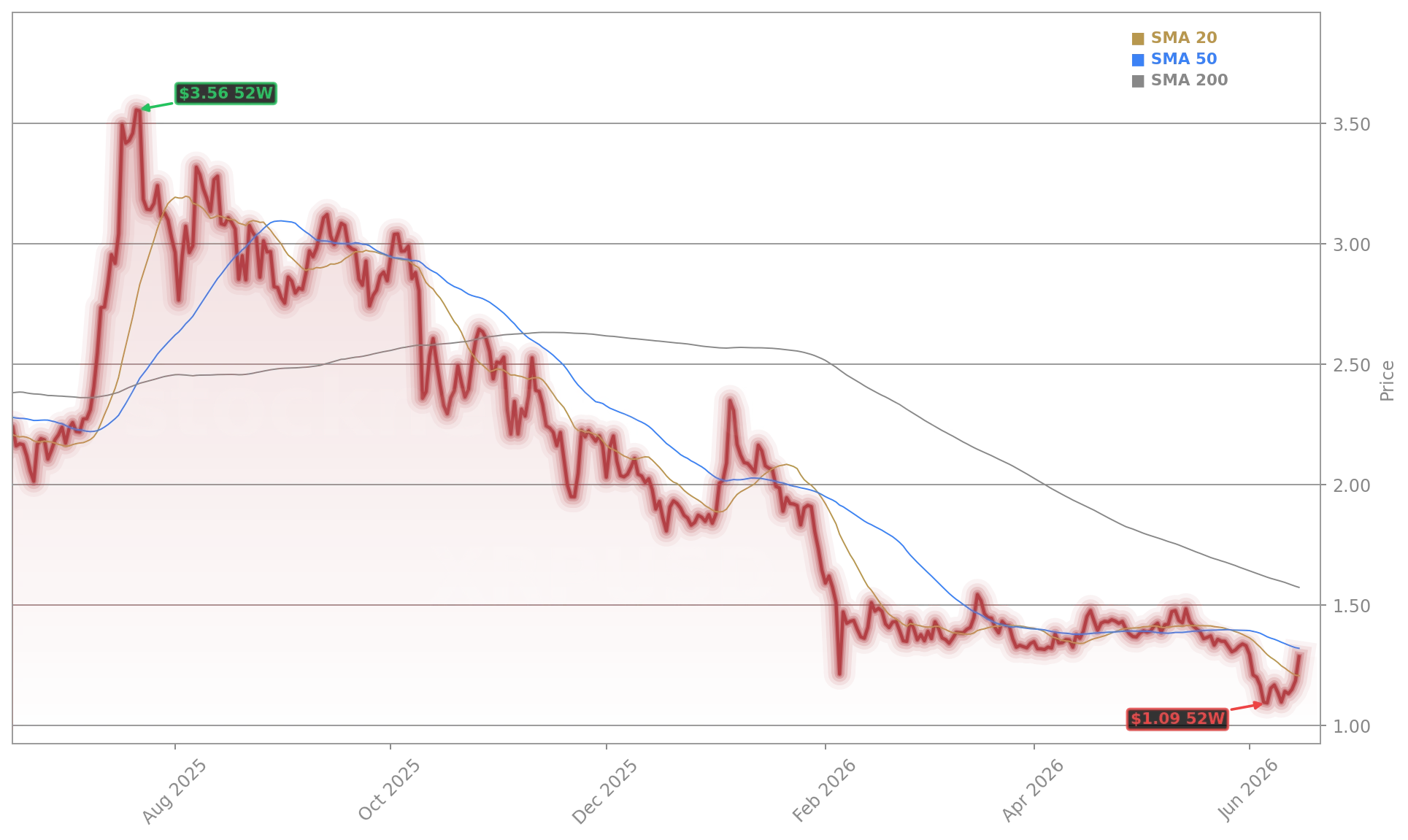
Why Is XRPUSD Rallying While Ripple Doubles Down on Infrastructure?
XRPUSD surged 8.47% to $1.29 on Monday, June 15 — its strongest single-day gain in over six weeks — even as broader crypto markets traded sideways. The rally coincides with two key catalysts: first, T. Rowe Price’s SEC-approved active crypto ETF (TKNZ) launched with XRP as a core holding, opening a new distribution channel for 401(k) and advisor-driven capital; second, sustained XRP Ledger activity during the recent price correction — transaction volume remained 40% above dormant-network thresholds, and payment counts held steady. This divergence — falling price but resilient on-chain usage — validates Ripple’s thesis that XRP demand is increasingly driven by utility, not speculation. Analysts at RBC Capital Markets recently upgraded Ripple’s long-term outlook, citing ‘structural adoption of RLUSD in institutional treasury stacks’ as a key driver for 2026–2027 revenue visibility.
How Does the XRP Ledger’s 15-Year DEX Legacy Fit Into Ripple’s Revenue Strategy?
This problem was solved 15 years ago on the XRP Ledger (the very first DEX in existence). And it seems every blockchain since keeps trying to re-solve it.— Matt Hamilton, former Ripple developer
Former Ripple developer Matt Hamilton recently highlighted a critical point: the XRP Ledger hosts the world’s oldest continuously operating decentralized exchange (DEX), live since 2012 — predating Ethereum by two years. Its order-book-based, non-AMM design solves front-running and middleman problems that newer blockchains like Solana are only now addressing. While Ripple doesn’t monetize the DEX directly, its existence strengthens the XRP Ledger’s credibility as a high-reliability, low-latency settlement layer — a key selling point for banks evaluating RLUSD integrations. That infrastructure advantage feeds directly into Ripple’s Revenue Strategy: trusted rails attract regulated clients, who then pay for custody, compliance, and settlement services. As Citigroup noted in its June 2026 fintech infrastructure report, ‘Ripple’s moat isn’t XRP — it’s the 14-year track record of uptime, auditability, and regulatory engagement baked into the XRPL.’