
Will the Tesla SpaceX IPO unlock a new Musk premium, or expose just how fragile Tesla’s valuation has become?

What does the Tesla SpaceX IPO mean for Tesla’s valuation?
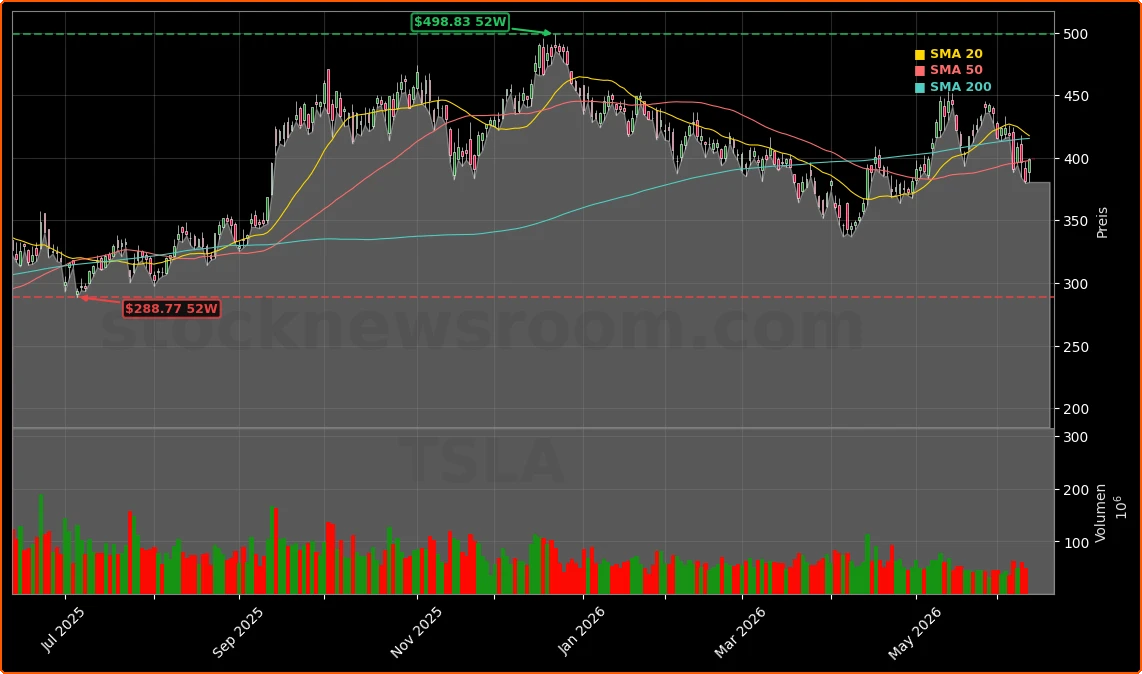
Oppenheimer has raised Tesla’s price target to $325, citing stronger-than-expected stationary storage demand and vehicle sales — but explicitly flagged Tesla SpaceX IPO speculation as a key near-term catalyst. The firm noted that CEO Elon Musk’s dual-public-currency strategy could improve capital access, though governance concerns persist. Tesla now trades at nearly 200x forward earnings — more than triple the S&P 500’s 22.2x — a premium increasingly tied to Musk’s broader ecosystem rather than auto fundamentals alone. Meanwhile, Ron Baron’s Baron Partners Fund holds Tesla and soon-to-be-public SpaceX at roughly 40% of its portfolio, underscoring how deeply the Tesla SpaceX IPO thesis is embedded in top-tier active management.
How are investors reacting ahead of SpaceX’s $1.77 trillion debut?
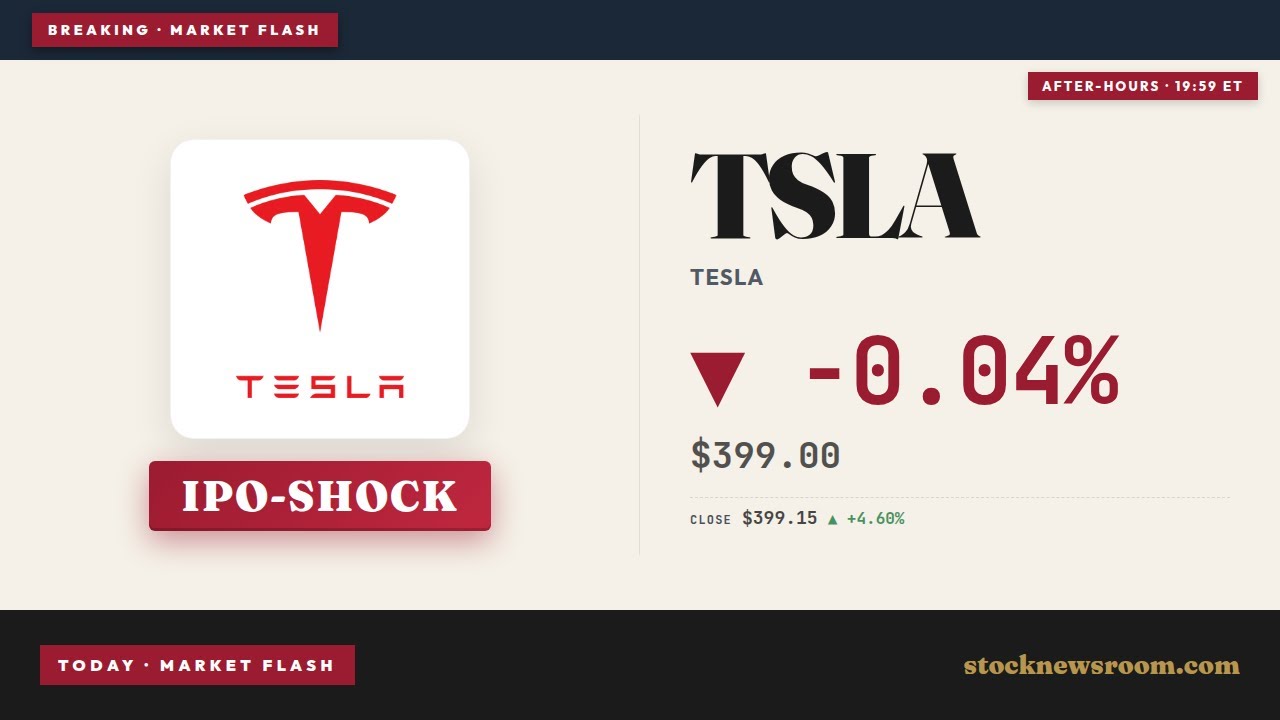
Retail interest in SpaceX has already exceeded $70 billion — 2.4x the record set by Saudi Aramco’s 2019 IPO — according to The Kobeissi Letter. That surge is driving tangible portfolio shifts: Gary Black of The Future Fund LLC expects Tesla shareholders to exit positions to participate in SPCX, though he calls the IPO ‘richly valued’ and plans to avoid it. Meanwhile, NYU Stern’s Aswath Damodaran cited valuation concerns and the $28.5 trillion ‘market opportunity’ claim in SpaceX’s prospectus as red flags. Notably, Tesla shares rose 4.5% on June 12 — outpacing the NASDAQ — as traders priced in both merger speculation and the gravitational pull of Musk’s capital markets moment.
Is a Tesla-SpaceX merger realistic — or just narrative fuel?
Elon Musk holds 85% control of SpaceX via Class B shares but less than 20% of Tesla — a structural imbalance that fuels merger talk. Analysts point to TerraFab, the joint semiconductor venture with ASML, as tangible proof of integration. Yet governance remains a hurdle: Akademiker Pension excluded Tesla last year over inadequate board oversight, and Senator Elizabeth Warren has called for delaying the SpaceX IPO over ‘misleading’ accounting and opaque governance structures. A full merger would likely convert Tesla shares into SpaceX stock — trapping investors in a 180-day IPO lockup. That risk is why Oppenheimer’s note warns of ‘extreme stock and operational volatility’ — a stark contrast to Tesla’s own $385.63 valuation, which reflects growing skepticism about its standalone EV growth amid BYD’s global leadership.
Where does Tesla stand alongside the Magnificent Seven?
Tesla remains the only Magnificent Seven member trading at triple-digit forward P/E — dwarfing NVIDIA’s 38x, Apple’s 32x, and Meta’s 28x. Its removal from recent forward-PE charts underscores how outlier its multiple has become. While the group collectively drives over 30% of S&P 500 returns, Tesla’s performance now hinges less on vehicle deliveries and more on AI infrastructure bets — Optimus robot production in Austin, TerraFab chip output, and Starlink-linked AI compute. That pivot explains Broadstone Net Lease’s $39.8 million build-to-suit Las Vegas facility: it’s not just a service center — it’s infrastructure for Tesla’s AI and robotics future. Yet with SpaceX IPO day looming, Tesla’s role in the Magnificent Seven may evolve from ‘auto disruptor’ to ‘Musk ecosystem gateway’.
What’s next for investors holding Tesla stock?
Oppenheimer’s $325 price target implies 18% downside from current after-hours levels — a sobering contrast to its $190 SPCX target, which forecasts 41% upside from the $135 IPO price. That divergence signals Wall Street’s growing bifurcation: Tesla’s valuation is increasingly hostage to Musk’s capital markets execution, not its quarterly margins. For U.S. investors, the immediate question isn’t whether Tesla will merge — it’s whether the Tesla SpaceX IPO triggers a broader reallocation from legacy tech into next-gen infrastructure. With SpaceX’s debut set for Friday, June 12 at 15:30 CET (9:30 ET), the NASDAQ futures surge of 135 points confirms this is no longer speculation — it’s a market-moving event.
We see it as the only vertically-integrated AI company with the required capital, data, LLMs, hardware, manufacturing and engineering talent.— Oppenheimer Holdings Inc.
Related coverage: Tesla’s recent FSD approval in Denmark — a regulatory win that masks mounting valuation pressure as Musk’s empire expands — is analyzed in Tesla FSD Denmark -2.9%: Regulatory Win, Market Warning. Meanwhile, Alibaba’s $1.5 billion Pupu acquisition — a move testing regulatory tolerance in global tech consolidation — is under scrutiny in Alibaba Acquisition $1.5B Deal Puts BABA Under Pressure.