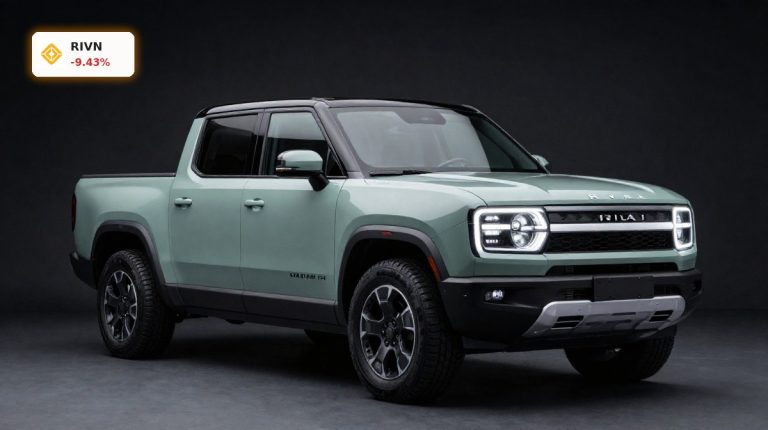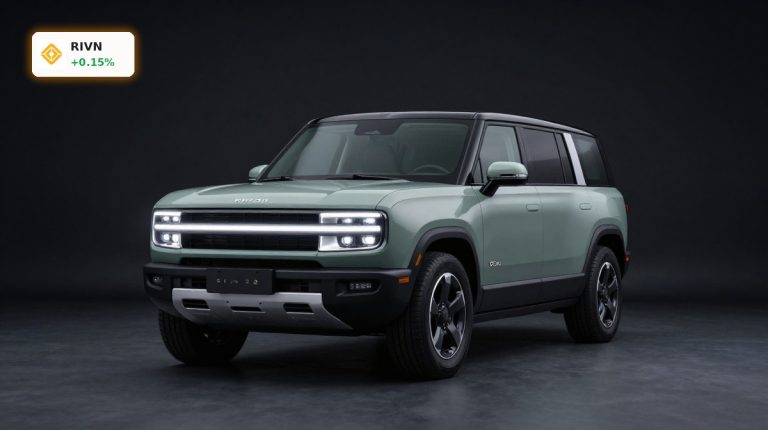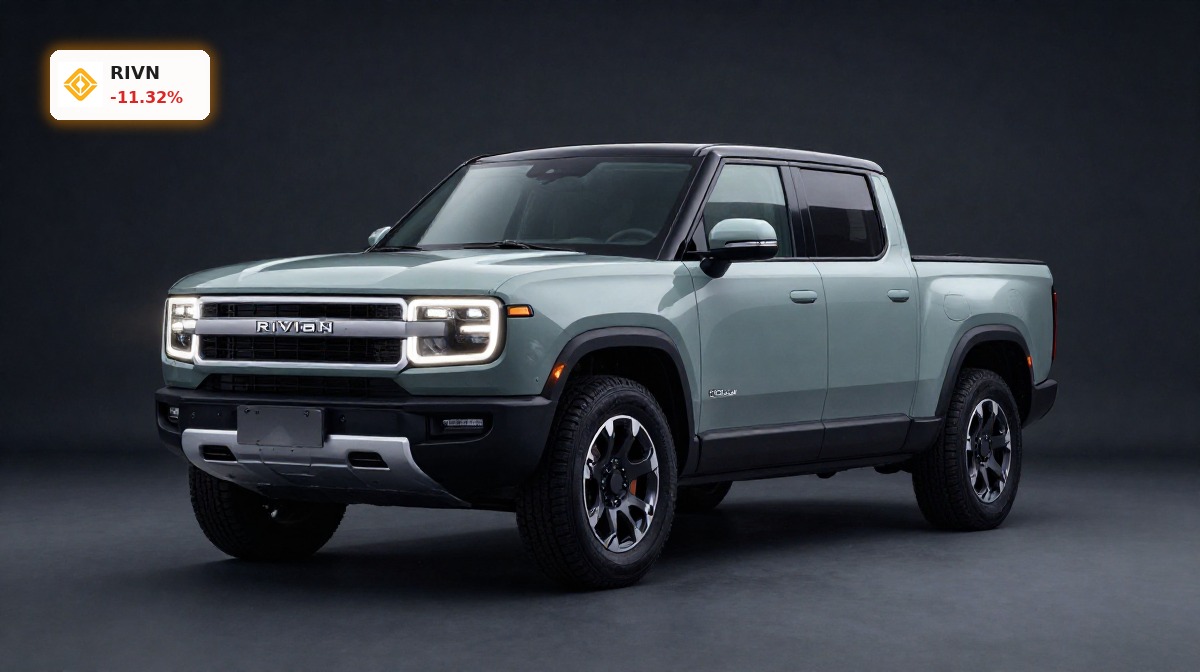

Can Rivian’s latest capital raise secure its growth plans without pushing investors too far on dilution?

Why Did Rivian Automotive, Inc. Launch This Rivian Share Offering?
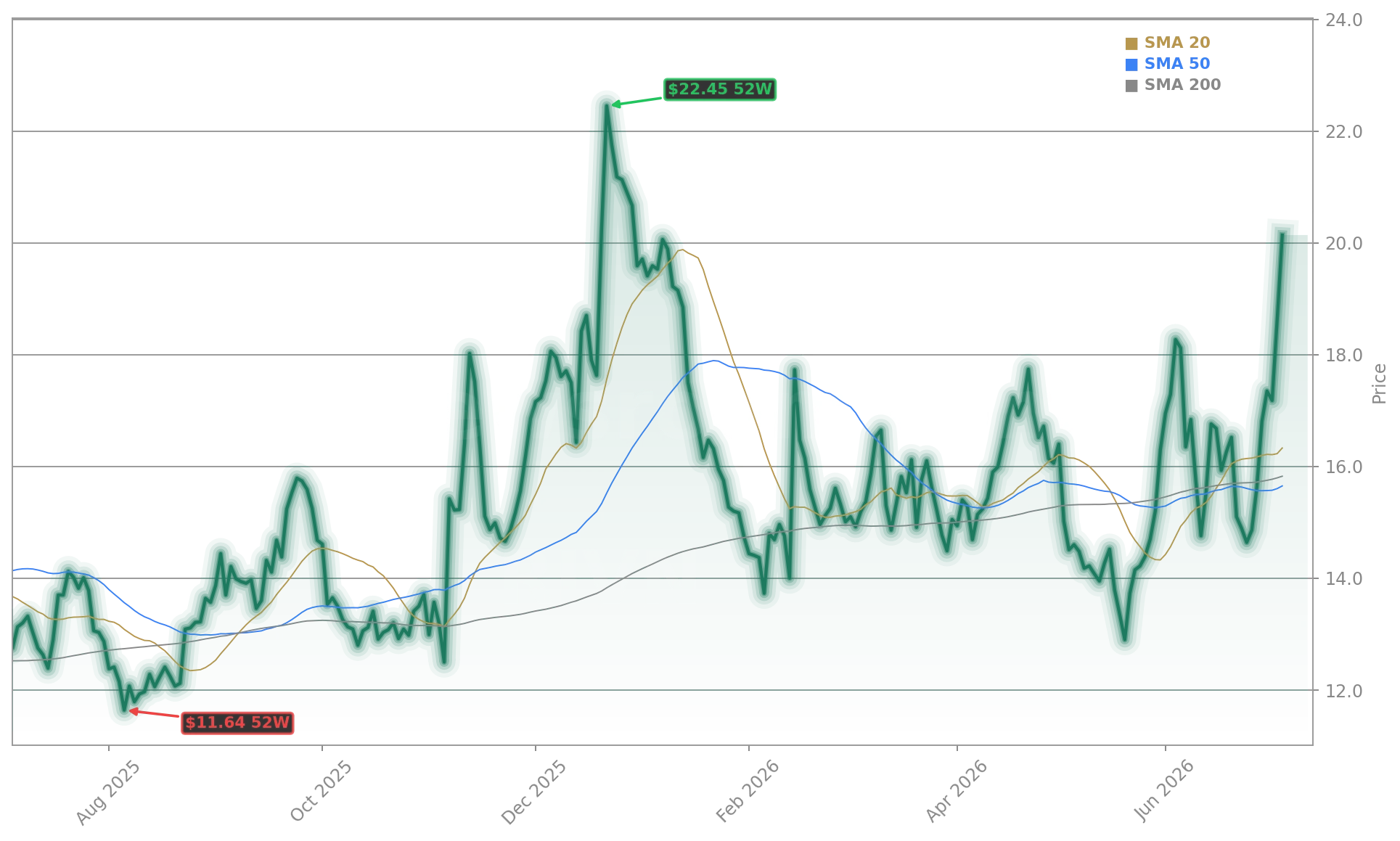
Rivian Automotive, Inc. initiated a public equity offering of 75 million Class A common shares at $20.14—the prior day’s close—raising roughly $1.51 billion. Underwriters, including Goldman Sachs, J.P. Morgan, and Morgan Stanley, received a 30-day option to purchase an additional 11.25 million shares. The proceeds will fund equity contributions tied to Rivian’s April 2026 amended loan agreement with the U.S. Department of Energy, directly supporting the $5 billion Georgia manufacturing campus. While the plant won’t begin production until 2028, the Rivian Share Offering is a strategic capital deployment to de-risk the build-out and meet near-term covenant obligations. The timing—immediately following an 8.1% rally—underscores management’s focus on liquidity over sentiment.
How Do Q2 Numbers Compare to Tesla and Other EV Makers?
Rivian Automotive, Inc. pre-reported Q2 revenue of $1.55–$1.65 billion, well above the $1.45 billion consensus from LSEG analysts and a 27% jump year-over-year. That outperformance stands in contrast to Tesla’s Q2 revenue growth of just 5%—and to Tesla’s margin compression amid price cuts. While NVIDIA’s AI-driven revenue surge continues to lift the broader NASDAQ, Rivian’s gains reflect hard-won vehicle execution: deliveries rose 42% sequentially, and cash reserves climbed to $5.3 billion from $4.8 billion in Q1. Still, gross margin remains at just 9%, lagging behind Apple’s hardware peers and raising questions about scalability before the R2 platform launch.
What Do Analysts Say About Dilution vs. Growth?
Analyst reactions reflect the duality of Rivian’s position. JPMorgan raised its price target from $9 to $15 but maintained an “Underweight” rating, citing near-term dilution risk from the Rivian Share Offering. In contrast, Baird reaffirmed its “Outperform” rating with a $23 price target, highlighting the Georgia plant’s potential to drive vehicle-level cash flow positivity by 2029. Morgan Stanley noted that while the offering adds ~11% to the share count, it eliminates uncertainty around DOE loan compliance—a key overhang for institutional holders. The divergence underscores how U.S. portfolio managers are reassessing Rivian not as a pure-play EV stock, but as a capital-intensive infrastructure play embedded in the S&P 500’s broader energy transition theme.
Is Rivian Automotive, Inc. on Track to Turn Cash Flow Positive?
CEO RJ Scaringe told CNBC that Rivian has “started to really reduce our burn rate”—a critical shift as capital expenditures rose to $372 million in Q1 2026 from $338 million a year earlier. The Georgia facility is central to that inflection: designed to produce SUVs, pickups, robotaxis, and delivery vans, it aims to deliver the volume needed to lift gross margins above 20% by 2030. But the path remains steep. Net loss narrowed to $416 million in Q1—still deep red—and R&D spending is set to surge for autonomy and next-gen platforms, prompting Rivian to suspend its 2027 profitability target. For Wall Street, the question isn’t whether Rivian can scale—but whether investors will tolerate continued dilution to get there.
Georgia brings the volume to generate the gross margin for the vehicle sales that covers everything.— RJ Scaringe, CEO of Rivian Automotive, Inc.
Related Coverage: For deeper analysis of how this equity raise reshapes Rivian’s capital structure and investor base, see Rivian Share Offering: $1.5B Raise Sparks 11.25% Drop, where Editor-in-Chief Maik Kemper details the Georgia plant’s margin implications and why the DOE loan terms forced this precise timing.