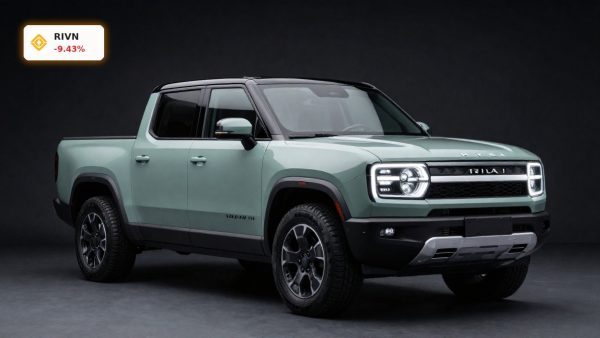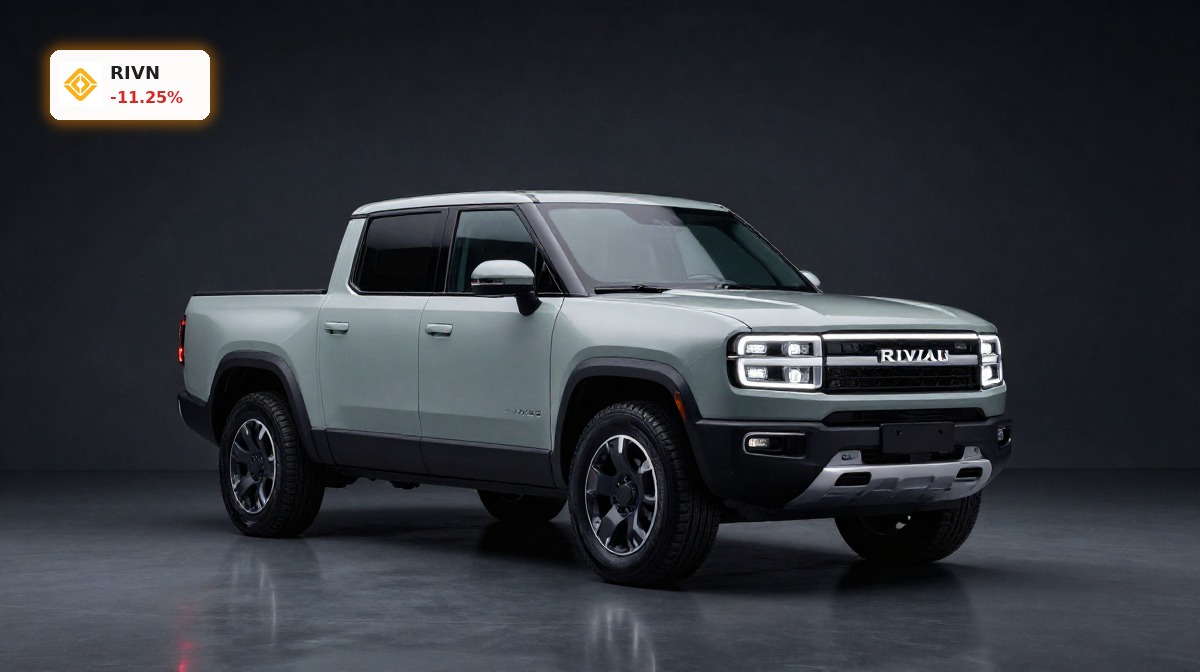

Why did Rivian raise $1.5 billion just as its quarterly numbers started to look stronger?

Why Did Rivian Automotive, Inc. Launch This Rivian Share Offering?
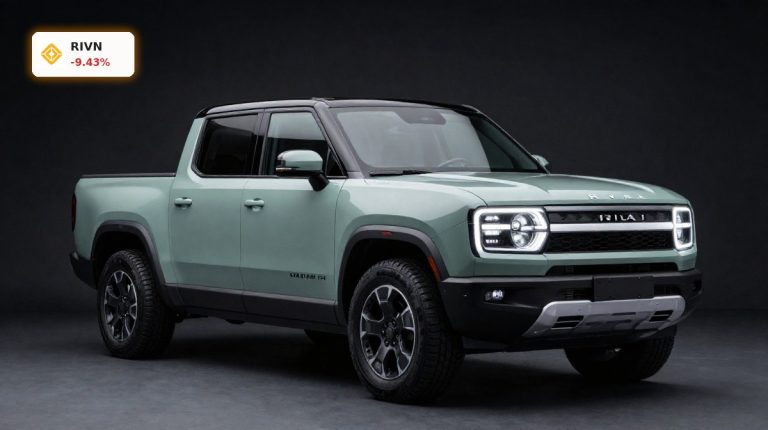
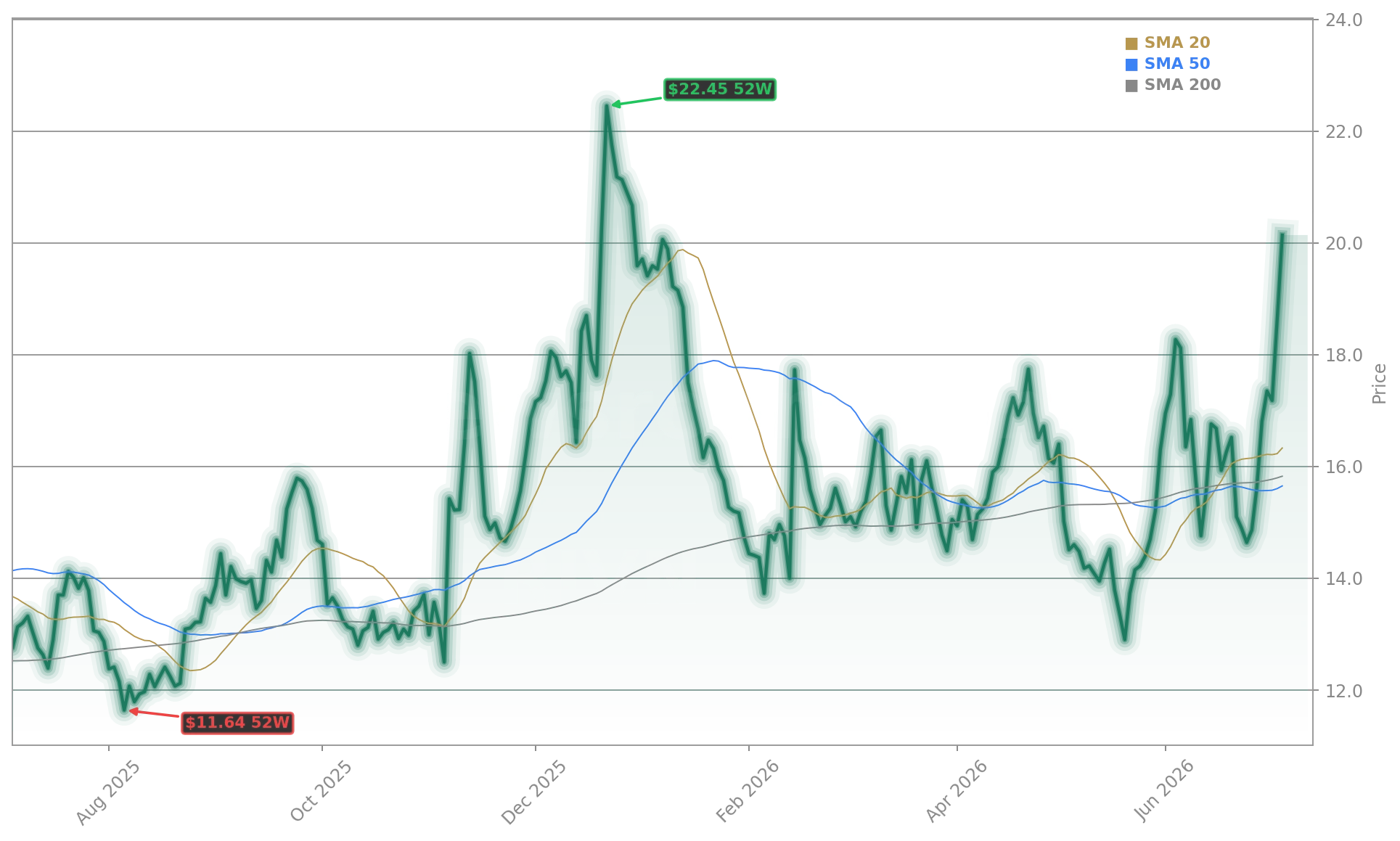
Rivian Automotive, Inc. initiated a $1.5 billion equity raise — 75 million shares priced at $20.14, with a 30-day greenshoe option for an additional 11.25 million shares — to meet capital requirements under its April 2026 amended loan agreement with the U.S. Department of Energy. The funds are earmarked for general corporate purposes, with explicit mention of equity injections needed to maintain compliance with the Georgia facility financing terms. While the Georgia plant remains critical to long-term margin expansion — CEO RJ Scaringe told CNBC it will ‘bring the volume to generate the gross margin for vehicle sales that covers everything’ — the timing of the Rivian Share Offering triggered immediate dilution concerns. Unlike traditional debt financing, this equity move directly impacts existing shareholders’ ownership stakes and near-term EPS trajectories, a dynamic Wall Street priced in aggressively.
How Did Q2 Fundamentals Compare to the Rivian Share Offering Impact?
Paradoxically, Rivian Automotive, Inc. reported strong preliminary Q2 2026 metrics just before the offering: revenue projected between $1.55 billion and $1.65 billion — well above the $1.45 billion consensus and a 27% jump year-over-year. Cash reserves rose to $5.3 billion, up from $4.8 billion in Q1. Yet those positives were eclipsed by the offering’s mechanics. The market’s reaction reflects a classic tension in high-growth EV investing: investors reward scale and execution but penalize capital structure risk. For comparison, Tesla’s 2023 equity raises triggered similar short-term selloffs despite strong deliveries, while NVIDIA’s capital-light model avoids such dilution entirely. With gross margin still at just 9% in Q1 2026 — down from 17% a year earlier — Rivian Automotive, Inc. remains in a high-burn, low-margin phase where every dollar of dilution carries outsized weight.
What Do Analysts Say About the Rivian Share Offering?
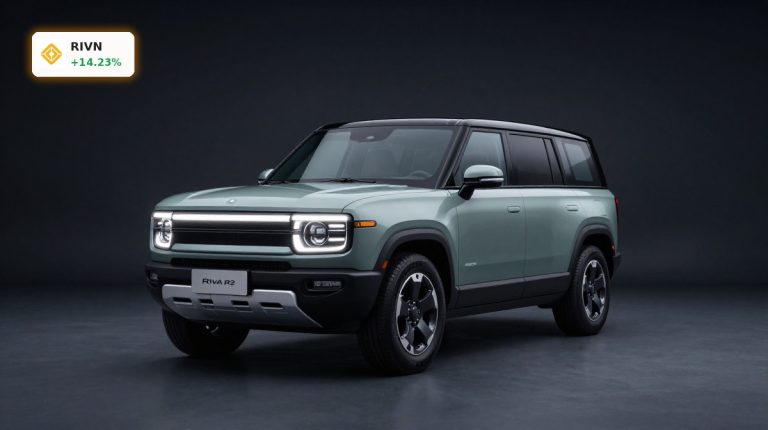
Wall Street’s response is split — a clear signal of the fundamental-versus-structural tension. JPMorgan lifted its price target from $9 to $15 but maintained its ‘Underweight’ rating, citing persistent cash burn and execution risk. Baird reaffirmed its ‘Outperform’ rating with a $23 price target, emphasizing the R2 platform’s mass-market potential and Georgia’s path to vehicle-level cash flow positivity. Meanwhile, Goldman Sachs, one of the offering’s lead underwriters, has not adjusted its stance publicly — a notable silence given its dual role. This divergence underscores why the Rivian Share Offering is more than a financing event: it’s a litmus test for investor confidence in Rivian Automotive, Inc.’s capital discipline and path to self-sustaining growth.
How Does This Affect U.S. Portfolios and the NASDAQ?
Rivian Automotive, Inc. is a top-100 NASDAQ constituent and a key barometer for EV sentiment. Its 11.25% intraday drop occurred while the broader NASDAQ rose 0.4% — highlighting isolated, company-specific risk. For U.S. investors, the Rivian Share Offering adds near-term volatility to an already challenging EV subsector, where Apple’s rumored autonomous vehicle delays and sector-wide margin pressure continue to weigh. With Rivian down 12.2% year-to-date — from $19.78 on January 2 to $17.35 on June 30 — the offering compounds pressure on long-term holders. Yet it also signals confidence: management chose to raise capital at a relative high ($20.14), not a low, suggesting belief in continued execution momentum despite the dilution cost.
Related Coverage: Rivian’s billion-dollar capital raise has ignited fresh debate on sustainability — Rivian Stock Offering -9.4% After $1.2B Equity Raise examines whether this move strengthens Rivian’s EV future or deepens dilution fears ahead of the July 30 earnings report.
Georgia brings the volume to generate the gross margin for the vehicle sales that covers everything.— RJ Scaringe, CEO of Rivian Automotive, Inc.
Rivian Automotive, Inc. remains a high-conviction, high-risk position for growth-focused portfolios. The Rivian Share Offering is a necessary step to fund the Georgia plant — but it also resets the timeline for profitability and investor patience. The next major catalyst is the full Q2 earnings release on July 30, which will clarify margin trajectory, R2 platform progress, and updated capital burn forecasts. For long-term investors, disciplined position sizing and close monitoring of vehicle-level cash flow metrics will be critical.