Are Seagate Earnings signaling a one-off AI hype spike or the start of a structurally higher era for data-center storage?

How are Seagate Earnings reshaping the stock story?
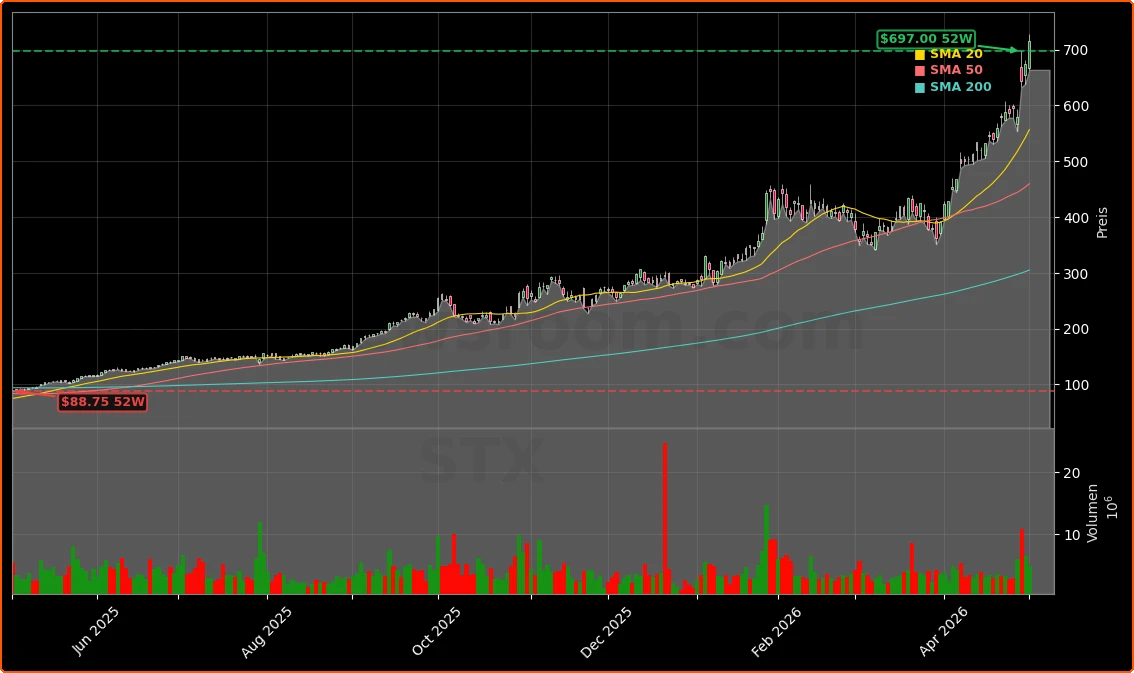
The latest Seagate Earnings have turned what was already a powerful recovery story into one of the most closely watched AI infrastructure plays on the NASDAQ. The stock now trades around $714.55, up 6.16% on the day and far above its 52‑week low of roughly $89.90, though still below the recent year high near $697 that was recorded earlier in the week, underscoring just how explosive the move has been. Over the past year, Seagate has gained about 600%, with an additional 11% advance just in the last week, as investors price in a multi‑year upgrade cycle in data‑center storage.
Under the hood, the most recent Seagate Earnings release showcased a dramatic improvement in cash generation. Free cash flow reached about $953 million, the highest level in more than a decade, giving management the flexibility to clean up the balance sheet and invest in next‑generation products. That cash was partially deployed to retire roughly $641 million of debt, helping equity swing back into positive territory at around $1.1 billion. For a company that had long been criticized for its leveraged profile, this marks a major shift that directly fed into the fresh credit upgrade.
Why did Seagate win an investment‑grade upgrade?
The improved fundamentals prompted Fitch Ratings to lift Seagate’s credit rating to investment‑grade status, citing the stronger balance sheet and markedly better profitability. This upgrade matters for equity investors because it typically lowers funding costs, widens the pool of institutional buyers, and can reduce perceived downside risk in cyclical downturns. For income‑focused shareholders, it also underpins the sustainability of the dividend, which currently stands at $0.74 per share for the upcoming payout scheduled for July 7, 2026, to shareholders of record as of June 24.
Seagate has also used the Seagate Earnings momentum to reset expectations on growth. Management now targets at least 20% annual revenue growth over the long term, up from prior guidance calling for only low‑ to mid‑double‑digit expansion. The company is leaning heavily on burgeoning demand for capacity‑optimized storage tied to artificial intelligence workloads. Hyperscale cloud providers and large enterprise customers are increasingly deploying massive data lakes to train and run AI models from players like NVIDIA and Apple, and Seagate aims to be the go‑to supplier of high‑capacity hard drives that store this data efficiently.
What does Seagate’s new guidance signal for AI storage?
Looking ahead, Seagate is forecasting revenue of around $3.45 billion for its fiscal fourth quarter of 2026, which would represent growth of roughly 41% year over year. On the bottom line, the company anticipates an adjusted earnings per share figure near $5.00. While these numbers are projections rather than realized figures, they offer a window into how management sees the trajectory of AI‑linked storage demand over the coming quarters. If achieved, they would reinforce the thesis that Seagate Earnings are entering a structurally higher phase rather than a one‑off rebound.
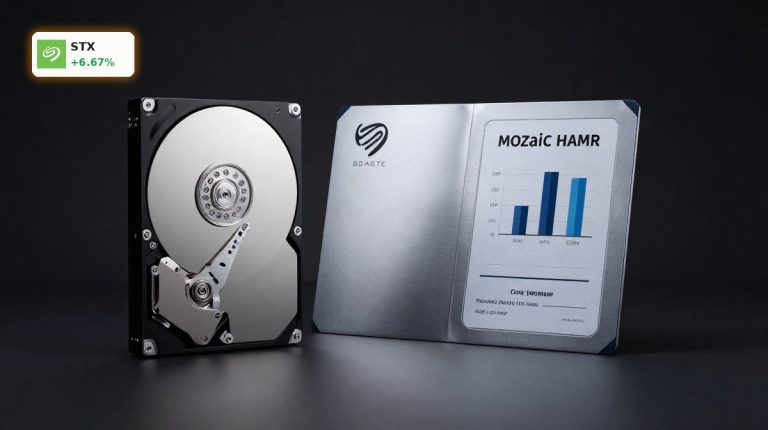
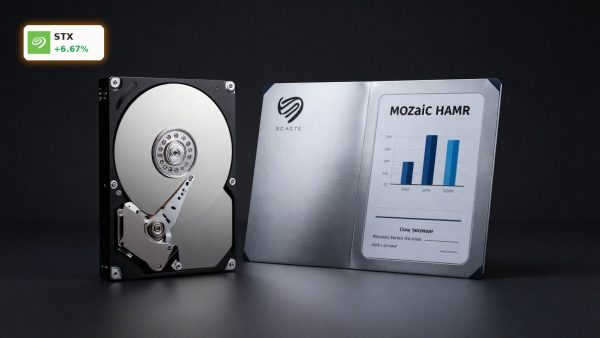
Technologically, Seagate is betting its future on the Mozaic 4+ platform, built around Heat‑Assisted Magnetic Recording (HAMR). This technology sharply increases areal density, allowing the company to push capacity to new levels. Management plans for 40‑terabyte drives to become the bulk of production by the end of 2026, up from today’s 30‑terabyte standard. For cloud operators seeking to minimize total cost of ownership in massive data centers, higher‑capacity drives can translate into fewer racks, lower power usage per terabyte, and reduced complexity—advantages that could help Seagate maintain pricing power even as competition intensifies.
How is Wall Street reacting to Seagate’s run?
Analysts on Wall Street have responded to the strong Seagate Earnings and upbeat guidance with a wave of price target hikes. Rosenblatt Securities, for example, reportedly doubled its target to around $1,000, while firms such as TD Cowen and BNP Paribas moved their targets into the $850–$860 range, maintaining bullish stances on the stock. Another highly ranked analyst recently reiterated an Outperform rating and raised a price target from $700 to about $825, implying further upside from current levels. These revisions reflect mounting conviction that Seagate can sustain above‑market growth as AI infrastructure spending ramps.
Yet the stock’s meteoric rise also raises questions about valuation risk. Seagate currently trades on a price‑to‑earnings multiple north of 60x, well above the roughly 50x average for peers in the broader information‑technology hardware group. For context, even fast‑growing AI beneficiaries like Tesla and leading chipmakers often see increased scrutiny when valuations stretch too far ahead of fundamentals. Investors must weigh whether Seagate’s emerging technological edge and newly won investment‑grade rating are enough to justify the premium versus legacy storage rivals and diversified tech giants.
What are the red flags behind the rally?
One concern hanging over the bull case is insider activity. Over the past six months, Seagate executives and directors have executed about 140 insider sales with no corresponding insider purchases, including nearly $47 million in stock sold in the most recent quarter alone. While insider selling does not automatically signal trouble—executives frequently sell for diversification or tax reasons—the absence of buying at current levels may reinforce fears that the stock has become overheated in the short term.
For portfolio managers who benchmark against the S&P 500 or NASDAQ Composite, Seagate’s surge poses a classic dilemma. Under‑owning the name risks lagging AI‑themed benchmarks if the storage supercycle continues, but chasing it aggressively at a rich multiple could backfire if growth disappoints or if hyperscale customers slow spending. Many investors may opt for a barbell approach, complementing Seagate exposure with positions in more diversified AI plays like NVIDIA or electric‑vehicle and energy‑storage players such as Tesla, thereby spreading risk across the broader AI and data‑infrastructure ecosystem.
Related Coverage
For a deeper dive into how AI workloads are transforming the storage landscape, readers can explore a focused analysis of Seagate’s recent performance and guidance. The article “Seagate Earnings +16.4% Surge as AI Storage Demand Explodes” examines whether the latest Seagate Earnings mark the start of a durable AI‑driven storage supercycle or simply a sentiment‑driven spike, and discusses key risks and catalysts that could shape returns over the next few quarters.
In summary, the latest Seagate Earnings underscore a powerful turnaround built on record free cash flow, an upgraded balance sheet, and ambitious AI‑driven growth targets. For investors, the combination of investment‑grade credit, innovative HAMR‑based 40‑terabyte drives, and strong Wall Street support makes Seagate a high‑beta way to play the build‑out of global AI infrastructure. The next few quarters will show whether execution can keep pace with expectations, but for now Seagate stands out as one of the more dynamic stories in the technology hardware space.