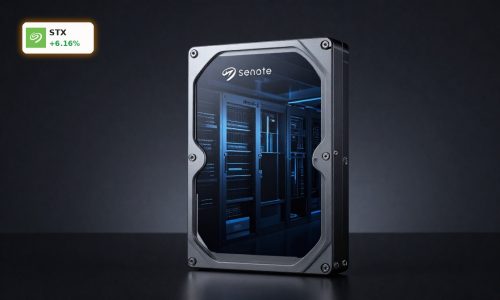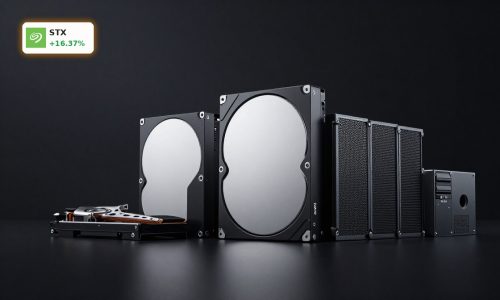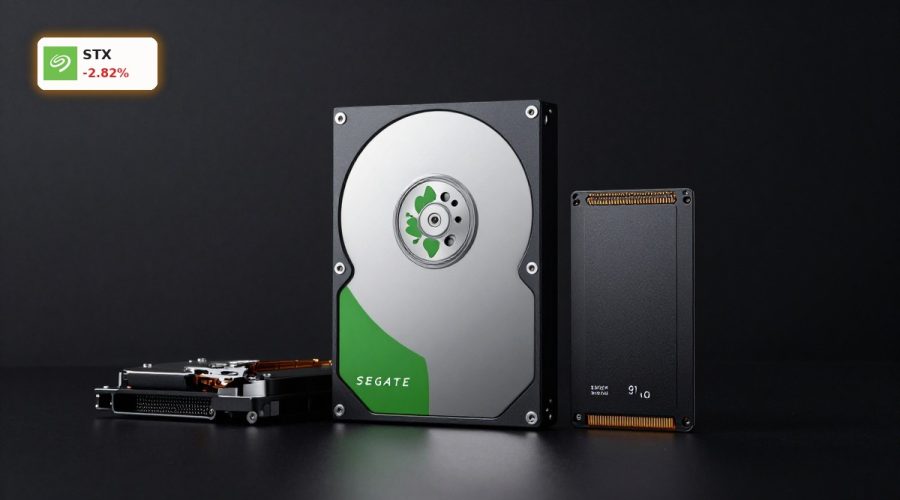
Can Seagate Earnings really support a sevenfold AI-fueled rally, or is the market pricing in perfection already?

Can Seagate Earnings justify the explosive rally?
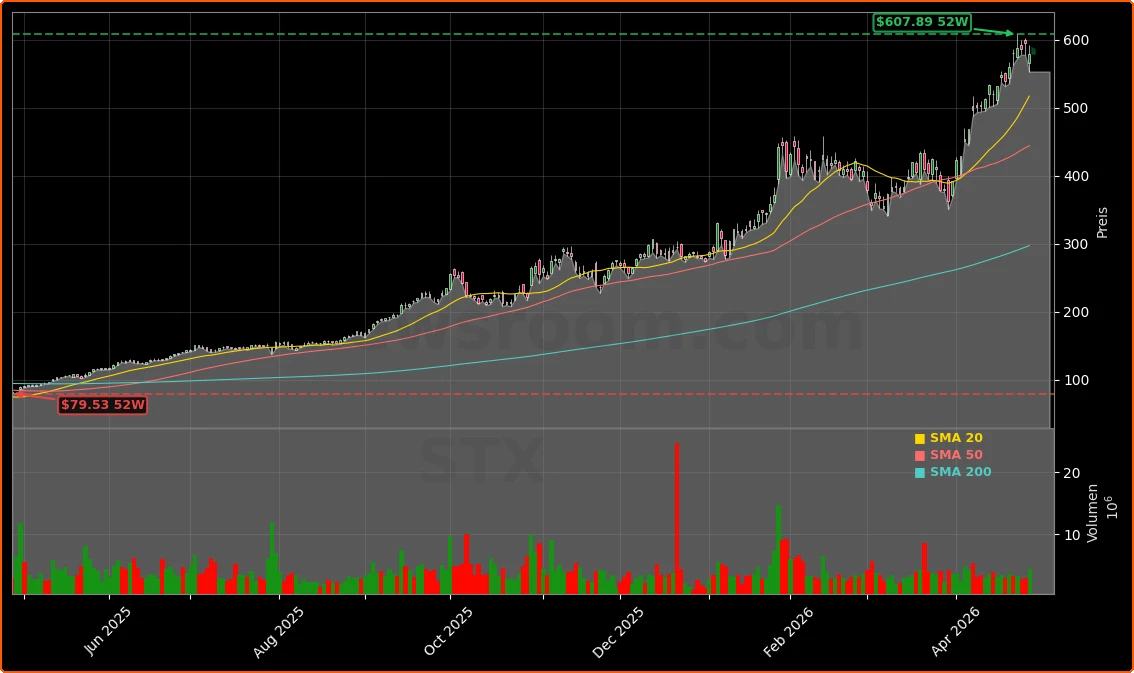
Seagate Technology Holdings plc (STX) has become one of Wall Street’s most aggressive AI infrastructure bets. Shares last changed hands around $579.03, down 2.82% from the prior close of $601.01, while early evening trading pointed to a modest rebound toward $588.09. Even after this pullback, the stock remains up dramatically over the past year, with some estimates pointing to a roughly sevenfold increase as investors crowded into high-capacity storage names seen as key beneficiaries of the AI data center buildout.
That surge leaves Seagate trading at a rich earnings multiple by traditional storage standards, but bulls argue the valuation reflects a structural shift. AI workloads require enormous mass-capacity storage, pushing demand for Seagate’s high-capacity hard disk drives (HDDs) and solid-state drives (SSDs). The company has indicated that its high-capacity HDD supply is effectively sold out for calendar 2026, with major cloud and hyperscale customers already reserving capacity into 2027 and 2028. Against this backdrop, the upcoming Seagate Earnings release is being watched less for surprise beats and more for confirmation that this demand visibility is intact.
What is Wall Street expecting from Seagate Technology?
Consensus heading into the print calls for fiscal Q3 2026 revenue of roughly $2.9–$3.0 billion and adjusted EPS in the $3.40–$3.50 range. Management had previously guided to revenue of $2.90 billion plus or minus $100 million, and non‑GAAP EPS of $3.40 plus or minus $0.20, implying roughly 34% year‑over‑year top‑line growth and a step‑up in operating margin into the mid‑30% range.
For context, Seagate’s prior quarter already signaled a powerful upcycle. The company delivered non‑GAAP EPS of $3.11 on revenue of $2.825 billion, up more than 21% year over year, while non‑GAAP gross margin reached a record 42.2%. Free cash flow climbed to about $607 million, the highest level in roughly eight years. On a full‑year basis, management’s fiscal 2026 earnings framework of $3.40 per share for an earlier quarter represented a 79% jump versus $1.90 a year ago, underscoring just how quickly profitability has inflected as pricing and mix improve.
Street models go further out. Some analysts expect Seagate’s EPS to grow more than 60% for the current fiscal year to above $13 per share, with additional gains projected for fiscal 2027. One widely discussed scenario assumes Seagate could deliver around $17.50 in EPS over a 12‑month span if growth remains near 70% and pricing stays firm, which would still leave the stock trading at a valuation discount to faster‑growing AI chip leaders such as NVIDIA on a forward basis.
How are analysts positioning into Seagate Earnings?
Major Wall Street firms have leaned bullish into the Seagate Earnings event, citing the durability of AI‑driven storage demand. Bank of America recently raised its price target on STX from $450 to $605 while reiterating a “Buy” rating. The bank’s thesis centers on sustained strength in data center orders for mass‑capacity HDDs, which should offset softer edge and Internet of Things markets that typically experience March‑quarter seasonality.
BofA also highlighted Seagate’s progress in its HAMR roadmap. The company’s Mozaic 4+ platform has cleared qualification and entered production with two large hyperscale cloud customers, reaching drive capacities up to 44TB. That transition is strategically important because higher‑capacity drives allow Seagate to ship more exabytes with fewer units, supporting both pricing power and margin expansion. With data center revenues already surpassing $2.2 billion last quarter and capacity fully allocated through 2026, analysts argue that the company’s bargaining position has rarely been stronger.
At the same time, more cautious voices on Wall Street note that STX now trades at a premium to its own history and, by some metrics, to the broader tech sector. One European analyst commentary suggested the stock had climbed roughly 6% above a 12‑month target of about $560, flagging the potential for a healthy 20–25% correction into the $450–$480 range as an attractive entry point for long‑term investors. That tension between near‑term valuation risk and multi‑year AI upside is likely to frame the reaction to tonight’s numbers.
What should investors watch beyond Seagate Earnings?
Beyond headline revenue and EPS, three pillars dominate investor checklists: the HAMR ramp, nearline demand, and margin trajectory. On HAMR, the Street wants updated unit shipment figures for Mozaic drives and any color on the transition to the latest Mozaic 4 generation. Execution here is critical for Seagate to defend share and economics as hyperscalers consolidate vendors and push for ever higher densities.
On demand, management commentary around 2027 and even 2028 allocation will matter, especially relative to peers in storage and AI hardware. Investors increasingly compare Seagate’s visibility and pricing power not just with traditional rival Western Digital but with broader AI ecosystem names like NVIDIA, Tesla in autonomous data generation, and Apple with its growing on‑device AI ambitions. Finally, on margins, Wall Street models gross margin around 44.5% this quarter, rising again in the June period toward approximately 45.6%, helped by tight HDD supply that has already driven about 60% price increases for high‑capacity drives since late 2025.
For US investors using Seagate as a high‑beta proxy on AI infrastructure, any sign that pricing is “flat to slightly up” through 2027, as management has previously hinted, would support the case for continued earnings outperformance. Conversely, if guidance falls short or if commentary hints at easing shortages, the stock’s elevated multiple could invite sharp profit‑taking even if absolute results remain strong.
Related Coverage
For a deeper dive into how the AI storage boom could shape the next leg of the rally, readers may want to explore Seagate Forecast +7.5% Surge as AI Storage Booms, which examines whether the company’s long‑term growth outlook can justify a 327% move and the latest single‑day gains.
In summary, Seagate Earnings have become a key barometer for the broader AI infrastructure trade, with tonight’s report set to test just how durable the company’s demand and pricing power really are. For investors in the US and abroad, the results will help determine whether STX can grow into its elevated valuation or whether a consolidation phase is overdue. The next few quarters of execution on HAMR, data center capacity and margins will show whether Seagate remains one of the most compelling ways to play the ongoing AI buildout.