
Will Elon Musk’s aerospace giant find its footing after a brutal post-listing correction, or is the stock heading back to its initial pricing?

Is the SpaceX IPO hype fading?
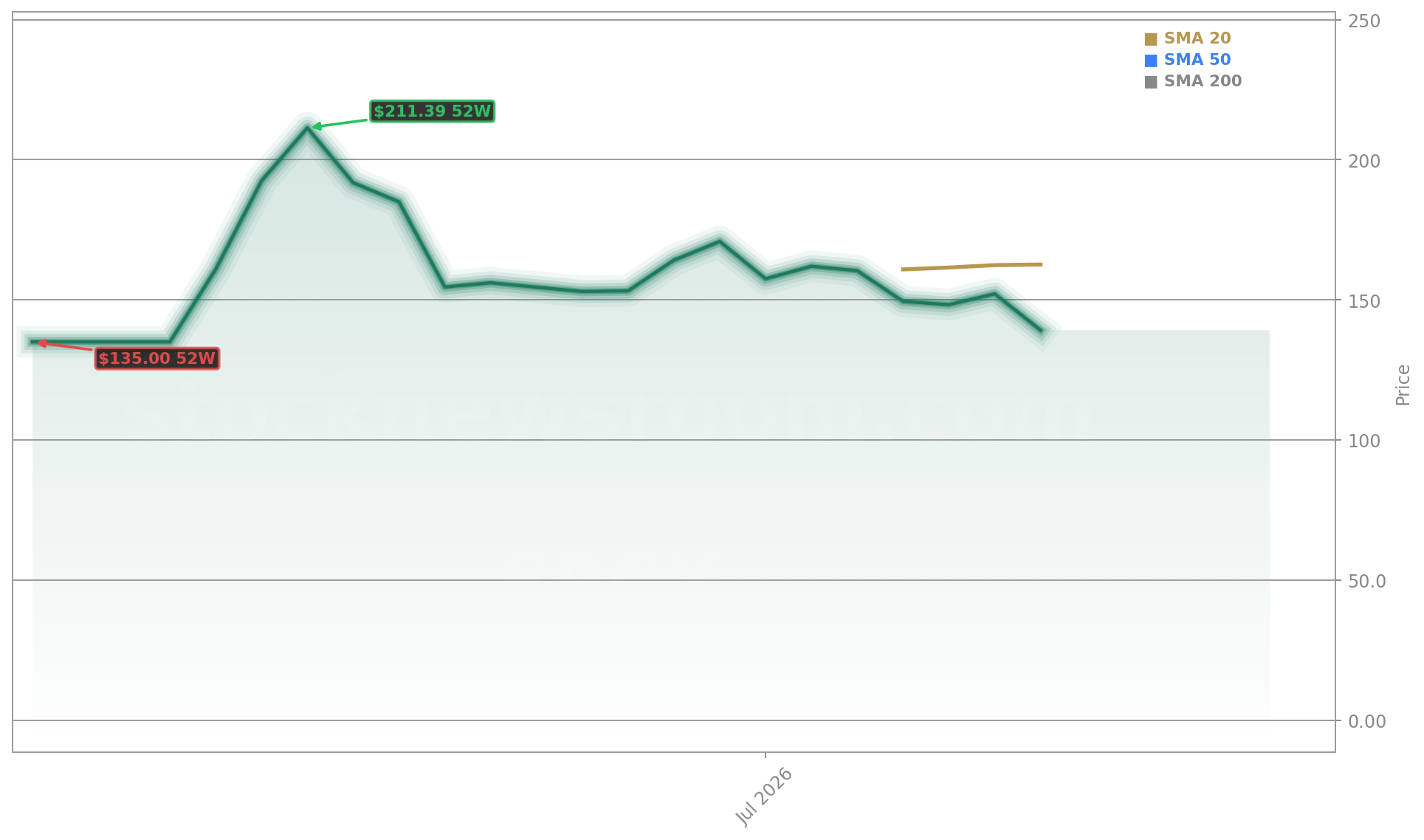
After pricing at $135 and opening at $150 on its first day of trading, the stock of Space Exploration Technologies Corp. (SPCX) experienced a dramatic rollercoaster ride. Shares initially rocketed to an all-time high of $225.64, pushing the company’s valuation to a staggering $2.9 trillion. Since that peak, however, the stock has plummeted by over 35%, closing Friday at $145.30 and sliding further to $138.54 on Monday, July 13, 2026. This downward momentum has brought the stock perilously close to its original listing price.
This correction occurred despite a major milestone on July 7, when the company was fast-tracked into the Nasdaq-100 index. While this inclusion triggered passive buying from index-tracking funds, it was not enough to halt the slide. Some market experts, including short-seller Jim Chanos, remain highly skeptical of the company’s near-term targets, particularly Elon Musk’s weekend claim that the firm will begin flying orbital data centers by next year.
How do analysts view SpaceX Corporation?
Wall Street is deeply divided on how to value the aerospace giant. On one side, several major investment banks have initiated highly bullish coverage. Raymond James issued a “Strong Buy” rating with an astronomical $800 price target, viewing the company as the defining industrial infrastructure play of the century. Similarly, Cantor Fitzgerald initiated coverage with a $246 price target, highlighting its unique planetary infrastructure model. Bank of America analyst Ron Epstein also came out in support, setting a $235 price target and pointing to the revolutionary cost-reduction potential of the Starship program.
Conversely, other institutions urge caution. Morgan Stanley maintains an “Overweight” rating with a $300 price target but simultaneously warned of a massive $672 billion funding risk, estimating that the company may not generate positive free cash flow until 2035. Meanwhile, CFRA analyst Keith Snyder assigned a “Sell” rating, noting that the stock’s valuation has detached from its immediate fundamentals, temporarily behaving more like a speculative meme stock.
Can AI and Starlink drive a recovery?
Despite the stock market volatility, the company’s underlying business segments are growing rapidly. In 2025, the firm generated $18.7 billion in total revenue, driven largely by its Starlink connectivity business, which brought in $11.4 billion. The enterprise is also aggressively expanding into artificial intelligence infrastructure. Following its acquisition of xAI and the coding startup Cursor, the company has secured lucrative computing capacity deals with major tech firms, including Alphabet and Anthropic, which could yield tens of billions in recurring annual revenue.
However, the company faces rising international pressure. China recently achieved a historic milestone by successfully recovering its reusable Long March-10B booster at sea using a state-of-the-art net-capture system. Analysts from Morgan Stanley highlighted this achievement as a direct challenge to the American rocket monopoly, signaling that the global space race is intensifying rapidly.
What are the upcoming risks for investors?
Near-term technical pressures could also weigh on the stock. Prominent investor Gary Black of The Future Fund LLC warned that shares could face further downward pressure in early August. This is when an insider lock-up expiration will allow 20% of locked shares to become eligible for public trading. Investors are now looking ahead to the upcoming Q2 2026 earnings report, expected in early August, to gain much-needed clarity on actual margins and the financial impact of the newly integrated AI divisions.
Related Coverage
Reduced launch costs are the superhighway to the stars, a new railroad opening markets that people aren’t even thinking of already.— Ron Epstein, Bank of America
For a detailed breakdown of how the company’s recent index milestone impacted market sentiment, read our SpaceX Weekly Recap -4.2%: Nasdaq Entry Meets Warning, which explores the tension between passive index inflows and long-term capital concerns. Additionally, you can review the broader market implications of these funding challenges in our specialized industrial coverage of the SpaceX Weekly Recap.