
Can SpaceX Nasdaq Inclusion overpower a looming insider sell wave, or is today’s index boost already setting up tomorrow’s pressure?

What Does SpaceX Nasdaq Inclusion Mean for QQQ Investors?
The SpaceX Nasdaq Inclusion reshapes the Invesco QQQ Trust overnight. As the largest non-financial addition to the Nasdaq-100 since its 2026 rule change — which slashed the seasoning period from 90 to just 15 trading days — SpaceX now commands roughly 1.3% of the index. That may sound modest, but given the $800 billion in assets tracking the benchmark, J.P. Morgan estimates $4.3 billion in forced buying must occur. Unlike Amazon or NVIDIA, which enjoy deep liquidity and broad float, SpaceX’s public float stands at just 4.9%. Nasdaq has scaled its effective index weight to three times its float-adjusted market cap — a technical maneuver that prevents outsized index distortion. For QQQ holders, this means automatic exposure without consent — and minimal downside protection if supply surges.
Why Are Analysts So Bullish — and So Divided?
With the IPO quiet period expired, Wall Street’s top underwriters launched coverage in unison. Morgan Stanley issued an Overweight/Attractive rating and a $300 price target, citing SpaceX’s ability to “convert energy into intelligence at scale” for the next AI era. Goldman Sachs followed with a Buy and $205 target, while RBC Capital Markets assigned Outperform and $225. Bernstein Research set Outperform at $239, emphasizing orbital AI data centers as the core value driver. Raymond James stunned the Street with a $800 target and Strong Buy, calling SpaceX “one of the defining industrial infrastructure companies of the 21st Century.” Yet not all are convinced: Morningstar’s Nicholas Iwens maintains a Sell rating and $62 target, warning that index buying will only “offset some, but not all” of the coming supply wave.
How Does Starlink Compare to Rivals Like Rocket Lab?
Starlink remains SpaceX’s most monetized engine — generating $1.2 billion in operating profit in Q1 on $4.7 billion of total revenue — but it’s not unchallenged. Rocket Lab (RKLB), with its Electron rocket and end-to-end satellite solutions, offers a pure-play alternative in the medium-lift segment. Meanwhile, AST SpaceMobile (ASTS) is fast scaling satellite-to-surface broadband via partnerships with T-Mobile and Vodafone — a direct competitive threat to Starlink’s terrestrial carrier model. Precedence Research forecasts the satellite broadband market will hit $40 billion by 2035, growing at 13.5% annually. Yet SpaceX’s 10,000+ satellite fleet and 12 million users dwarf rivals’ footprints — a lead that could widen with FCC approval for up to 15,000 Gen2 satellites.
What’s Next After Today’s Index Entry?
Today’s SpaceX Nasdaq Inclusion is only the first catalyst in a volatile sequence. The first major lockup release arrives in late July — just after Q2 earnings — unlocking nearly 20% of the insider-held pool. Smaller tranches follow monthly, with float potentially surging from 4.9% to over 25% by October and 40% by December. Meanwhile, the next Starship test flight is scheduled for mid-July, and Q2 results land in early August — a triple-test of investor confidence in AI monetization, launch cadence, and Starlink’s path to $124 billion in 2028 revenue. Crucially, the S&P 500 remains off-limits: SpaceX lacks both four consecutive GAAP-profitable quarters and the required 10% free float, pushing S&P 500 eligibility to mid-2027 at earliest.
Is SpaceX’s Valuation Sustainable for Long-Term Portfolios?
SpaceX is one of the defining industrial infrastructure companies of the 21st Century.— Gesuale, Raymond James
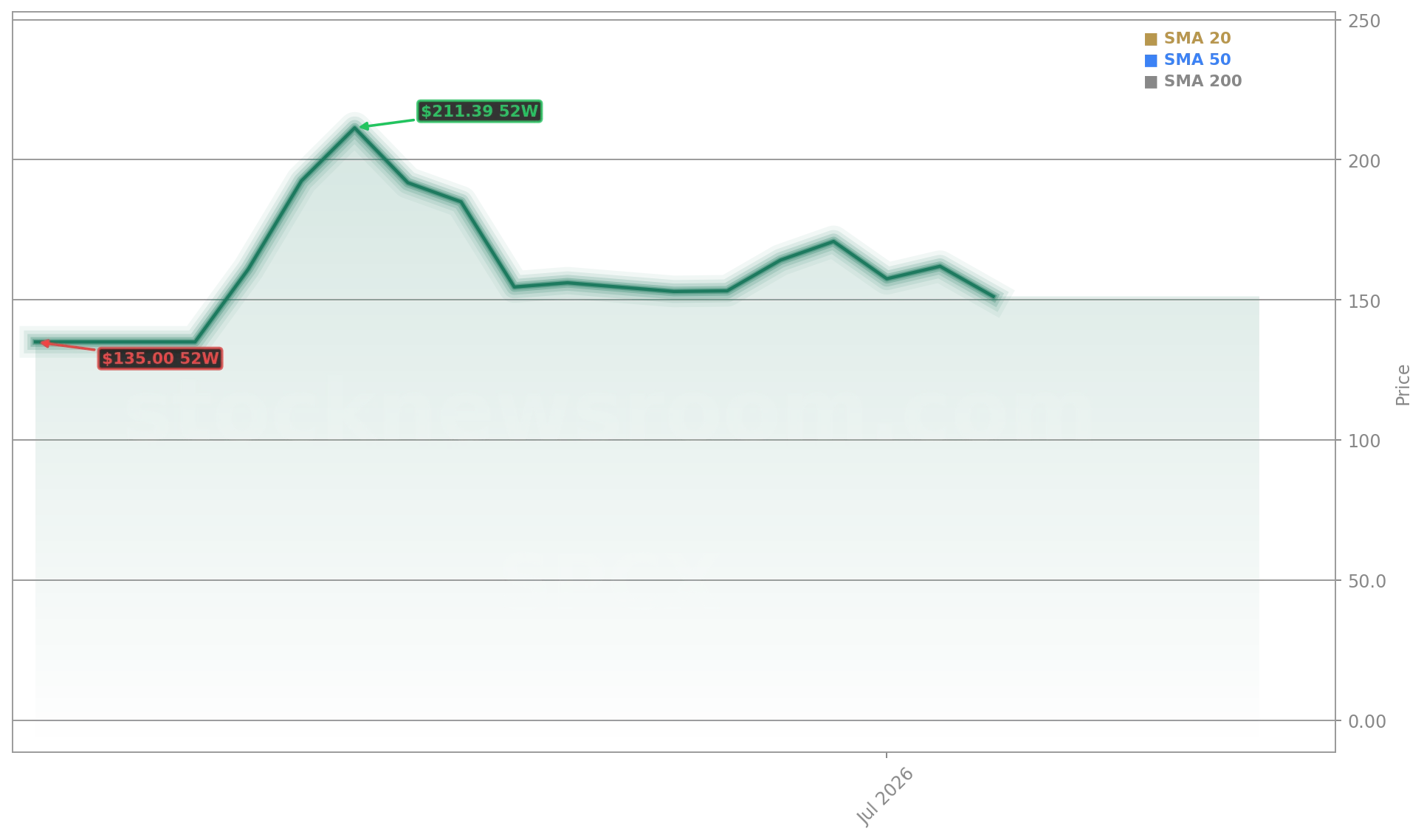
At $151.09, SpaceX trades at 110x trailing-12-month sales — more than five times Apple’s multiple and nearly six times Tesla’s. Its $2.1 trillion market cap implies success across Starship, orbital AI data centers, and Mars infrastructure — outcomes with multi-year timelines and high technical risk. While Wedbush’s Dan Ives assigns $190 and Outperform, citing a sum-of-the-parts valuation anchored to 2028, the broader consensus — $217.95 average across 20+ firms — still implies 44% upside. Yet history warns caution: Truist Financial found the average year-one max drawdown for mega-IPOs is 55%. For SpaceX, that implies a risk of falling to $101.50 before year-end — a scenario that would test even the most patient U.S. retirement portfolios.