
If SpaceX joined the Nasdaq 100, why did the stock still sink instead of soaring?

Why Did SpaceX Nasdaq 100 Inclusion Fail to Boost the Stock?
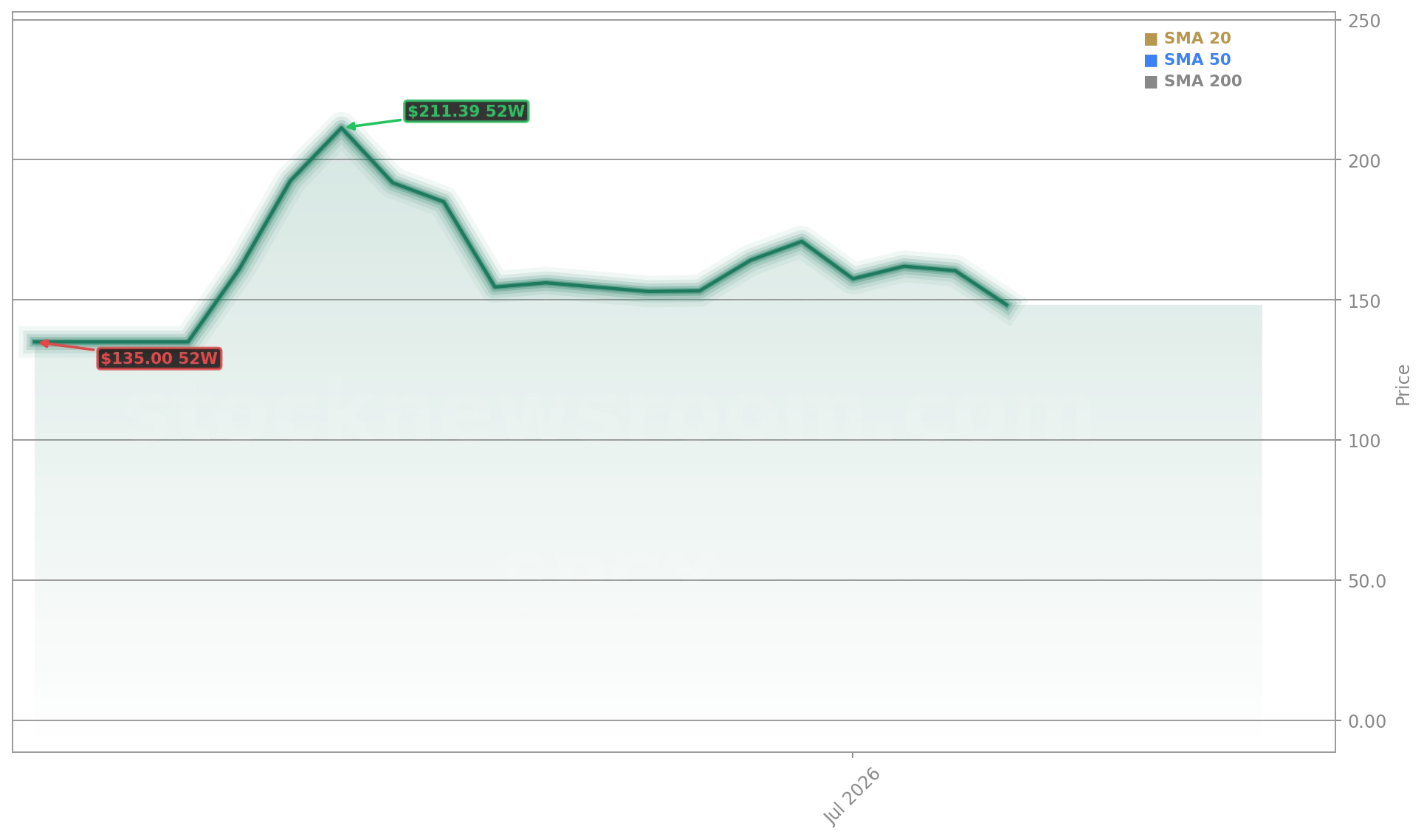
SpaceX entered the Nasdaq 100 on Tuesday — a historic fast-track inclusion enabled by revised exchange rules — yet shares closed 6.8% lower that day, the weakest close since its June 12 debut. Unlike typical index additions, which trigger automatic ETF and mutual fund buying, passive inflows were muted. Analysts at RBC Capital Markets attributed this to the stock’s high free-float weighting cap: at just 0.7% of the index, estimated institutional demand totaled only $4.3–$4.6 billion — insufficient to offset broader tech-sector weakness and rising skepticism. The stock has now surrendered all early IPO gains, trading near its $150 opening level despite a $1.75 trillion IPO valuation and $86 billion raised.
What Do Wall Street Analysts Really Think?
Eighteen of 19 firms initiating coverage on July 7 issued Buy or Overweight ratings, but targets spanned $115 to $800 — the widest dispersion of any recent mega-IPO. Raymond James launched with a Strong Buy and $800 price target, forecasting $837 billion revenue by 2031. Morgan Stanley’s Adam Jonas initiated with Overweight and $300, citing SpaceX’s “one infrastructure stack” fusing launch, Starlink, and AI. Goldman Sachs set $205, highlighting trillion-dollar opportunities in orbital computing and global connectivity. Deutsche Bank’s Edison Yu issued $255, calling SpaceX “the apex of civilizational ambition.” Yet CFRA held firm on Sell with $115, and Morningstar’s $62.51 target — the only outright Sell — argues current pricing assigns 93% of value to speculative Starship and AI scenarios with sub-10% probability.
How Does Blue Origin’s $10 Billion Raise Change the Game?
Just as SpaceX Nasdaq 100 inclusion spotlighted valuation fragility, rival Blue Origin announced a $10 billion fundraise at a $130 billion valuation — its first external capital raise after 25 years of Bezos-backed funding. While dwarfed by SpaceX’s scale (673 Falcon 9 launches vs. Blue Origin’s 3 New Glenn flights), the move signals growing institutional appetite for space infrastructure. Unlike SpaceX, Blue Origin remains private and unprofitable, but its Artemis and Space Force contracts — plus its focus on engine development and lunar landers — position it as a strategic counterweight. Analysts at Bank of America note Blue Origin’s raise could accelerate competition in national security launch, pressuring SpaceX’s near-monopoly pricing power by 2028.
Is Starlink Enough to Justify the Valuation?
Starlink, now with 12 million subscribers and $11 billion in annual revenue, is the only near-term profit engine. But it’s also the anchor holding back the stock’s speculative premium: Bernstein analysts estimate Starlink contributes just $40 per share to fair value — less than one-third of the $149.16 price. The rest hinges on Starship’s success (still grounded post-test failure), orbital data centers (zero revenue), and AI ambitions (including the $250 billion xAI acquisition). Clear Street’s $217 target assigns $113 to AI alone — a bet on unproven infrastructure. Meanwhile, NVIDIA trades at 32x forward revenue and Tesla at 65x, making SpaceX’s 110x trailing multiple the most aggressive in the NASDAQ 100.
What’s Next for Investors?
SpaceX represents, in our view, the apex of civilizational ambition, oftentimes expressed in steel and fire, bending the arc of history to make humans multi-planetary by building foundational infrastructure across transportation, connectivity, and AI.— Edison Yu, Deutsche Bank
Three catalysts loom: the August 17 earnings call — where management may detail Starlink profitability and Starship timelines; the August lockup expiration of 20% of the free float (per Clear Street); and the Q3 2026 Starship test flight window. Tom Lee of Fundstrat warns that SpaceX’s lockup wave, combined with high margin debt and oil supply risks, could pressure the Nasdaq through August–October. For investors, the SpaceX Nasdaq 100 moment is less about index exposure and more about conviction in a 10-year infrastructure bet — one where the math remains deeply contested.