Can Super Micro Edge AI turn a promising product launch into durable profits before margin pressure and governance risks catch up?

What does Super Micro Edge AI mean for enterprise AI deployment?
Super Micro Computer, Inc. has officially launched its Kubernetes Edge AI appliances — pre-integrated hardware-software systems validated with Red Hat OpenShift and Everpure’s Portworx data management platform. Designed for low-latency inference, real-time video analytics, and private 5G AI workloads, the appliances target verticals including manufacturing, healthcare, and smart cities. Unlike cloud-centric AI stacks, these systems enable AI model execution directly on-premises without ongoing cloud dependency — a critical advantage for data-sensitive or latency-constrained use cases. The move strengthens Super Micro’s positioning against rivals like Dell Technologies and HPE, while carving out a distinct niche beneath NVIDIA’s full-stack AI data center ambitions. Importantly, this isn’t a reference design: it’s a production-ready, supportable appliance shipped with full lifecycle management — a key differentiator for enterprise procurement teams wary of integration risk.
How does this launch impact Super Micro Edge AI margins and valuation?
Despite the technical promise, Wall Street remains focused on execution risk. Super Micro Computer, Inc. reported declining gross margins over the past five quarters — a trend analysts attribute to aggressive pricing in the AI server arms race and rising component costs. Citigroup recently reaffirmed its ‘Neutral’ rating on SMCI, citing ‘persistent margin uncertainty’ and noting that ‘even with $39 billion in recent orders, the company’s adjusted EBITDA margin remains below 6% — well below peers like Arista Networks and Cisco.’ RBC Capital Markets echoed that view, lowering its price target to $25.50 from $32.00, citing ‘dilution from the $7 billion capital raise and unproven scalability of edge revenue streams.’ With the stock trading at a low-teens P/E — significantly cheaper than the S&P 500’s 21x and the NASDAQ-100’s 28x — the market is pricing in near-term execution risk, not long-term AI opportunity.
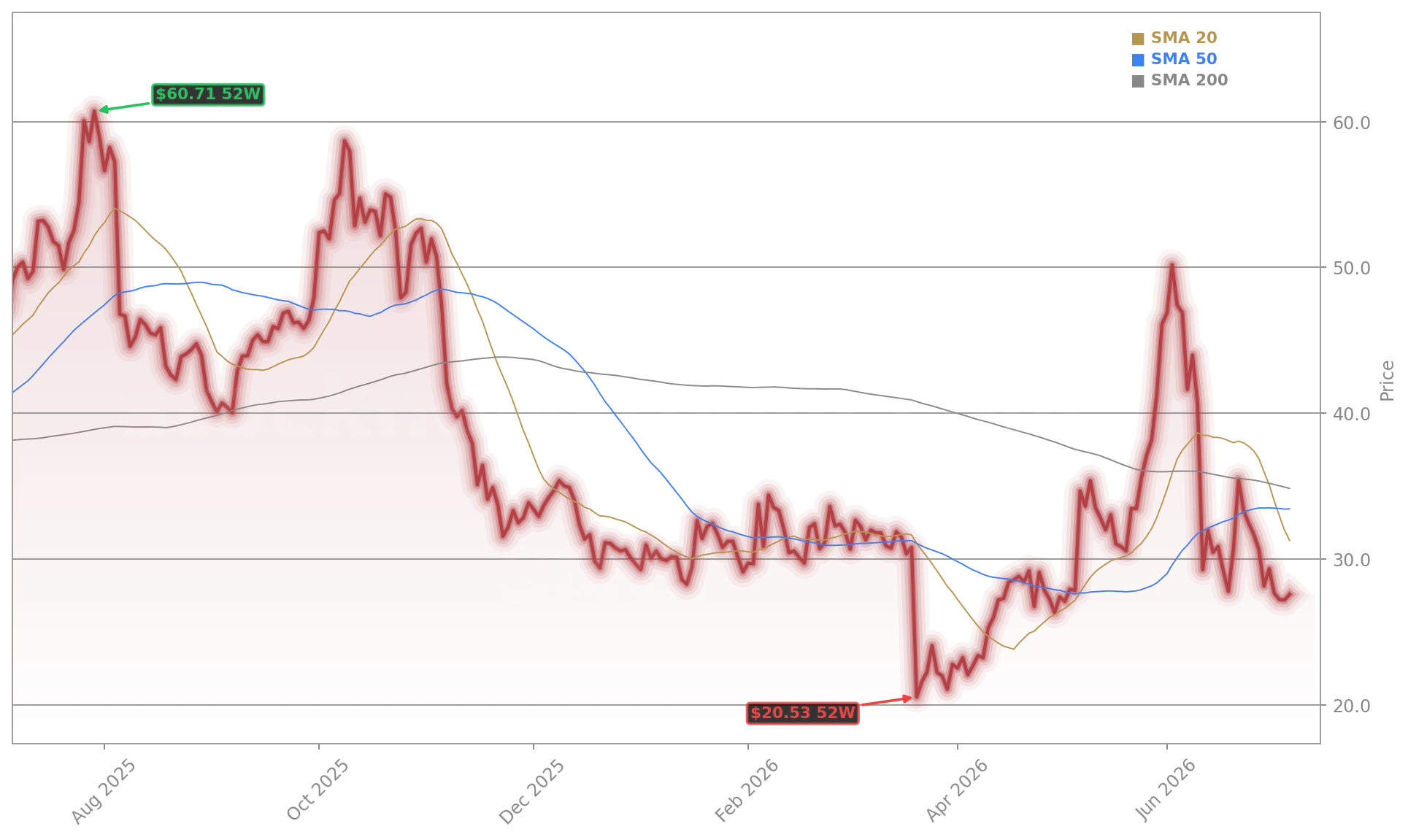
Can governance concerns derail Super Micro Edge AI momentum?
Regulatory headwinds continue to weigh on sentiment. In late June, Taiwanese authorities raided Super Micro’s Taipei offices and detained four employees — part of a broader crackdown on unauthorized AI server exports to China. While the company’s Chief Revenue Officer told Reuters that Super Micro was ‘not a target’ and had cooperated with authorities for months, the incident amplified investor concerns about supply chain controls and internal compliance. This follows March’s arrests of other employees linked to illegal shipments. Governance risk is now a top-line factor for institutional investors: Morgan Stanley flagged ‘material execution overhang’ in its latest note, warning that ‘any further enforcement action could trigger covenant reviews across SMCI’s $3.75 billion convertible note issuance.’ For U.S. portfolio managers, this isn’t just a Taiwan issue — it’s a proxy for operational discipline in a high-stakes, geopolitically charged sector.
Where does Super Micro Edge AI fit in the broader AI infrastructure stack?
Super Micro Edge AI bridges the gap between cloud AI and embedded AI — a $14.2 billion market expected to grow at 37% CAGR through 2030 (Bloomberg Intelligence). That puts it in direct competition with Dell’s Edge AI Solutions and HPE’s GreenLake for Edge, but with tighter Red Hat integration than either. Crucially, it avoids direct overlap with Tesla’s Dojo edge inference strategy or Apple’s on-device ML roadmap — instead serving as infrastructure for enterprise customers building custom AI applications. The timing is strategic: with Meta’s AI infrastructure build-out accelerating and Microsoft’s Azure Edge Zones expanding, demand for validated, vendor-supported edge stacks is surging. Yet Super Micro’s reliance on third-party software — versus NVIDIA’s full-stack control — remains a vulnerability in enterprise sales cycles where software lock-in drives long-term stickiness.
We’re not just shipping servers — we’re delivering production-grade AI infrastructure for the edge, validated and supported from silicon to Kubernetes.— Charles Liang, CEO of Super Micro Computer, Inc.
Related Coverage: The fallout from Taiwan’s raids continues to reverberate — read how the Super Micro Computer Smuggling Probe Sends SMCI Down 6.7% reshaped investor risk models. Meanwhile, in the broader semiconductor ecosystem, Broadcom Apple Partnership +6.2% Surge on Apple Deal highlights how supplier relationships can drive valuation premiums — a contrast to SMCI’s current discount.