
Can Uber Hotel Bookings and new mobility deals turn a ride-hail app into a full travel platform that investors re-rate?

How do Uber Hotel Bookings change the growth story?
The launch of Uber Hotel Bookings turns the ride-hailing giant into a more complete travel companion, moving it from an in-destination utility to a pre-trip planning hub. Through Expedia’s inventory, U.S. users can now reserve rooms at more than 700,000 hotels and other properties directly inside the Uber app, with Vrbo vacation rentals slated to follow later this year. That gives Uber immediate global reach in an adjacent, high-margin category without taking on hotel risk itself.
Strategically, this aligns with management’s goal of building an “everything app” where rides, meals, errands and now lodging are bundled into a single interface. Nearly 100 million people already use Uber for airport trips each year, and more than 1.5 billion trips annually are taken outside riders’ home cities. Converting even a single-digit percentage of those travelers into hotel customers could create a meaningful new revenue stream and deepen engagement with Uber’s platform.
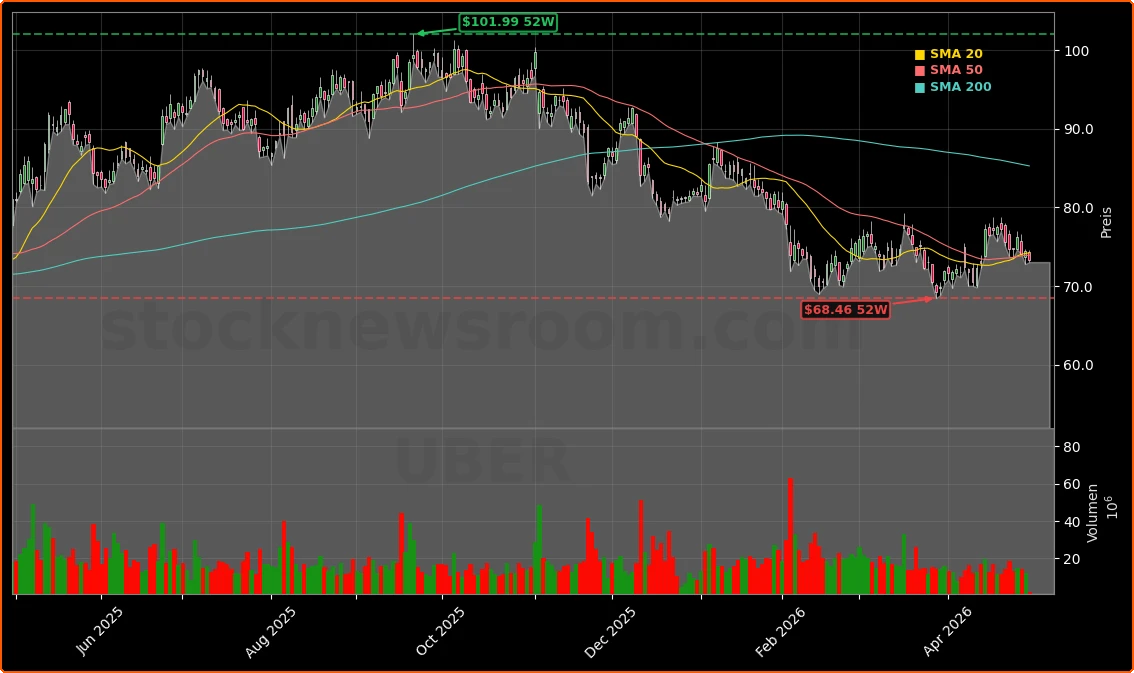
Importantly for U.S. investors, this push comes as Uber has already joined high-growth platform names like NVIDIA and Tesla in Wall Street portfolios focused on secular tech themes, even though Uber itself is not yet in the S&P 500. The stock’s pullback from recent highs to around $73 gives the company more to prove on monetizing its large user base with cross-sold services such as Uber Hotel Bookings.
What does the Expedia partnership add for Uber?
Expedia Group’s role is central. Its broad global supply powers the new Uber Hotel Bookings feature, while Uber contributes distribution and a massive, highly engaged user base. Expedia benefits by placing its inventory in front of tens of millions of incremental users; Uber benefits by avoiding the complexity of directly contracting with hundreds of thousands of hotels and vacation rentals worldwide.
From a product standpoint, the hotel experience will look familiar to anyone who has used a dedicated travel app: users tap a “Hotels” icon, enter their destination, and filter by price, reviews, and amenities. Pricing is displayed with taxes and fees included, and the booking is tightly integrated with rides—if a traveler hails a car from the airport, the Uber app automatically suggests the booked hotel as the default destination. Later this year, Vrbo rentals are expected to be layered in, further expanding choice.
For loyalty, Uber is leveraging its nearly 50 million Uber One and rewards participants by offering credits and discounts tied to hotel stays, using the same playbook that has helped companies like Apple and big travel platforms lock in repeat use. Analysts covering Expedia at firms such as Morgan Stanley have recently highlighted the strategic upside of this partnership when discussing Expedia’s outlook, underscoring that the tie-up is viewed as additive for both sides.
How does the Hertz partnership support Uber’s mobility ambitions?
Beyond Uber Hotel Bookings, the company is also reinforcing its mobility backbone. Hertz has launched an affiliate, Oro Mobility, and announced Uber as its first major partner, expanding an existing relationship that already made Hertz one of Uber’s largest fleet rental providers. Under the new agreements, Oro will manage Uber’s autonomous robotaxi fleet of Lucid vehicles equipped with Nuro technology in the San Francisco Bay Area, handling charging, maintenance, repairs, cleaning and depot staffing.
In a separate but related arrangement, Oro will operate a driver-led fleet on the Uber platform using vehicles driven by Oro employees. After a successful pilot in Atlanta, this model has rolled out to Los Angeles and San Francisco, with Northern New Jersey expected to launch this spring. For Uber, the setup improves supply reliability and ride quality without tying up capital on its own balance sheet. For Hertz, it accelerates a pivot from traditional rental cars toward recurring mobility-as-a-service contracts.
From a competitive lens, this hybrid approach—combining third-party drivers, fleet partners and eventually scale robotaxis—positions Uber differently from asset-heavy automakers or pure-play software platforms. It also helps counter potential pressure from integrated ecosystems run by giants like Apple or Google’s parent Alphabet, which are exploring in-car services and autonomous driving technologies that intersect with ride-hailing.
Where do Uber Hotel Bookings fit versus other travel apps?
On Wall Street, the key question is whether Uber can carve out share in a travel market dominated by specialist players such as Expedia, Booking Holdings and Airbnb. Uber’s pitch is convenience: instead of downloading a separate travel app for one or two trips a year, occasional travelers can now coordinate rides, food and lodging in one place. Data from travel research firms shows that around half of travelers already use mobile apps to book hotels or flights, but app fatigue remains real—favoring multipurpose platforms.
For now, analysts at major investment banks like Citigroup and Goldman Sachs have generally framed Uber’s travel expansion as strategically positive but not yet a core driver of valuation. The real upside will depend on attach rates: how many riders adopt Uber Hotel Bookings, how much they spend per stay, and how much take-rate economics Uber can capture from each transaction. Voice-enabled AI booking, tailored recommendations and international expansion of hotel and membership features are all levers management can pull to improve those metrics over time.
Related Coverage
Investors tracking regulatory and pricing dynamics in Uber’s core ride-hailing business may also want to read “Uber Minimum Fares Shock: Munich Tariff Squeeze Hits”. That article examines how new minimum fare rules in Munich could pressure margins and potentially serve as a template for other European markets, adding another layer of complexity just as Uber pursues growth avenues like hotels and autonomous fleets.
In sum, Uber Hotel Bookings and the expanded Hertz partnership highlight how Uber Technologies, Inc. is using its massive user base to move deeper into both travel and fleet solutions. For U.S. investors, the initiatives offer optionality beyond traditional ride-hailing, even as the share price eases slightly today. The next few quarters will show whether integrated lodging, robotaxis and managed fleets can meaningfully lift engagement, profitability and ultimately the long-term trajectory of UBER’s stock.