Can Uber Robotaxi justify the market’s excitement, or will rising AV costs slow the story before scale arrives?

What’s Driving Uber’s Robotaxi Momentum?
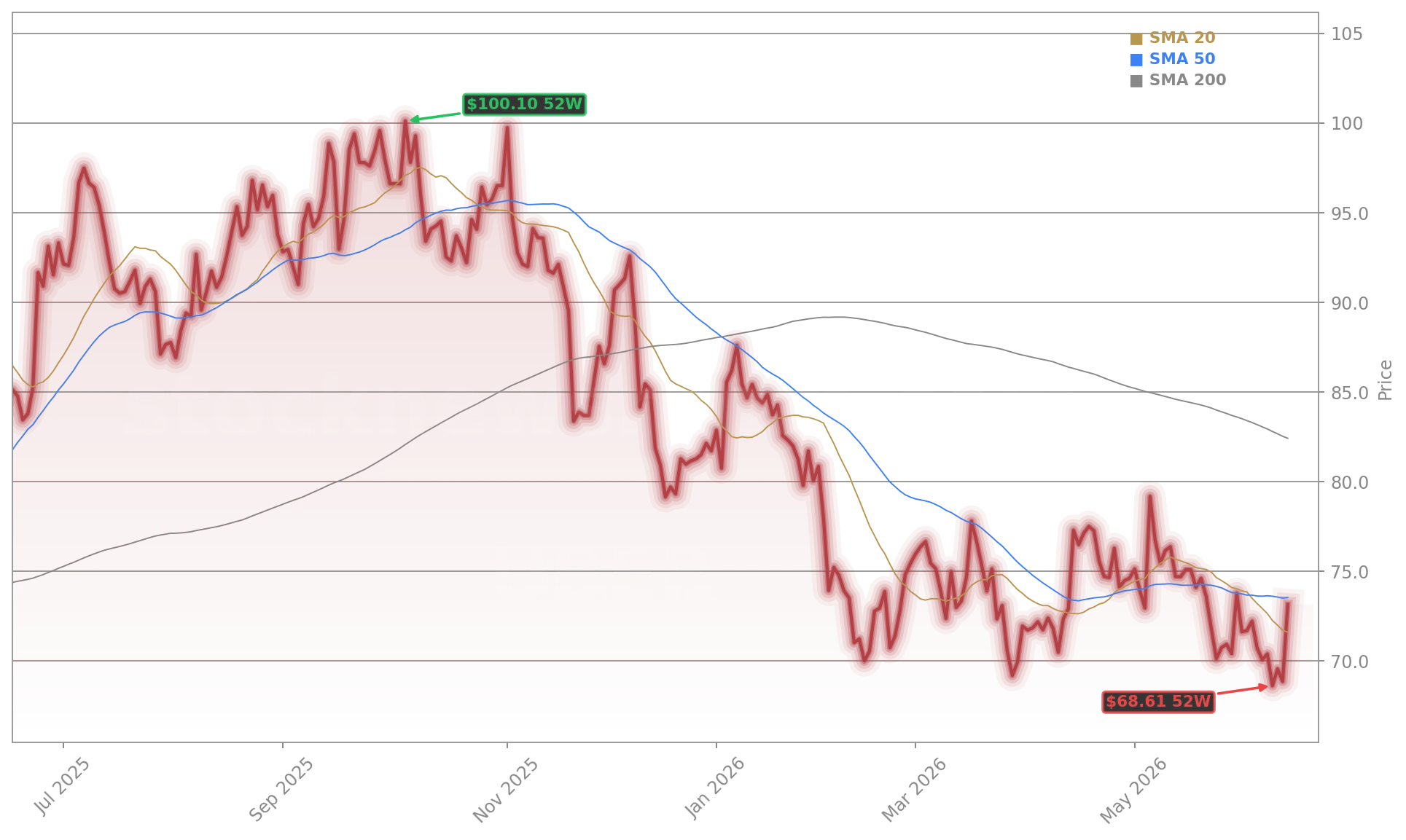
Uber’s after-hours rally reflects more than just sentiment—it’s a vote of confidence in its accelerated autonomous vehicle roadmap. The March Rivian agreement isn’t merely a vehicle supply contract; it’s a strategic infrastructure play. Rivian will co-develop AV-ready R2 platforms with Uber’s AV software stack, including integrated charging and fleet management systems. This aligns with Uber’s $100 million-plus commitment to AV charging infrastructure—capital that Citigroup flagged as ‘materially dilutive to near-term FCF’ in its June 10 note, though the firm maintained a ‘Buy’ rating with a $82 price target. The move also positions Uber directly against Tesla’s Cybercab rollout and NVIDIA-powered competitors like Motional and Zoox, both of which are scaling commercial deployments in Phoenix and Austin. Unlike those players, Uber brings 130 million active users and a 30% U.S. ride-hail market share—critical network effects for robotaxi adoption velocity.
How Does Uber Robotaxi Compare to Global Peers?
While Uber pushes AV hard, its financial trajectory diverges sharply from Southeast Asia’s Grab Holdings—a profitable, net-cash super-app growing GMV at 24% YoY. Grab reported $120 million net income in Q1 2026—up 400%—with no AV capex drag. In contrast, Uber’s long-term debt now stands at $10.52 billion, and insurance reserves swelled to $3.39 billion—partly to cover AV liability exposure. RBC Capital Markets recently downgraded Uber to ‘Sector Perform’, citing ‘unsustainable revaluation volatility’ from equity investments and ‘uncertain ROI on AV infrastructure’. That stands in stark contrast to Morgan Stanley’s $79 target, which emphasizes Uber Robotaxi’s ‘first-mover advantage in fleet-scale AV integration’—a view echoed by Bloomberg’s June 14 deep-dive on Uber’s AV pilot expansion across Los Angeles and Dallas.
Is Uber’s Core Business Still Solid?
Yes—but with caveats. Uber One membership now exceeds 50 million, driving $2.1 billion in annualized subscription revenue and boosting rider retention by 37%. Mobility gross bookings rose 13% YoY in Q1, and delivery gross bookings grew 19%, aided by lower gas prices and a broader U.S. consumer rebound. Yet Freight remains unprofitable, and adjusted EBITDA margin dipped to 12.8%—down from 14.1% in Q4 2025. Reuters noted in its June 12 earnings analysis that Uber’s ‘core platform economics remain robust, but AV-related headwinds are now materially distorting GAAP comparability’. The company’s 2026 guidance maintains full-year adjusted EBITDA of $5.2–$5.4 billion, but that excludes $100M+ in AV infrastructure spend—raising questions about true underlying profitability.
What’s Next for Uber Robotaxi Deployment?
Commercial robotaxi service is slated to launch in Austin and Phoenix by Q4 2026, with Los Angeles and Dallas following in early 2027. Uber plans to deploy Rivian R2s alongside its existing Waymo and Motional partnerships—creating a multi-AV-stack fleet strategy. Bloomberg reported that Uber’s AV software team has grown to over 1,200 engineers, and the company recently acquired a San Francisco-based AI safety startup to accelerate L4 validation. Still, regulatory approval timelines remain fluid—especially after the NHTSA’s June 5 advisory on ‘fleet-level AV incident reporting standards’. Analysts at Goldman Sachs warn that ‘regulatory tailwinds could delay full commercialization by 6–9 months’, though they reaffirmed their ‘Buy’ rating and $80 price target, citing ‘unmatched ride-hail data moat’.
Why Are U.S. Investors Watching Grab?
Our On-Demand GMV growth accelerated to 24% year-over-year… marking another quarter of record profitability.— Anthony Tan, CEO of Grab Holdings
With Uber trading at 22x forward EV/EBITDA and Grab at just 8x, U.S. portfolio managers are increasingly benchmarking the two. Grab’s $2.95 billion cash position—versus Uber’s $5.1 billion but $10.52 billion debt—creates stark balance sheet contrast. Wall Street’s 27 ‘Buy’ or ‘Strong Buy’ ratings on Grab (zero ‘Sell’) reflect confidence in its profitable inflection and capital return capacity. As AP reported June 13, Grab’s $500 million buyback program is already 65% executed—while Uber has yet to announce any share repurchase activity in 2026. For U.S. investors seeking exposure to high-growth, capital-efficient mobility platforms, Grab is emerging as a compelling alternative—and a cautionary benchmark for Uber Robotaxi’s capital intensity.