Are stronger UnitedHealth Earnings and a billion‑dollar AI push enough to turn last year’s turmoil into a durable 2026 comeback?

How strong were UnitedHealth Earnings this quarter?
UnitedHealth Group Incorporated (UNH) reported Q1 2026 adjusted earnings of $7.23 per share, beating consensus estimates of about $6.58 and edging up from $7.20 a year earlier. Revenue rose 2% year over year to $111.7 billion, also ahead of expectations around $109.6 billion. Net income was essentially flat at roughly $6.3 billion, as higher operating costs offset some of the benefit from improved medical margins.
The company’s medical care ratio improved to 83.9% from 84.8% a year ago, helped by strong cost management and favorable reserve development, even as utilization remained elevated. Operating margin for the group stood at 5.6%, slightly below 5.7% last year, reflecting deliberate spending on technology, people and compliance after a turbulent 2025 marked by investigations, leadership turnover and earnings disappointments.
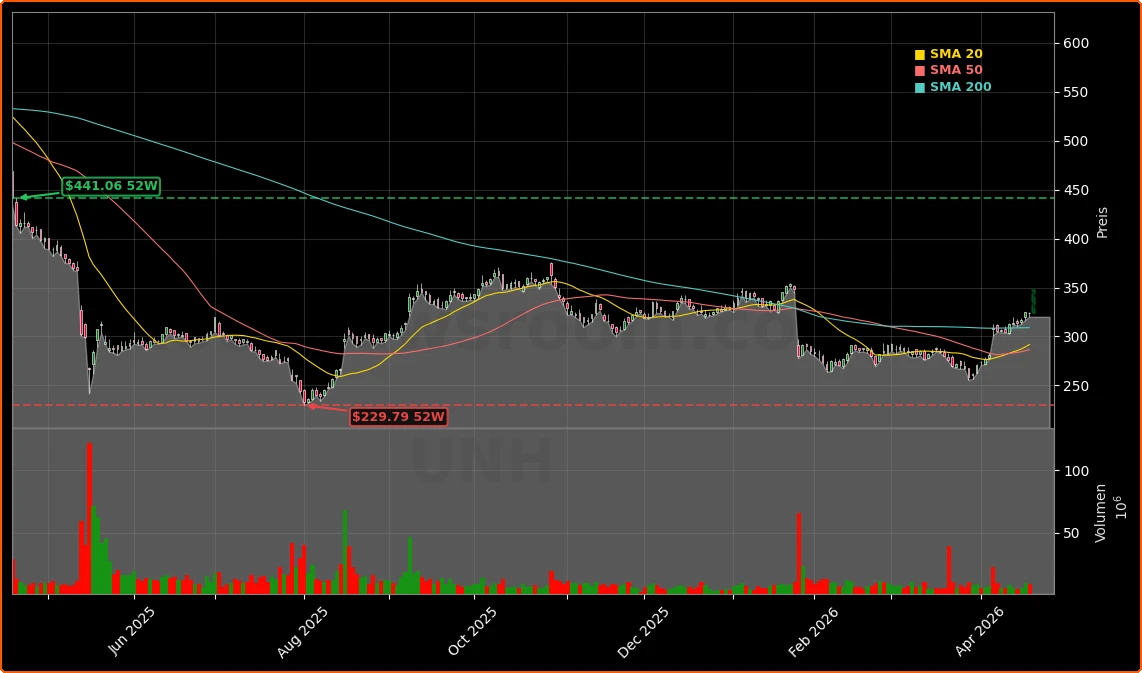
On Wall Street, UNH closed Monday at $323.48 on the NYSE and was indicated around $347.06 in pre‑market trading on Tuesday, a gain of more than 7%, making it one of the early movers in the S&P 500.
What changed in the 2026 outlook for UnitedHealth Group?
On the back of the Q1 beat, management lifted its full‑year 2026 guidance. UnitedHealth now expects adjusted EPS of more than $18.25, up from a prior outlook above $17.75 issued in January. Reported EPS is now seen at more than $17.35, versus a previous view above $17.10. The upgrade signals growing confidence that the restructuring program and pricing actions, particularly in Medicare Advantage, are starting to flow through to the bottom line.
CFO Wayne DeVeydt described the quarter as an early stage of a multi‑year turnaround, emphasizing that the company wants to see how trends develop in Q2 before committing to additional upgrades. For long‑term portfolio managers, the new range narrows the gap between current valuation and Street targets; analysts’ average price target sits near $360, implying double‑digit upside from Monday’s close, though less from the pre‑market spike.
UnitedHealth continues to target a long‑term debt‑to‑capital ratio of about 40% and ended Q1 at 42.9%, with plans to reach the 40% level in the back half of 2026. The company also intends to repurchase at least $2 billion of stock by the end of Q2, adding a capital‑return pillar to the earnings story.
How central are AI and restructuring to UnitedHealth Earnings?
A key differentiator in this quarter’s narrative is the scale of UnitedHealth’s technology push. Management expects to invest at least $1.5 billion in artificial intelligence initiatives in 2026, alongside substantial cybersecurity and modernization spending. These AI projects span claims automation, fraud detection, care management and provider workflows, with the company indicating a relatively short payback period and a role in offsetting a roughly $6 billion Medicare reimbursement headwind.
At the same time, UnitedHealth is reshaping its portfolio to focus on U.S. health care. It has exited its Optum UK business, is winding down remaining South American operations and is in the process of acquiring Alegeus Technologies, a benefits‑administration platform aimed at consumer‑directed healthcare accounts. Roughly half of the company’s top 100 leadership roles have been refreshed, and a new Public Responsibility Committee has been added at the board level, steps designed to reduce operational and governance risk that weighed on the stock in 2025.
These moves helped stabilize sentiment after last year’s plunge and have renewed interest from institutional investors who view the shares as attractively valued below $300, especially in comparison with high‑growth health‑tech names like NVIDIA that trade at much richer multiples.
What do segment results and analysts signal for investors?
Within insurance operations, UnitedHealthcare revenue grew to $86.3 billion, with operating earnings of $5.7 billion and margin expanding to 6.6% from 6.2%. Notably, membership declined, with seniors in Medicare Advantage and related complex‑populations programs down by about 965,000 in the quarter. Management is deliberately prioritizing profitability over sheer scale after 2025’s cost surprise, expecting lower revenue but higher earnings over time as less profitable business is pared back.
On the services side, Optum generated $63.7 billion in revenue and $3.3 billion in earnings, for a 5.2% margin. Optum Health contributed $1.1 billion in operating earnings, or $1.3 billion on an adjusted basis, a “good start” toward more than $1.6 billion in adjusted earnings targeted for the year. The company still characterizes Optum Health’s recovery as a multi‑year journey.
Wall Street has turned more constructive. Morgan Stanley recently upgraded UnitedHealth to a “Top Pick” with an Overweight rating and a $375 price target, citing clearer Medicare Advantage economics and the potential for a “string of clean quarters.” Other brokers including Bernstein, Raymond James, Mizuho, Truist Securities and JPMorgan have reiterated Outperform or Buy ratings while adjusting earnings models around the Medicare rate decision.
Compared with other mega‑cap health names such as Apple’s growing health ecosystem or medical‑data‑rich platforms that attract AI enthusiasm similar to that surrounding Tesla, UnitedHealth’s story remains more about steady cash generation and disciplined capital allocation than hyper‑growth, a profile many diversified U.S. portfolios favor in volatile markets.
We’re making a lot of progress but we’re nowhere close to our full potential.— Wayne DeVeydt, Chief Financial Officer of UnitedHealth Group
In summary, the latest UnitedHealth Earnings underscore a gradual but tangible turnaround: better‑than‑feared margins, a clear AI‑driven efficiency plan and a focused U.S. footprint. For investors seeking defensive exposure within the S&P 500 that still offers earnings growth and buybacks, UnitedHealth remains a core holding candidate, and upcoming quarters will reveal how much more upside the company can unlock from its AI investments and Medicare repricing strategy.