Are Wells Fargo Earnings signaling the end of the easy rate-driven boom, or just a pause before the next leg higher?

How did Wells Fargo & Company perform in Q1?
Wells Fargo & Company, the fourth‑largest U.S. bank by assets, reported first‑quarter 2026 net income of $5.25 billion, up roughly 7% from a year earlier. That equates to GAAP earnings of $1.60 per share, modestly above analyst expectations around $1.58. On an adjusted basis, earnings came in at $1.56 per share, missing the $1.58 consensus, highlighting a small but notable gap between headline and underlying performance.
Total revenue rose about 6% year over year to approximately $21.45 billion, compared with Wall Street forecasts closer to $21.77 billion. That revenue miss, combined with pressure on net interest income (NII) and margins, set the tone for a negative initial reaction in the stock, despite the clear year‑on‑year improvement in profitability.
Management reiterated that U.S. consumers and the broader economy remain resilient, even as markets grapple with volatile energy prices and ongoing geopolitical tensions in the Middle East. Trading revenue was a bright spot: market‑related income increased around 19% year over year to roughly $2.17 billion, benefiting from choppy markets that boosted client activity across rates and credit products.
Why did the market react negatively to Wells Fargo Earnings?
Investors had bid up large U.S. bank stocks into the reporting season, leaving little margin for error. Against that backdrop, the latest Wells Fargo Earnings disappointed in the areas the market currently cares most about: net interest income and efficiency. Net interest income came in at about $12.1 billion, below expectations of roughly $12.27 billion. Non‑interest income was $9.35 billion, also a touch shy of estimates near $9.5 billion.
While management maintained its full‑year NII outlook of roughly $50 billion, the softer first‑quarter print raised questions about how much incremental upside is left from higher rates. Net interest margins and the efficiency ratio were weaker than analysts had modeled, signaling that cost discipline and deposit pricing remain pressure points. Provisions for credit losses totaled about $1.14 billion, slightly above some estimates but still consistent with what management describes as strong overall credit quality.
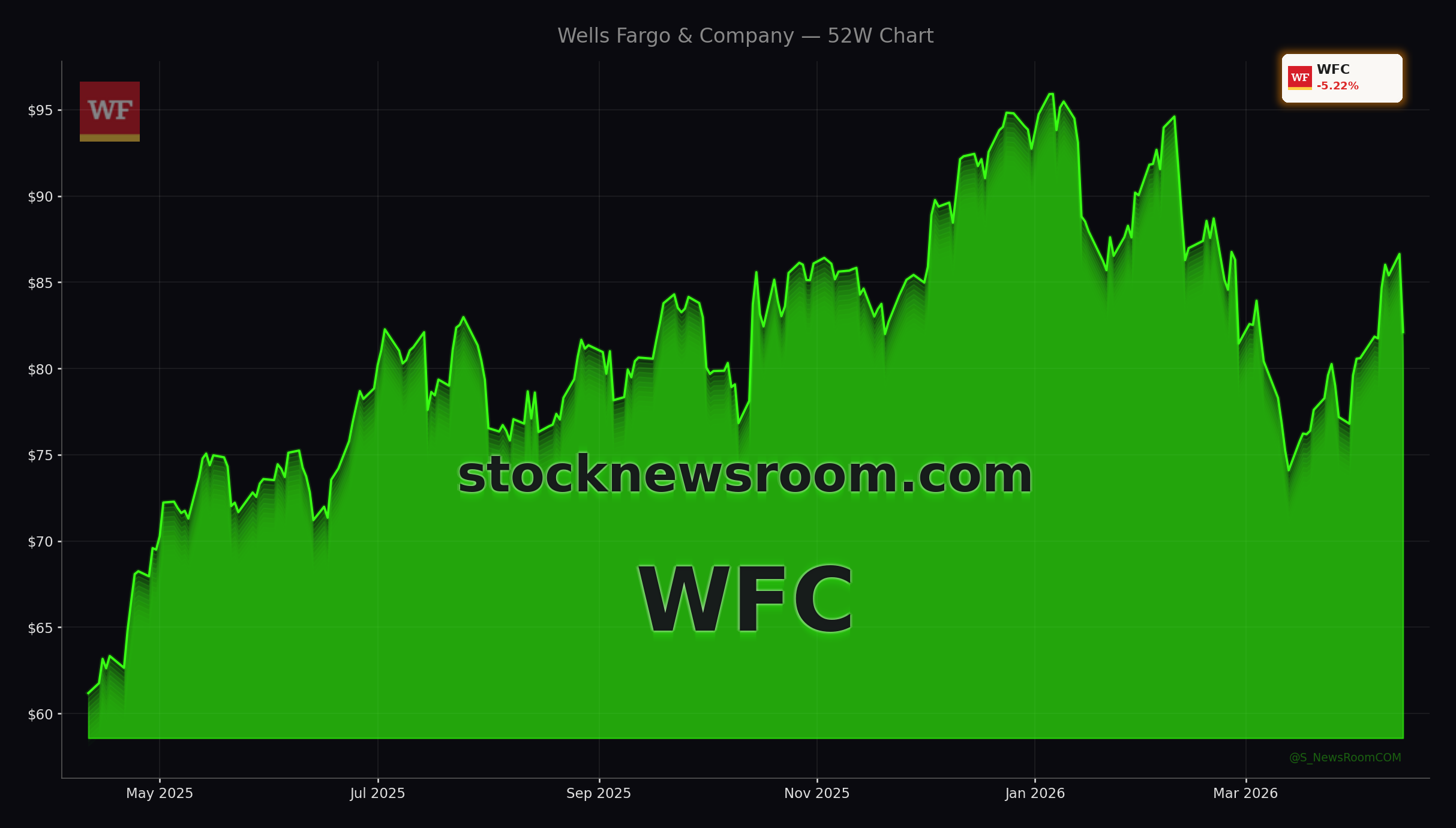
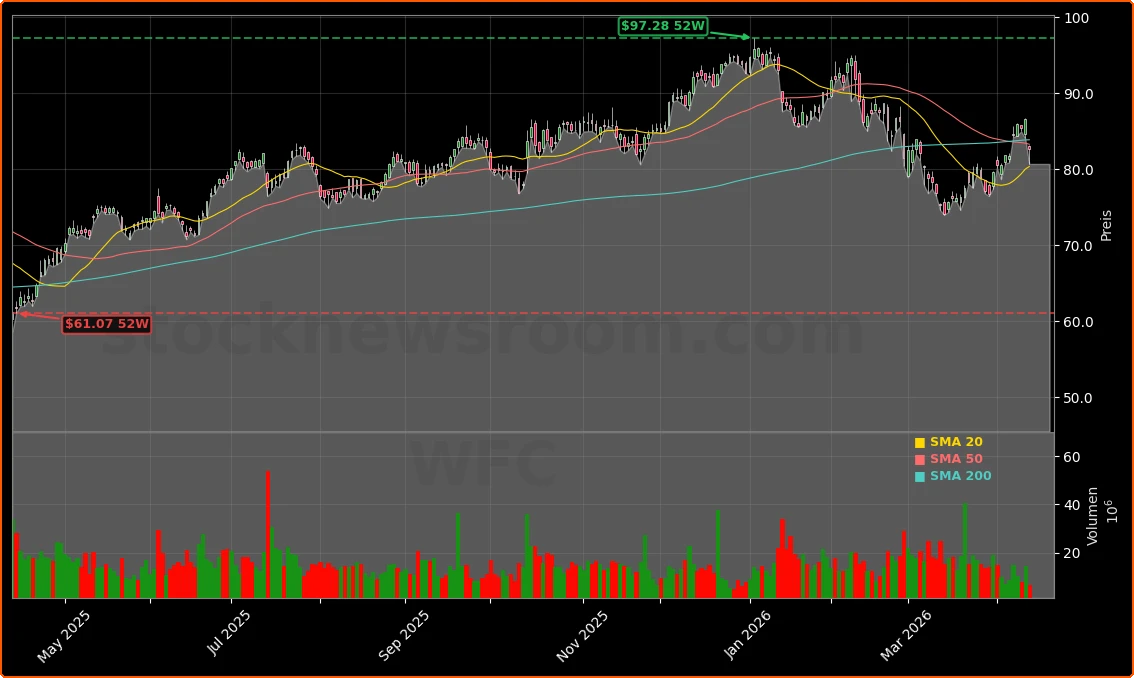
WFC had already lagged the broader financial sector this year, and the stock’s current decline to $82.74 leaves it about 4.7% below Monday’s close of $86.60. The move also pulls the shares back from recent 52‑week highs, reminding investors that bank rallies can be fragile when the earnings narrative shifts from rate tailwinds to margin compression.
How does Wells Fargo stack up against other big banks?
The Wells Fargo Earnings release landed on a busy day for U.S. financials, with JPMorgan Chase, Citigroup and BlackRock also reporting. Compared with its peers, Wells Fargo continues to lean more heavily on traditional banking—consumer and commercial lending—than on fee‑heavy investment banking and trading, though the latest quarter showed that markets revenue can still provide a useful buffer.
Commentary from executives at other Wall Street banks ahead of the report had already flagged potential softness in fixed‑income, currencies and commodities (FICC) trading and rising concerns around private credit exposures. For Wells Fargo, investors are watching its business lending to financial sponsors and any links to stressed lenders in Europe, such as failed U.K. mortgage originators, though the bank has so far emphasized that its approach to private credit is more conservative and diversified than some rivals.
The broader KBW Bank Index recently pushed to a two‑month high, reflecting improving sentiment toward financials. The question now is whether the sector can sustain those gains if earnings increasingly depend on cost cuts and fee income rather than expanding net interest margins. For diversified portfolios tracking the S&P 500 or overweight financials versus the NASDAQ’s tech tilt, the latest results argue for more selective positioning within large‑cap banks.
What do analysts and institutional investors say?
Institutional appetite for WFC remains solid. AssetMark Inc., for example, recently increased its position in Wells Fargo & Company by 12.5% in the fourth quarter, bringing its stake to more than 1.09 million shares valued at just over $100 million. On Wall Street, the stock still carries a broadly constructive stance: analysts collectively rate WFC a “Moderate Buy,” with an average price target around $97.70, implying upside from current levels.
RBC Capital Markets maintains an “Outperform” rating on Wells Fargo, seeing long‑term value as the bank continues to work through legacy regulatory issues and improves profitability. Other large houses such as Citigroup and Goldman Sachs have highlighted traditional U.S. retail and commercial banks—including Wells—as potential beneficiaries if the U.S. economy avoids a hard landing and credit losses remain contained.
At the same time, some research notes have turned more cautious in the near term after the latest Wells Fargo Earnings, citing the NII miss, modestly higher credit provisions, and a slight dip in capital ratios. For growth‑oriented investors heavily allocated to mega‑cap tech names like NVIDIA, Apple or Tesla, Wells Fargo offers a different, rate‑ and credit‑sensitive exposure that can diversify portfolio risk—but the quarter reinforces that timing entries around bank earnings remains critical.
Management will elaborate on strategy, cost controls and balance‑sheet positioning on its conference call at 10:00 a.m. ET, a key venue for clarifying how it plans to protect margins if the Fed begins cutting rates later this year or if funding costs stay elevated for longer.