Will the WTI Crude Oil Hormuz sell-off last, or are traders underestimating how slowly real tanker flows can return?

What Does WTI Crude Oil Hormuz Reopening Really Mean for Supply?
WTI Crude Oil Hormuz is no longer a theoretical risk premium — it’s becoming a logistical timeline. While President Donald Trump announced the Strait of Hormuz will “completely reopen” toll-free this Friday in Geneva, tanker operators remain deeply cautious. Mitsui OSK Lines CEO Jotaro Tamura told the Financial Times that commercial shippers will likely wait “weeks” before resuming transit — not days — citing unresolved maritime security, insurance reactivation, and unconfirmed mine-clearance progress. The U.S. Naval Forces Central Command confirmed partial reopening, but acknowledged that full traffic normalization could take 3–8 weeks. Meanwhile, U.S. strategic petroleum reserves sit at 340 million barrels — the lowest since 1983 — and weekly draws remain elevated at 8.9 million barrels. Even with Hormuz flows resuming, refilling inventories will take months, not weeks.
How Are U.S. Energy Stocks Reacting to WTI Crude Oil Hormuz?
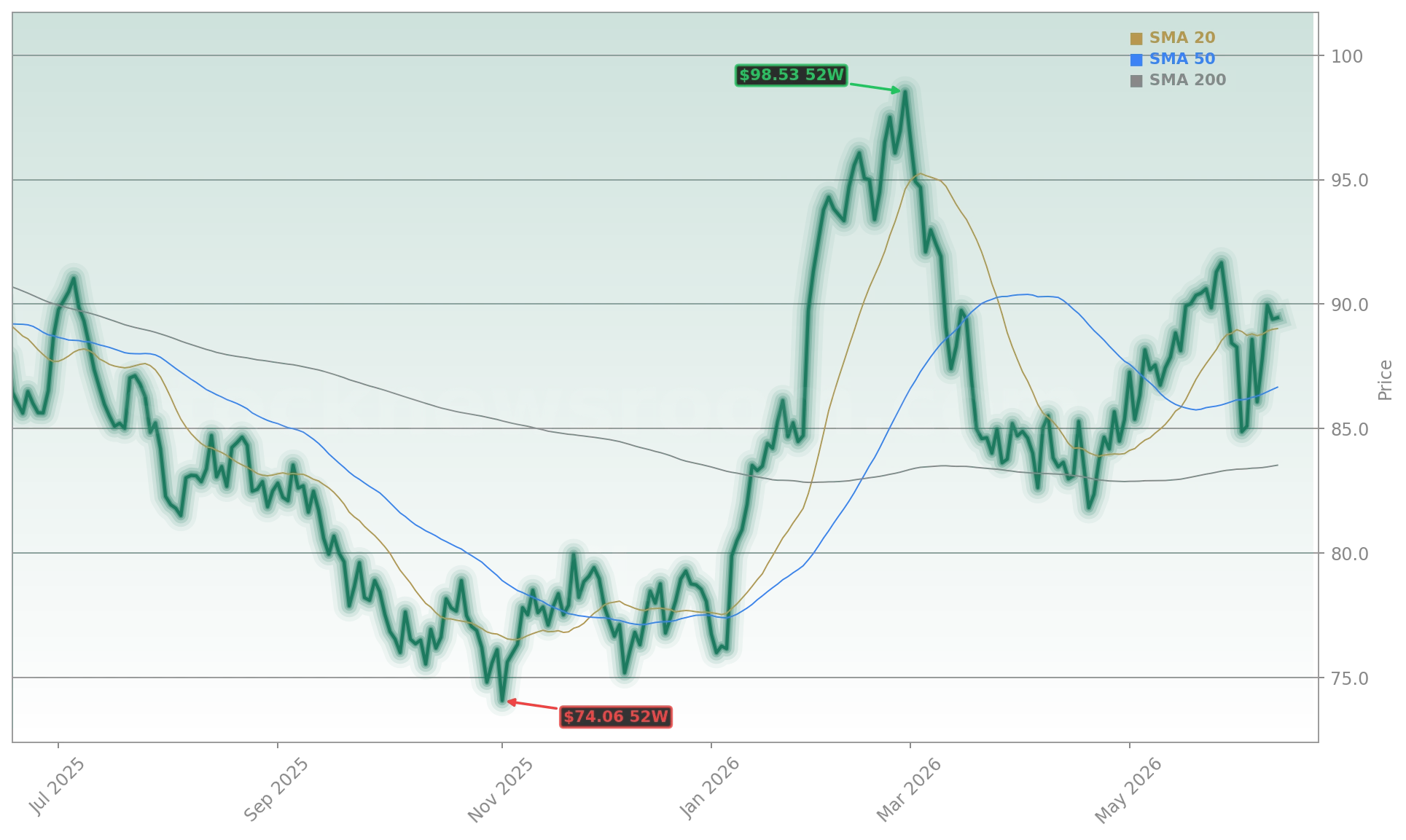
Energy sector equities are under pressure: Exxon Mobil, Chevron, and Valero Energy all slid more than 2.5% Tuesday as WTIUSD breached $77. The S&P 500 Energy Index dropped 3.08%, outpacing broader market gains. This divergence highlights Wall Street’s short-term focus on margins: lower crude prices compress refining spreads and reduce upstream revenue visibility. Goldman Sachs cut its 2026 WTI price forecast to $74 — down from $82 — citing “accelerated risk premium removal” tied to the Hormuz framework. Morgan Stanley echoed the move, lowering its Brent outlook and noting that “physical demand weakness is now compounding geopolitical relief.” Notably, NVIDIA and Apple rallied alongside the Nasdaq’s 1.3% gain — underscoring how WTI Crude Oil Hormuz-driven inflation relief benefits growth and tech exposure.
Will Lower WTI Crude Oil Hormuz Prices Cool Inflation Enough for the Fed?
Markets are pricing in a more dovish Federal Reserve ahead of Wednesday’s policy meeting — with the 2-year Treasury yield down 14 bps since Monday. While WTI Crude Oil Hormuz volatility has subsided, Capital.com analyst Daniela Hathorn cautioned that “underlying inflation pressures tied to strong economic activity and AI-driven investment remain present.” Gas prices have already fallen 54 cents since May 20th, and cruise lines and airlines are seeing analyst upgrades on lower fuel cost assumptions. But Julie Beal, a commodities strategist, warned: “The U.S. must refill the SPR, and China is expanding reserves — that creates a structural floor. A $70–$75 WTI Crude Oil Hormuz range is sustainable, not a collapse.” Fed officials remain silent on the deal, but the implied pivot is clear: easing energy costs buy breathing room.
What’s Next for WTI Crude Oil Hormuz After Friday’s Geneva Signing?
Friday’s formal signing of the 60-day ceasefire and Hormuz framework is expected — but implementation is the real test. The deal does not resolve Iran’s nuclear program, sanctions relief, or long-term Strait governance. Vance, a senior U.S. State Department official, confirmed toll-free access is “part of technical negotiations,” not guaranteed. Meanwhile, OPEC slashed its 2026 demand growth forecast to 970,000 barrels per day — down from 1.17 million — signaling structural softness. Brent December contracts remain 10–15% above pre-war levels, and U.S. storage is still 22% below the five-year average. Analysts at ANZ Bank conclude: “The simple part of the rally is over. Now it’s about execution — and execution takes time.”
The simple part of the rally is over. Now it’s about execution — and execution takes time.— ANZ Bank economists
Related coverage: The WTI Hormuz Deal Drives Crude Lower as Fed Bets Shift explores how the framework reshapes inflation expectations and central bank timing — read the full analysis here. That article also examines the implications for U.S. equity valuations and sector rotation — see how energy and tech stocks are repositioning.