Are surging Berkshire Hathaway Earnings and a record cash pile a quiet warning about how Warren Buffett’s empire sees today’s market?

How do Berkshire Hathaway Earnings change the market picture?
Berkshire Hathaway Inc. reported operating earnings of about $11.35 billion for the first quarter, an increase of roughly 17%–18% from a year earlier. The improvement was broad-based, with higher profits in insurance underwriting, BNSF Railway, Berkshire Hathaway Energy, and its manufacturing, service, and retail businesses. Insurance underwriting profit alone climbed to around $1.7 billion, helped by a rebound from prior catastrophe losses and stronger pricing. Earnings in the insurance investment portfolio were also solid, with roughly $2.7 billion generated from investing float.
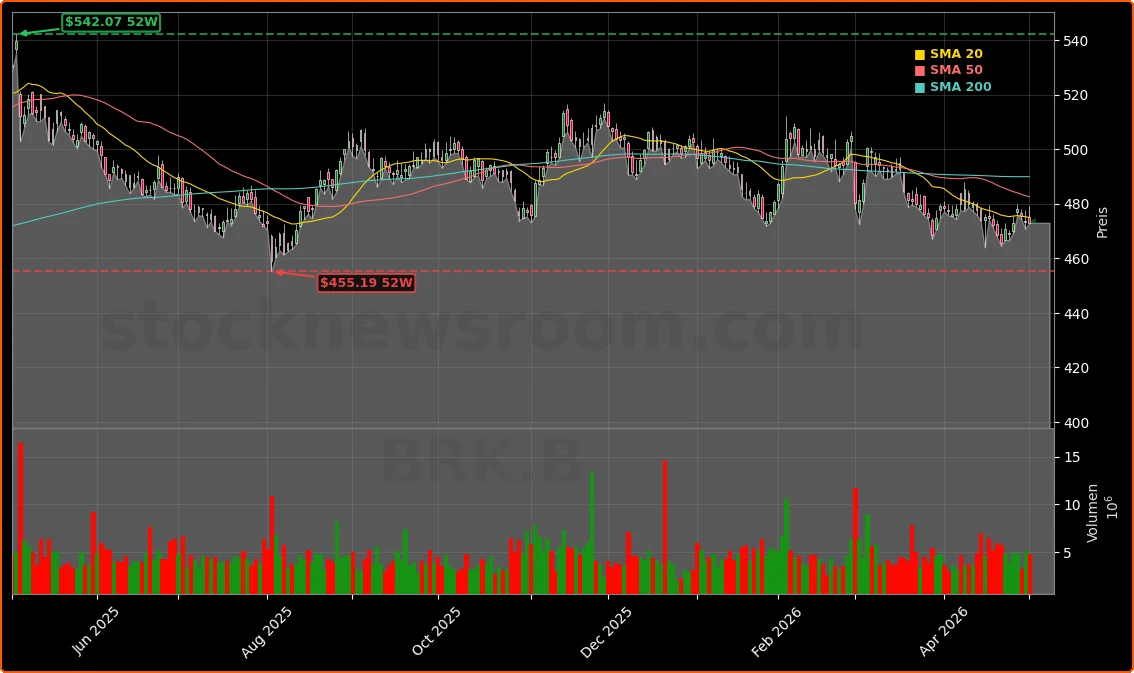
Despite the stronger Berkshire Hathaway Earnings, the Class B shares have lagged the S&P 500 both year to date and over the last 12 months. BRK.B recently traded around $473.01, down about 0.3% from the prior close in intraday action, while after-hours indications pointed to $474.52, a modest uptick of about 0.3%. Over the past year, the stock has underperformed the S&P 500 by more than 37 percentage points, as growth and mega-cap tech names have driven the index sharply higher.
For U.S. investors balancing quality defensives against higher-growth exposure in sectors dominated by NVIDIA and Apple, the latest Berkshire Hathaway Earnings highlight an unusual disconnect: fundamental strength contrasted with muted share-price momentum.
What does the record cash pile signal for investors?
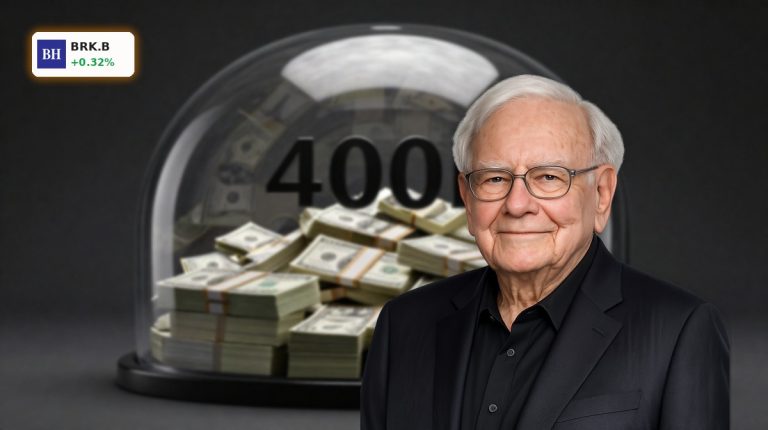
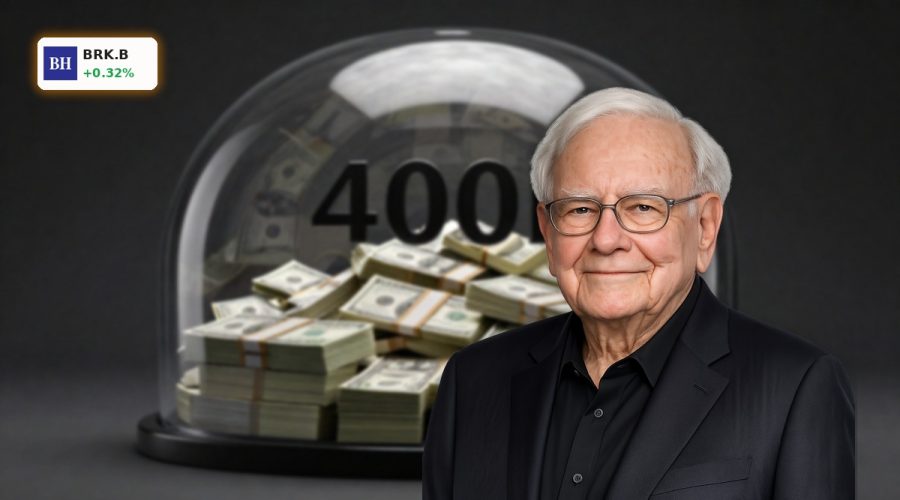
One of the most striking takeaways from the quarter is Berkshire’s swelling cash and Treasury bill position. The conglomerate ended the period with a record cash hoard of roughly $397–$400 billion, even after accounting for about $17 billion in payables related to Treasury bills. That stash now exceeds the market capitalizations of blue chips such as Chevron (CVX) and several large financial institutions, and rivals the equity values of high-profile names on the NASDAQ.
Abel and his team remained net sellers of equities, unloading roughly $24 billion of stocks while buying about $16 billion, for net sales of just over $8 billion. It marked the 14th consecutive quarter in which Berkshire reduced its equity portfolio. The company has trimmed or exited some positions that were initially built by an internal investment manager under Buffett, while leaving its five largest holdings — American Express, Apple, Bank of America, Coca-Cola, and Chevron — broadly unchanged.
For shareholders, the Berkshire Hathaway Earnings underscore a cautious stance toward current valuations on Wall Street. Warren Buffett long argued that he would prefer to hold cash rather than overpay, and Abel has so far echoed that philosophy, making clear he won’t pursue deals or dividends simply to put money to work.
Are buybacks back as a key capital tool at Berkshire Hathaway?
After a pause that lasted roughly seven quarters, Berkshire resumed share repurchases in a measured way. During the first quarter, the company bought back around $235 million of its own stock, a modest figure compared with the $78 billion Berkshire spent on buybacks between mid-2018 and mid-2024. Still, the move is symbolically important because it suggests Abel is willing to follow Buffett’s playbook when he views the stock as trading at a reasonable discount to intrinsic value.
At recent prices, Berkshire’s price-to-book ratio is about 1.4x, down from levels closer to 1.8x when the stock was more richly valued. Some long-term holders see that compression, combined with solid Berkshire Hathaway Earnings, as a potential opportunity to increase exposure. Abel himself has purchased roughly $15 million of Berkshire shares, reinforcing the signal of internal confidence.
Sell-side coverage remains relatively sparse compared with megacap tech, but where analysts do weigh in, they tend to emphasize Berkshire’s balance-sheet strength and diversified cash flow. U.S. banks such as UBS have highlighted the potential for higher future buybacks if the valuation remains subdued, while skeptics like KBW analyst Meyer Shields warn that persistent macro headwinds and consumer weakness could limit upside and even pressure the stock by another 5%–10% by year-end.
How is Greg Abel shaping post-Buffett Berkshire Hathaway Earnings?
The quarter was the first in which Greg Abel, long groomed as successor, fully owned the operating results as CEO. While Warren Buffett has stepped aside from day-to-day management, he remains chairman and the symbolic face of the company, visible everywhere from shareholder event merchandise to brand campaigns at subsidiaries such as Geico and BNSF Railway.
Operationally, Abel has stressed continuity. Insurance remains the engine of float, which is then invested across equities, bonds, and wholly owned businesses. Subsidiaries like Brooks Running, which posted a standout 23% global revenue increase in the first quarter and leads the U.S. performance-running market, show how Berkshire benefits from resilient consumer demand even outside its core financial and industrial holdings. Partnerships with culturally visible figures, such as actor and singer Cynthia Erivo running a marathon in Brooks gear, signal that Berkshire’s portfolio companies can still innovate on brand and product despite the parent’s conservative financial stance.
At the same time, Abel has begun to leave his imprint. On the industrial side, he has flagged rising input costs, particularly in chemicals, which cannot always be passed on to customers immediately. He has also reiterated that Berkshire will not chase deals simply to shrink its cash mountain. For many U.S. investors, the key question is whether Abel will ultimately use that capital for a transformative acquisition, expanded energy investments — including areas like nuclear and renewables — or larger buybacks, especially if the stock’s relative underperformance persists against high-flying names such as Tesla and other growth darlings on the NASDAQ.
Your goal as an investor should simply be to purchase, at a rational price, a part interest in an easily understandable business whose earnings are virtually certain to be materially higher five, 10, and 20 years from now.— Warren Buffett
Beyond the numbers, Berkshire’s annual meeting in Omaha continues to underscore the company’s unique shareholder culture. More than two dozen subsidiaries set up shop with discounted merchandise, and Buffett-themed items — from Squishmallows plush toys to novelty “Warren’s Oracle Orb” gadgets — drew long lines. That intense retail investor loyalty, combined with disciplined Berkshire Hathaway Earnings and a fortress balance sheet, remains a key part of the investment thesis for BRK.B.