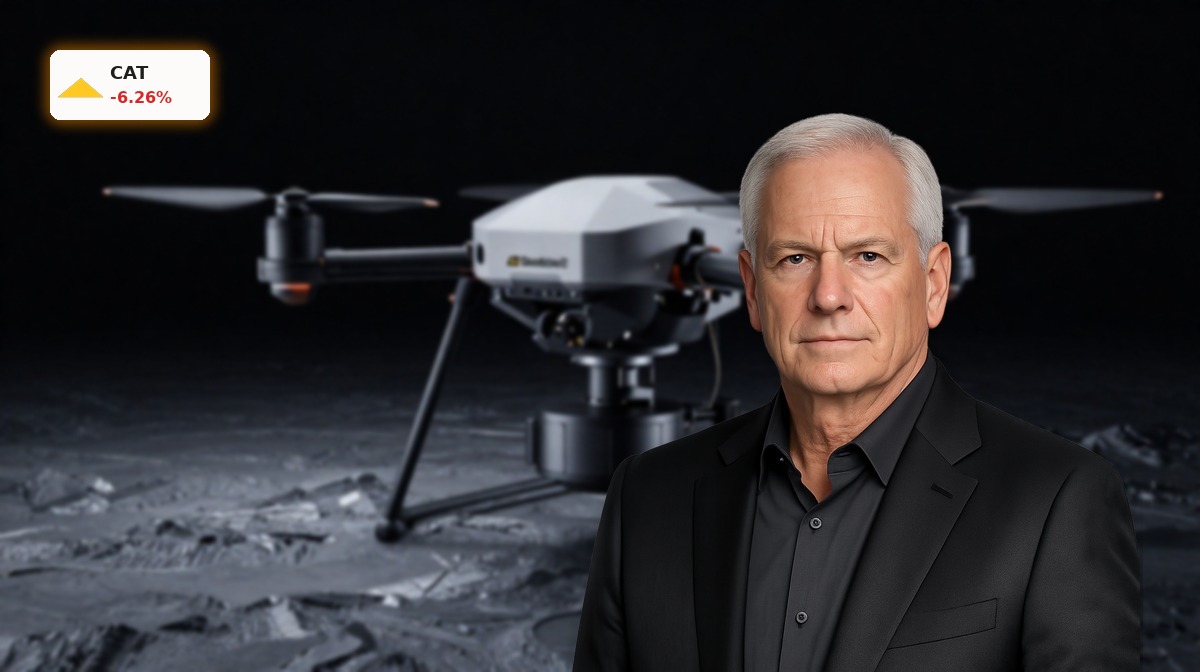

Can Caterpillar Acquisition momentum in mining AI outweigh investor fears after CAT shares suddenly dropped more than 6%?

What Does Skycatch Bring to Caterpillar?
Skycatch specializes in high-frequency, high-precision 3D spatial data acquisition — using drones, edge sensors, and cloud AI to map terrain, track stockpiles, and monitor equipment in near real time. Its platform integrates with Caterpillar’s MineStar Command for hauling and RPMGlobal’s mine planning suite, enabling closed-loop optimization across exploration, extraction, and logistics. Unlike legacy surveying tools, Skycatch’s AI models identify subsurface anomalies and predict haul road degradation — capabilities that directly support Caterpillar’s autonomous fleet roadmap. For U.S. investors, this acquisition signals a pivot from hardware-centric revenue toward recurring SaaS-like data services, a model already proving profitable for peers like Apple in enterprise mobility and Tesla in fleet intelligence.
How Does This Caterpillar Acquisition Fit the Broader Strategy?
The Caterpillar Acquisition of Skycatch isn’t standalone — it’s the third major tech buy in 18 months, after the $1.2 billion RPMGlobal acquisition and the 2025 integration of autonomous control startup NACCO. Together, these moves form a vertical stack: RPMGlobal handles mine planning and scheduling; MineStar Command manages autonomous equipment; and Skycatch delivers the real-time geospatial intelligence layer. Citigroup analysts noted in a July 6 report that ‘Caterpillar’s $3.1B annual software and services revenue now represents 12% of total sales — up from 7% in 2023 — and this Caterpillar Acquisition could lift that to 15% by FY2028.’ The firm raised its price target to $985, maintaining a ‘Buy’ rating.
Why Did CAT Shares Drop Despite Strategic Upside?
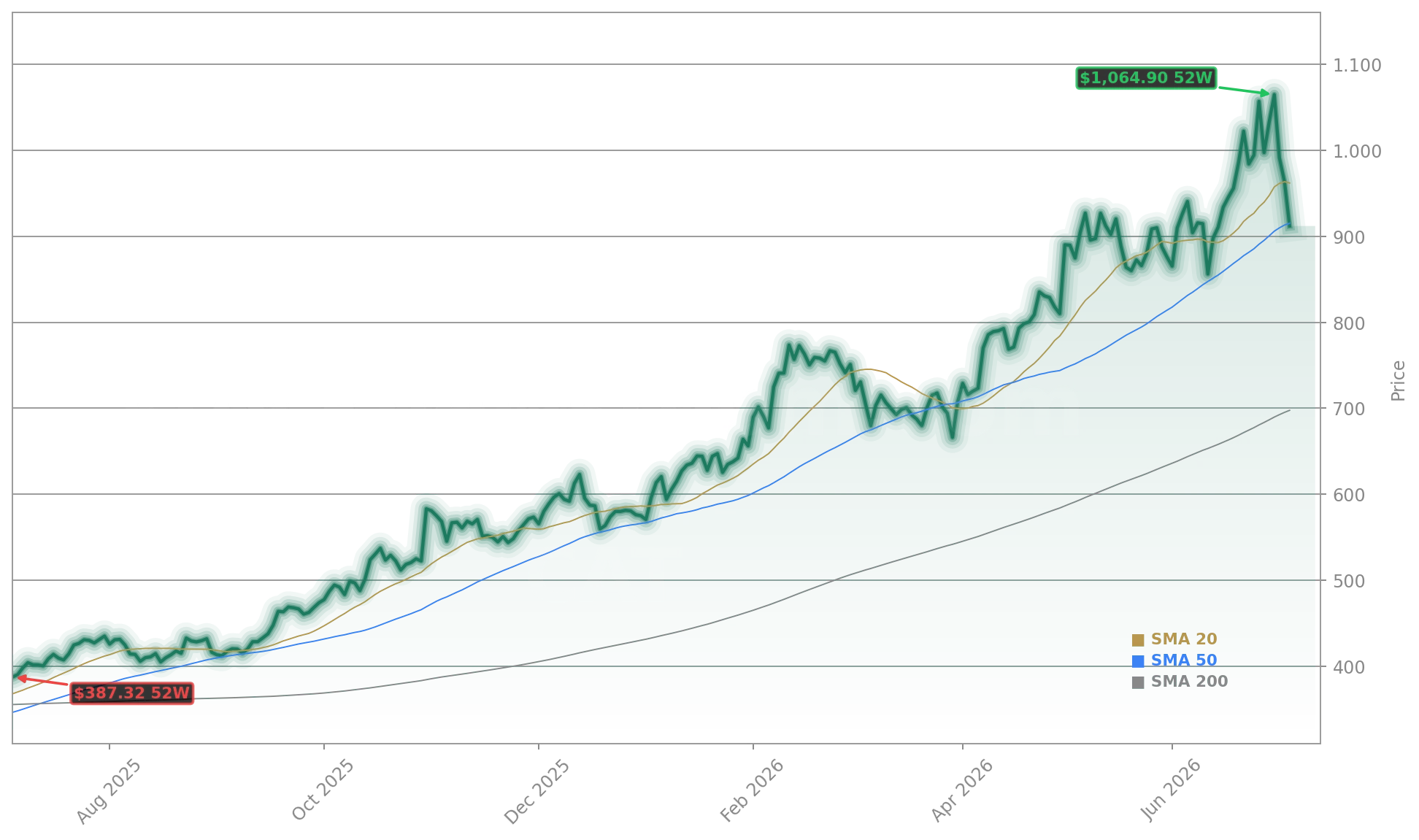
Despite strong fundamentals — CAT’s Q2 2026 EPS came in at $6.21, beating consensus by $0.19 — the stock fell sharply on intraday trading, reflecting Wall Street’s caution on execution risk and capital allocation. The Skycatch deal’s financial terms remain undisclosed, fueling speculation about potential dilution. RBC Capital Markets downgraded CAT to ‘Sector Perform’ on July 6, citing ‘elevated integration complexity and near-term margin pressure from R&D and cloud infrastructure spend.’ The Dow Jones Industrial Average dropped 137 points Tuesday, with CAT alone dragging the index down by 35 points. This underperformance contrasts with the NASDAQ, where AI infrastructure names like NVIDIA gained 1.8% on stronger-than-expected data center demand — highlighting investor preference for pure-play tech over industrial hybrids.
How Does This Compare to Mining Tech Rivals?
Caterpillar’s Caterpillar Acquisition targets a gap left by competitors: Komatsu relies heavily on its own proprietary systems and partnerships with Microsoft; Hitachi Energy focuses on grid-integrated mining electrification; and Hexagon leans on legacy surveying hardware. Skycatch’s drone-first, AI-native architecture gives Caterpillar a unique edge in dynamic, unstructured environments — particularly in North American copper and lithium operations where rapid site changes are common. Goldman Sachs observes that ‘no other OEM offers this level of real-time spatial fidelity at scale,’ and has increased its 2027 EBITDA forecast for CAT’s Resource Industries segment by 4.2% following the announcement. Still, investors remain wary: the S&P 500 Industrials sector is down 2.1% year-to-date, while the S&P 500 Information Technology index is up 18.7% — underscoring the valuation premium for software-defined infrastructure.
What’s Next for Caterpillar’s Tech Roadmap?
Caterpillar plans to embed Skycatch’s AI models into its next-gen MineStar Edge platform, launching in Q4 2026 with predictive maintenance and autonomous pit navigation features. Integration with RPMGlobal’s DISPATCH software is expected by early 2027, enabling full digital twin synchronization across mine planning and execution. Denise Johnson, Caterpillar Resource Industries group president, stated: ‘This isn’t about adding another tool — it’s about closing the loop between what’s planned, what’s happening, and what’s next.’ With over $2.4 billion in cash and $1.7 billion in annual R&D spend, Caterpillar has the balance sheet to scale — but Wall Street will demand clear monetization: recurring revenue growth, not just installed base expansion.
By integrating near-real-time, high-resolution spatial data into both RPM and MineStar solutions, we can help customers improve mine site performance by enhancing safety, productivity and predictability across their operations using both staffed and autonomous fleets.— Denise Johnson, Group President, Caterpillar Resource Industries
Related Coverage: Short sellers are intensifying pressure on Caterpillar following the Caterpillar Short Bet -7% as Valuation Fears Deepen report, citing stretched multiples and margin compression in its core equipment business. Meanwhile, broader industrial sentiment is softening — Walmart Forecast -4.3%: Q3 Sales Warning Hits Sentiment reflects similar concerns about demand durability across capital-intensive sectors, reinforcing the need for Caterpillar to prove software monetization can offset cyclical headwinds.