Is Caterpillar AI Strategy turning an old-line industrial giant into one of the market’s most overlooked AI infrastructure winners?

Why Is Caterpillar Inc. Rising With AI Stocks?
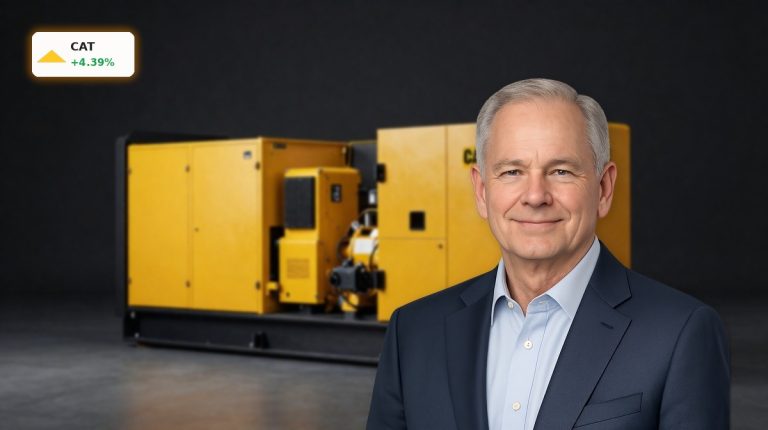
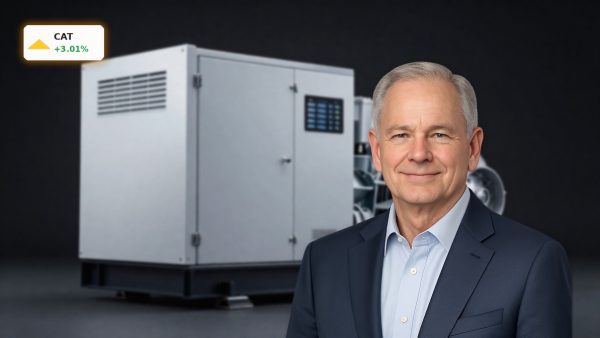
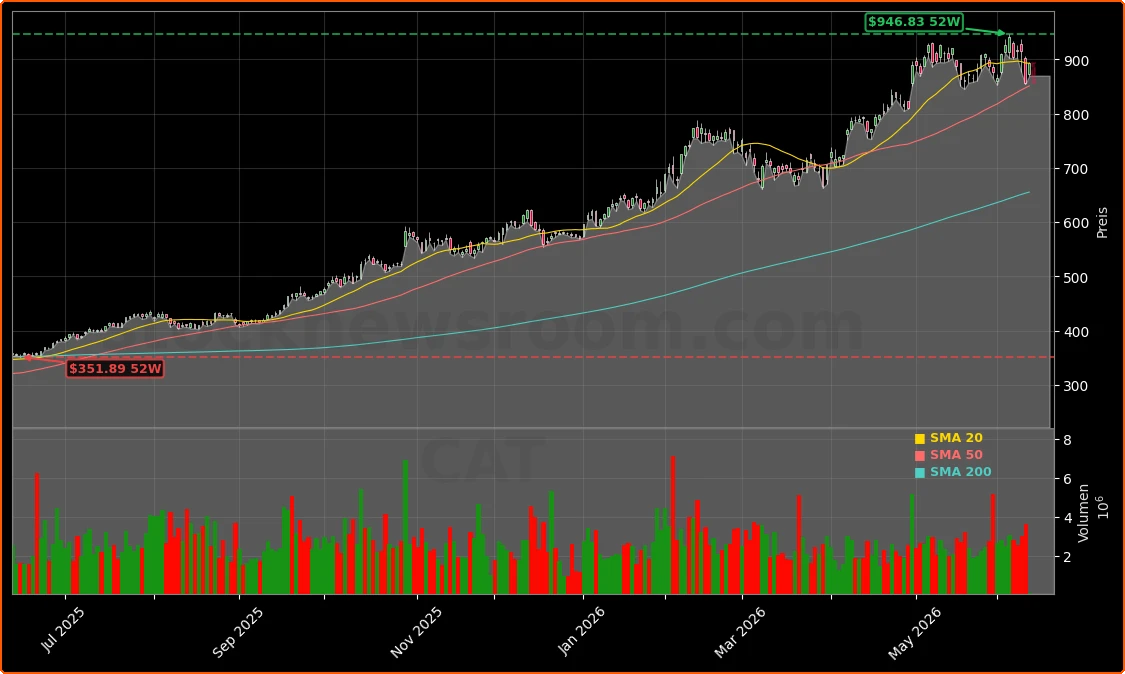
Caterpillar Inc. climbed $15.67, or 1.8%, during Thursday’s session — contributing roughly 138 points to the Dow Jones Industrial Average’s 288-point intraday gain. That outperformance isn’t accidental. While peers like NVIDIA and Tesla dominate AI and autonomy headlines, Caterpillar Inc. is quietly capturing high-margin infrastructure demand: its gas turbines, diesel generators, and microgrid solutions now power AI data centers from Northern Virginia to Frankfurt. Unlike pure-play tech firms, Caterpillar Inc. delivers mission-critical, on-site power resilience — a non-negotiable for AI workloads running 24/7. Its Q1 2026 results, released in late April, confirmed record backlog growth across energy and infrastructure segments, with orders for large-engine systems up 22% year-over-year.
What Does Caterpillar AI Strategy Actually Deliver?
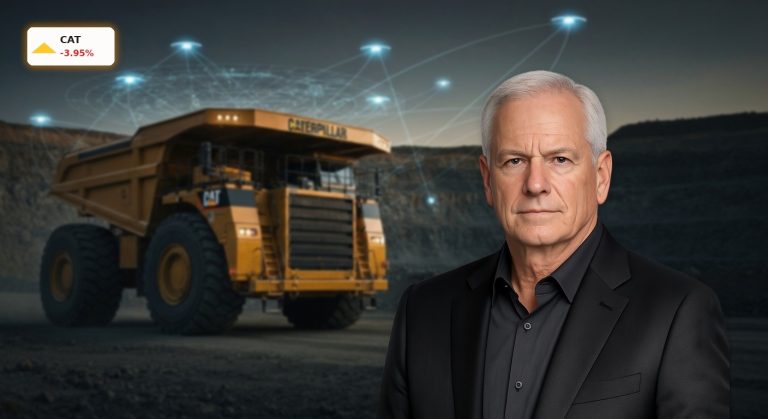
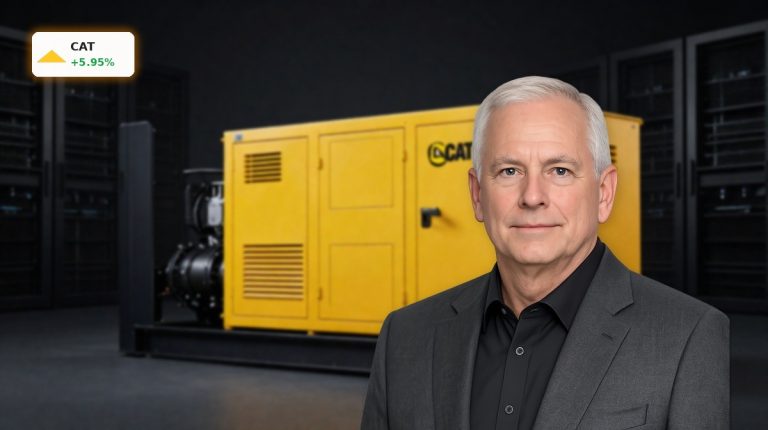
Caterpillar AI Strategy extends far beyond marketing buzz. It’s embedded in three revenue-generating vectors: (1) AI data center power systems, including integrated generator sets rated for Tier IV uptime; (2) autonomous mining platforms — already deployed across 12 global sites with >90% fleet utilization rates; and (3) AI-driven predictive maintenance services bundled with hardware sales. These initiatives are lifting gross margins: energy-related product lines now contribute 34% of total revenue, up from 27% in Q1 2025. Citigroup analyst Kyle Menges recently reiterated a ‘Buy’ rating and raised the 12-month price target to $940, citing ‘accelerating traction in AI-adjacent infrastructure’ and noting that ‘Caterpillar AI Strategy is shifting from R&D investment to scalable monetization.’
How Does Caterpillar Inc. Compare to Energy & Tech Peers?
While Apple and Microsoft invest billions in AI chip design and cloud infrastructure, Caterpillar Inc. owns the physical layer — the hardware that keeps those systems alive during grid stress or outages. That puts it in a rare defensive-offensive position: its 4.0% dividend yield and 32-year streak of annual increases provide ballast, while its exposure to AI-driven power demand grows faster than the S&P 500’s energy sector average. Contrast that with Chevron and Exxon Mobil, whose energy transition investments remain largely upstream- or carbon-capture-focused. Caterpillar Inc. is delivering tangible, revenue-generating AI infrastructure — today. Morgan Stanley highlights that Caterpillar Inc.’s AI-linked revenue could reach $8.2 billion by 2028, up from ~$2.1 billion in 2025 — a compound annual growth rate of 59%.
Is the Autonomous Push Just Hype?
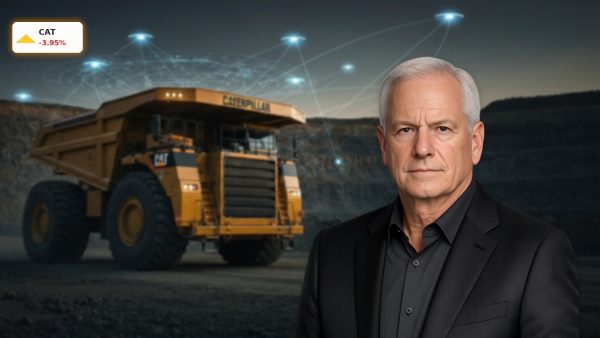
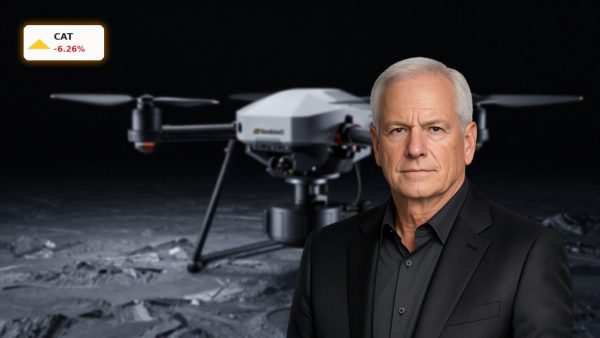
No. Caterpillar Inc.’s autonomous mining fleet — the world’s largest commercially deployed — now includes over 450 AI-guided haul trucks, loaders, and excavators operating across six continents. These machines use real-time sensor fusion, edge AI, and cloud-based fleet optimization — all built on proprietary software platforms acquired over the past decade. The result? A 15% average reduction in fuel consumption and 22% lower maintenance costs per machine, according to internal operational data. That efficiency translates directly into customer ROI — and sticky, multi-year service contracts. RBC Capital Markets recently upgraded Caterpillar Inc. to ‘Outperform’, citing ‘the defensibility of its autonomous stack and growing attach rate of AI-powered analytics subscriptions.’
What’s Next for Caterpillar Inc. in Q2 2026?
With AI data center buildouts accelerating — and U.S. grid constraints worsening — Caterpillar Inc. is expanding its modular power system manufacturing capacity in Illinois and Germany. The company expects Q2 2026 energy-related order intake to exceed $4.3 billion, up 31% year-over-year. Meanwhile, its AI-driven equipment-as-a-service (EaaS) model is gaining traction: 68% of new large-asset contracts now include embedded AI analytics and remote diagnostics. As Wall Street recalibrates industrial valuations around AI enablement, Caterpillar Inc. stands out not for abandoning its roots, but for upgrading them — with AI at the core of its next growth chapter.
We think [this] is more of a 2027/2028 story than a 2025/2026 story.— Kyle Menges, Citigroup
Related coverage includes Caterpillar Earnings Q1: Record Boom Fueled by AI Power, which details how AI infrastructure demand drove a 27% jump in large-engine system orders and record backlog. Also relevant is Medtronic Upgrade Sends Shares Up 5.1% After Q2 Beat, illustrating how Wall Street is rewarding companies that embed AI into mission-critical physical systems — whether in healthcare or heavy industry.