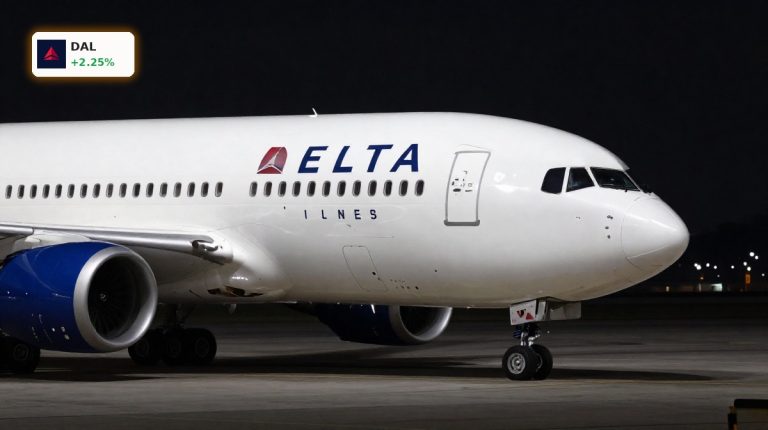
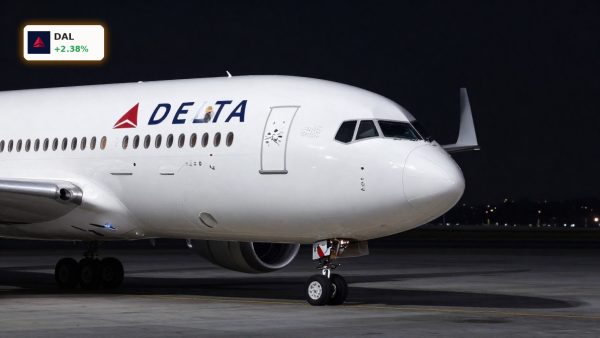
Can Delta Air Lines Demand keep climbing even as fuel costs surge and insider selling starts to unsettle investors?

Why Is Delta Air Lines Demand So Resilient?
Delta Air Lines Demand is anchored in a structural shift: the K-shaped economy is accelerating premium travel while budget carriers struggle. Unlike Southwest or American Airlines, Delta Air Lines targets high-net-worth individuals and corporate clients who prioritize comfort, lounge access, and seamless international connectivity — not price. Transatlantic flight additions from Boston, Seattle, and New York are driving outsized revenue per available seat mile (RASM), particularly in premium cabins. According to Likefolio’s latest consumer sentiment data, Delta Air Lines Demand rose +14% year-over-year — the highest among major U.S. airlines. That strength isn’t reflected in TSA passenger counts alone; it’s embedded in loyalty program engagement, Amex co-branded card spend, and corporate contract renewals — all of which remain robust despite macro uncertainty.
How Do Competitors Compare on Premium Demand?
While United Airlines is positioning itself as a growth-focused transatlantic challenger, its premium demand growth lags Delta Air Lines Demand by nearly 500 basis points in Likefolio’s proprietary scoring. American Airlines and Southwest face steeper headwinds: American’s corporate book remains below 2019 levels, and Southwest’s cost-focused model limits premium seat capacity and pricing power. Delta’s 91% Industrials weighting in the U.S. Global Jets ETF underscores its dominance in the premium segment — a contrast to the fund’s 7% Consumer Cyclical and 2% Technology allocations. RBC Capital Markets recently reaffirmed its ‘Outperform’ rating on Delta Air Lines, citing ‘superior margin insulation and loyalty-driven revenue stickiness’ — a view echoed by Citigroup, which raised its 12-month price target to $88, citing ‘structural pricing power in transatlantic and business travel.’
What’s the Fuel Risk to Delta Air Lines Demand?
Jet fuel costs are the single largest threat to Delta Air Lines’ Q2 2026 earnings. With the International Air Transport Association forecasting global airline net profits to fall from $41 billion to $23 billion in 2026, fuel-driven margin compression is unavoidable. Delta’s operating margins are expected to contract from 4% to 3%, and gross margins from 17% to 15%. That pressure stems directly from crude oil’s surge — from $65/barrel in mid-2025 to $152/barrel in Q2 2026 — driven by Middle East conflict escalation. Yet Delta’s hedging strategy and premium pricing power allow it to absorb more cost than peers: unlike Southwest, Delta does not rely on main cabin volume to fill planes. Instead, a single premium passenger often generates revenue equivalent to two economy passengers — giving Delta Air Lines Demand both elasticity and margin resilience.
Are Insider Sales a Red Flag?
Nineteen insider sales — including by the CEO and President — over the past six months have raised investor questions. However, analysts at Morgan Stanley note these transactions align with typical stock option exercises at elevated valuations, not a fundamental shift in confidence. The stock’s 77% rise from $45 a year ago — outpacing the S&P 500’s 12% gain — makes profit-taking logical. More telling is Delta’s strategic posture: its July 9 earnings report will reveal whether transatlantic expansion and corporate travel recovery are accelerating faster than fuel cost inflation. Options activity suggests traders anticipate a muted reaction — with a July 2nd $80 call calendar spread indicating neutral-to-bullish positioning ahead of the print. That aligns with Likefolio’s data: sentiment remains strong, and Delta Air Lines Demand shows no signs of softening.
What’s Next for Delta Air Lines Demand?
Delta’s customers want to go where they want to go and be comfortable when they go there. They’re willing to pay for it — and they don’t switch to Southwest because that’s not their vibe.— Landon Swan, Co-Founder, Likefolio
Delta Air Lines Demand is now the benchmark for airline resilience in a volatile macro environment. With Q2 2026 earnings due July 9, investors will scrutinize yield trends, transatlantic load factors, and fuel-hedging disclosures. A resolution in the Middle East — and crude falling below $80 — would instantly lift margins and catalyze further upside. Until then, Delta remains the safest airline exposure on Wall Street: it’s not just surviving the fuel crisis — it’s leveraging Delta Air Lines Demand to deepen its premium moat. As Citigroup stated, ‘Delta’s customer base doesn’t trade down. They trade up — and they pay.’ For portfolios seeking exposure to resilient consumer spending and global travel recovery, Delta Air Lines Demand is the clearest signal in a noisy sector.