Is the Ethereum Plunge just another liquidation washout, or is ETH breaking into a far more dangerous phase?

Why Is the Ethereum Plunge Accelerating?
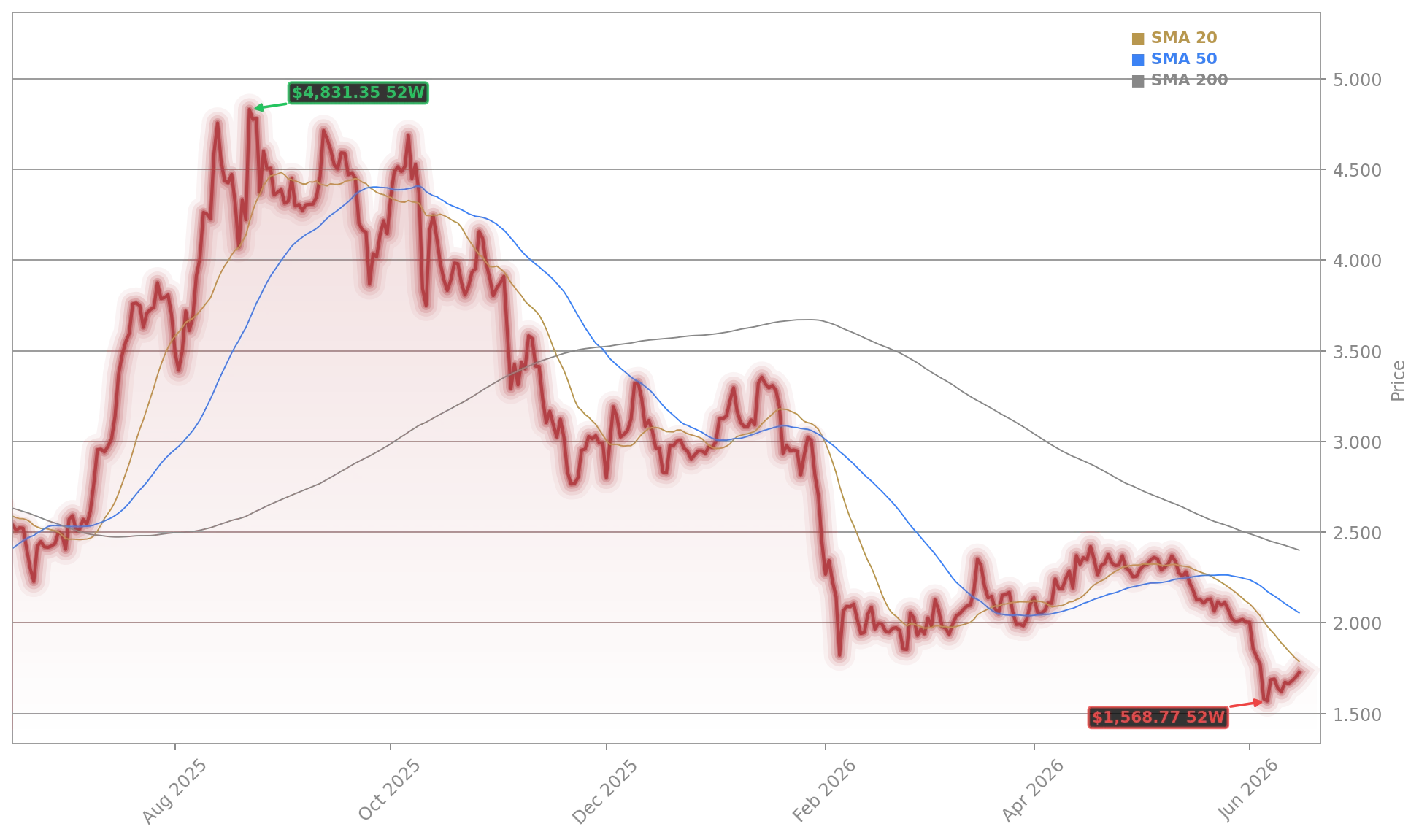
ETH dropped about 5.5% intraday, briefly touching levels not seen since late February after breaking below a five-day range near $1,965 to $2,035. The selloff came alongside weakness in Bitcoin, which fell toward the $67,000 area, reinforcing a broader risk-off tone across digital assets. CoinGlass data showed roughly $1.83 billion in crypto liquidations over the past 24 hours, with more than 90% tied to long positions. Long liquidations alone topped $1.58 billion, including about $440 million in Ether. That kind of forced selling can intensify downside momentum because leveraged traders are pushed out quickly, adding supply into an already falling market. For portfolio managers, this Ethereum Plunge is less about a single headline and more about a cascade of positioning stress.
Can Ethereum Hold Key Support?
Several closely followed crypto analysts see the current setup as technically fragile. Trader Tardigrade argued that ETH is repeating a bear flag pattern that previously led to a steep correction earlier this year. In his view, the structure resembles the post-peak declines seen after the late-2024 rally, suggesting one more capitulation move could mark a local bottom. Rekt Capital also flagged that Ethereum closed the month below its multiyear uptrend for the second time in five months, a sign that rebound attempts are losing force. Ali Martinez has highlighted $1,825 as an important area near the bottom of ETH’s four-month horizontal channel, while calling $1,750 the more critical line on a daily closing basis. If that zone fails, he sees downside targets around $1,560 and potentially $1,070. None of these are Wall Street ratings from firms like Citigroup or RBC Capital Markets, but they are shaping short-term crypto sentiment.
What Are ETFs Telling Wall Street?
Spot crypto ETF flows turned decisively negative in the latest session, with combined Bitcoin and Ether ETF net outflows reaching $609.3 million. Ether-focused products alone saw $90.2 million in redemptions, marking a 16th straight day of losses. That matters for US markets because ETF redemptions can force sales of the underlying asset as authorized participants unwind positions. The result is mechanical pressure on spot prices even if long-term investor views have not changed. Grayscale has also been addressing liquidity mechanics in its Ethereum staking ETF structure this year, underscoring that the ecosystem is still adapting to institutional trading demands. For investors comparing crypto exposure to high-beta equities like NVIDIA or Tesla, the distinction is important: ETH is facing both macro risk appetite pressure and product-flow pressure at the same time. That double headwind has made the Ethereum Plunge especially sharp.
Does Ethereum Still Have a Bull Case?
Longer term, the picture is not uniformly bearish. CoinShares recently outlined a 2031 valuation framework with a bear case near $1,443, a base case of $4,935, and a bull case of $14,135. The firm argues ETH should increasingly be valued not just by transaction fees, but by its role as money, collateral, and settlement infrastructure across the Ethereum economy. That thesis depends on stronger staking demand, healthier DeFi activity, layer-2 reserves, ETF inflows, and tokenization growth. It also assumes Ethereum can preserve its position against other smart-contract networks and benefit from regulatory clarity, a theme also emphasized by Grayscale in recent research on blockchain adoption. In other words, today’s Ethereum Plunge is colliding with a still-active long-term debate over what ETH is really worth. Near term, traders are focused on liquidation risk and support levels; longer term, institutional investors are still weighing whether Ethereum can regain momentum versus alternatives and even against mega-cap leaders like Apple.
The structure is identical. Same breakdown. Same setup.— Trader Tardigrade
The Ethereum Plunge shows how quickly sentiment can shift when ETF outflows, technical breakdowns, and leverage unwind together. For investors, the next signals to watch are whether ETH can defend the $1,825 to $1,750 zone and whether fund flows start to stabilize. If those pressures ease, the same volatility that drove this selloff could eventually create a more constructive entry point.