Are FuelCell Energy Data Centers the next big AI power trade or just another volatile detour for speculative investors?

Why is FuelCell Energy rallying so hard?
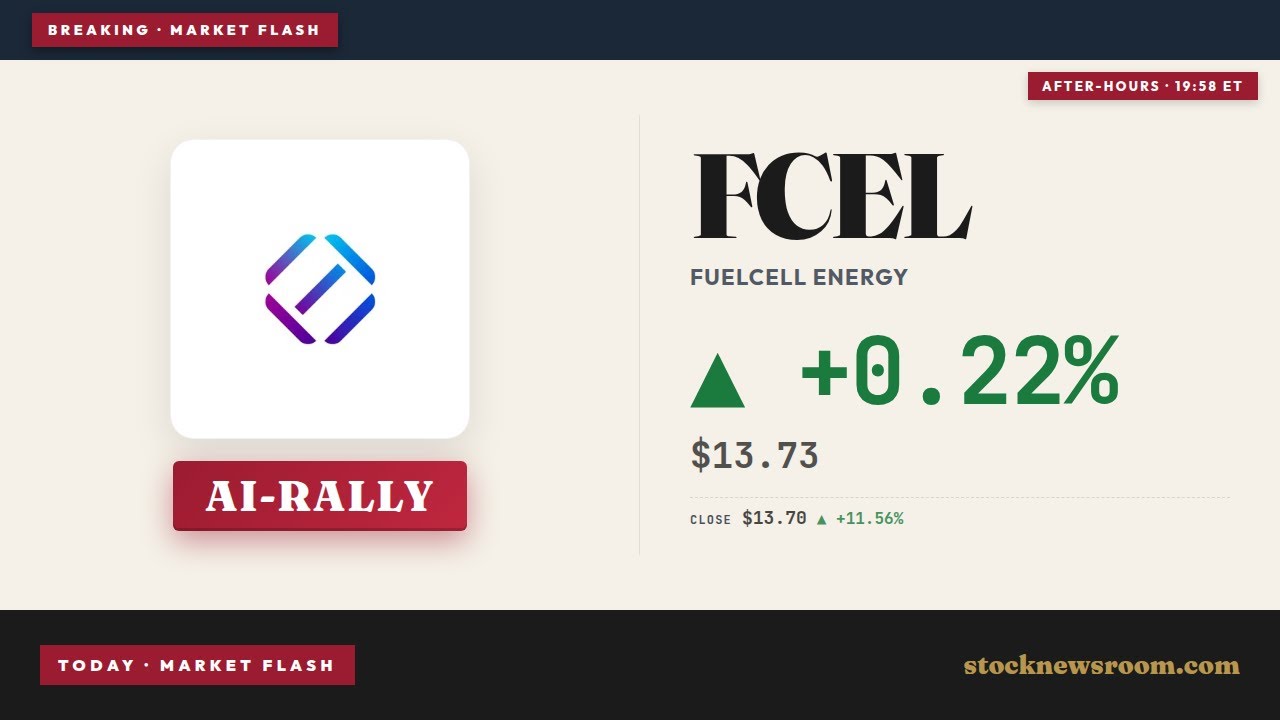
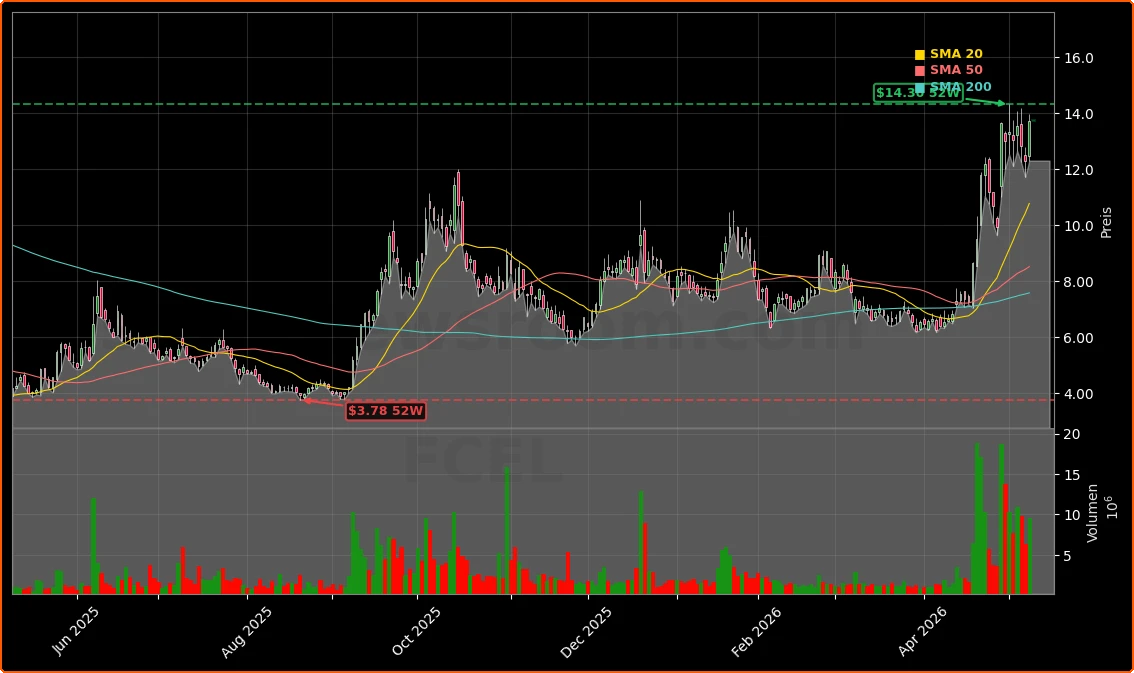
FuelCell Energy has become a momentum favorite as traders crowd into speculative beneficiaries of the AI infrastructure build-out. Shares jumped 11.6% on Friday to $13.70, extending a roughly 106% gain over the last 30 days. On May 8, the stock set a new 52-week high in Europe around 11.73 EUR, while on Wall Street it now trades less than 5% below its 12‑month peak of $14.30. The move comes as U.S. indices like the NASDAQ Composite and S&P 500 have also been firm, but FCEL’s performance has dramatically outpaced the broader market.
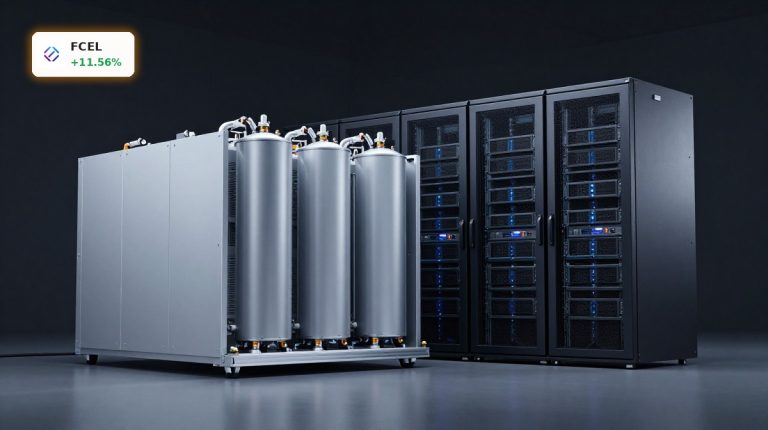
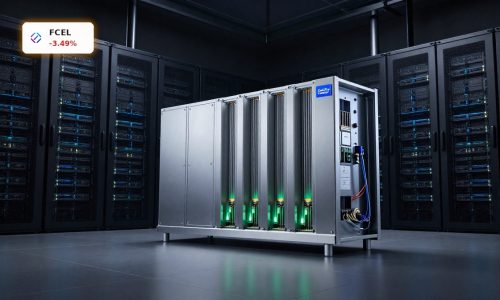
The latest leg of the rally followed the company’s launch of a 12.5‑megawatt fuel‑cell “Power Block” platform specifically designed for AI and cloud data-center campuses. With hyperscale operators like NVIDIA’s major cloud customers racing to secure reliable, low‑carbon electricity, investors are betting that FuelCell Energy Data Centers could evolve from a niche concept into a scalable business line.
How big is the FuelCell Energy Data Centers opportunity?
The strategic pivot is substantial. Management now targets the energy supply for AI infrastructures as its top priority, with a project proposal pipeline exceeding 1.5 gigawatts. More than 80% of that pipeline is tied directly to data‑center applications – effectively turning FuelCell Energy Data Centers into the company’s core growth engine rather than a side bet.
The idea is straightforward: AI training clusters and inference farms require dense, 24/7 power, and grid capacity in key U.S. regions is increasingly constrained. On‑site fuel‑cell plants using natural gas or hydrogen blends can provide baseload power with low emissions, helping hyperscalers manage both uptime and decarbonization targets. For investors who have watched Tesla and other growth names ride secular megatrends before profitability arrived, the scale of the potential AI‑power market is part of the appeal.
At the same time, this is not a risk‑free story. Yearly volatility in the stock has exceeded 150%, underscoring how quickly sentiment flips between excitement over new orders and concern about long‑term profitability and execution risk on large projects.
Are the fundamentals catching up to the stock?
On the earnings front, there are signs of progress but not yet a clean bill of health. In the most recent reported quarter, FCEL’s loss per share improved by about 61% year over year, and the upcoming report is expected to show another narrowed loss of roughly $0.57 per share, a year‑over‑year change of more than 60% in the right direction. Revenue is projected around $41 million, up nearly 10% from the prior year.
Despite that improvement, profitability remains distant. The gross margin is still negative, at roughly –16%, and the company generated a negative operating cash flow of around $34 million in the last quarter. Cash on hand stands near $312 million, while debt is relatively modest at about $30 million. That balance sheet gives FuelCell Energy some runway to pursue its FuelCell Energy Data Centers strategy, but the business still needs to convert its large pipeline into profitable, cash‑generating contracts.
Valuation is the main sticking point for fundamental investors. Several brokerages tracked by MarketBeat currently assign FCEL a consensus “Reduce” rating, with an average 12‑month price target of about $8.24. That implies meaningful downside from current prices and suggests that, for now, Wall Street analysts remain more cautious than the market. While individual firms such as Zacks Investment Research rate the stock a short‑term “Buy” (Zacks Rank #2), the broader sell‑side community has not yet embraced the rally.
How does FCEL stack up against other AI power plays?
For U.S. portfolios, FCEL sits in a different bucket than established mega-cap AI winners like Apple or the AI-chip leader NVIDIA. It is a small‑cap, high‑beta clean‑energy name tied to the physical infrastructure layer beneath AI computing rather than the software or semiconductor layer. That makes it more comparable to other alternative‑energy players such as Bloom Energy or ReNew Energy Global than to big‑tech NASDAQ components.
Industry commentary has highlighted FCEL alongside peers as one of several alternative energy stocks positioned to benefit from growth in electric vehicles and renewable power, but FuelCell’s edge is its laser focus on data centers. By contrast, data‑center landlords and utilities are pursuing their own solutions, including grid upgrades, small nuclear reactors, battery storage and traditional gas generation. Investors who view FuelCell Energy Data Centers as a differentiated, lower‑carbon baseload solution may see upside optionality if hyperscalers standardize on fuel cells across multiple campuses.
Still, compared with diversified energy or utility holdings, FCEL offers much higher potential reward and significantly higher risk, with execution on the manufacturing ramp‑up and project delivery in Connecticut and beyond now in the spotlight.
What should investors watch next?
In the near term, the next quarterly earnings release will be critical. Investors will look for confirmation that the AI‑centered pipeline is translating into firm orders, that margins are stabilizing, and that operating cash burn is not accelerating as the company scales up production. Any updates on manufacturing expansion, especially the tripling of capacity tied to its 12.5‑MW platform, will help clarify whether the company can serve multiple large deployments in parallel.
Traders should also monitor technical indicators like the Relative Strength Index, which recently sat near a neutral 43, suggesting room for either renewed upside or a consolidation after the steep run. With the stock trading above most published price targets, any downgrade or negative commentary from major firms such as Goldman Sachs, Morgan Stanley, or Citigroup could trigger volatility, while new AI‑data‑center contract wins may extend the rally.
Related Coverage
For a deeper dive into how FCEL’s AI strategy emerged from its latest results, readers can explore the detailed earnings breakdown in FuelCell Energy Earnings -3.5%: AI Data-Center Pivot Shock. That analysis examines whether the improving loss profile and the early focus on AI data centers can realistically support a longer-term turnaround and what that might mean for both growth-oriented and cautious investors.
Ultimately, the surge in FuelCell Energy shares reflects growing conviction that FuelCell Energy Data Centers could become a key beneficiary of the AI power crunch, but the company must still prove it can execute profitably at scale. For U.S. investors, the stock now represents a high‑risk, high‑reward way to play AI infrastructure, and the next few quarters will show whether this fuel‑cell specialist can convert hype into sustainable returns.