
Can IBM’s massive quantum and AI security spending turn a legacy tech giant into one of the market’s most credible next-wave bets?

Why is IBM Quantum Investment moving shares?
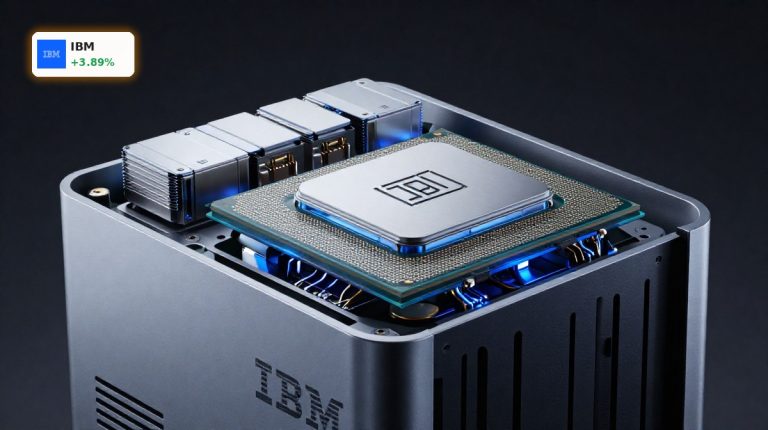
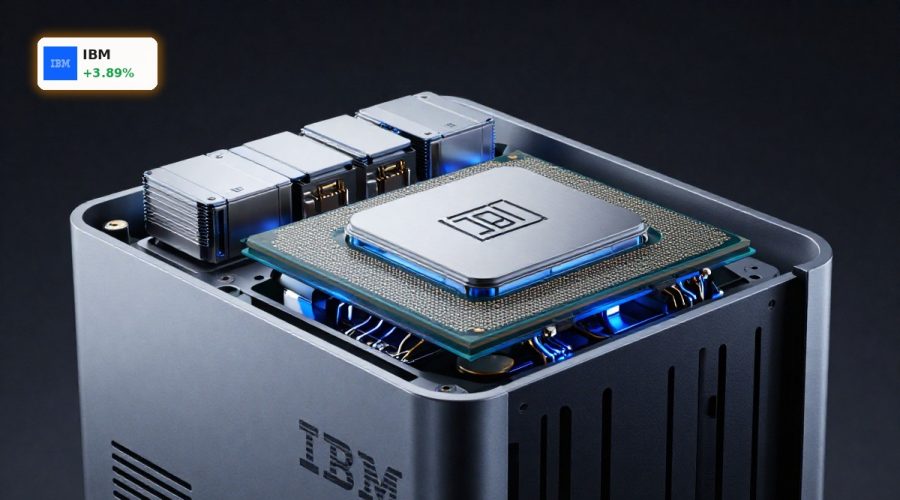
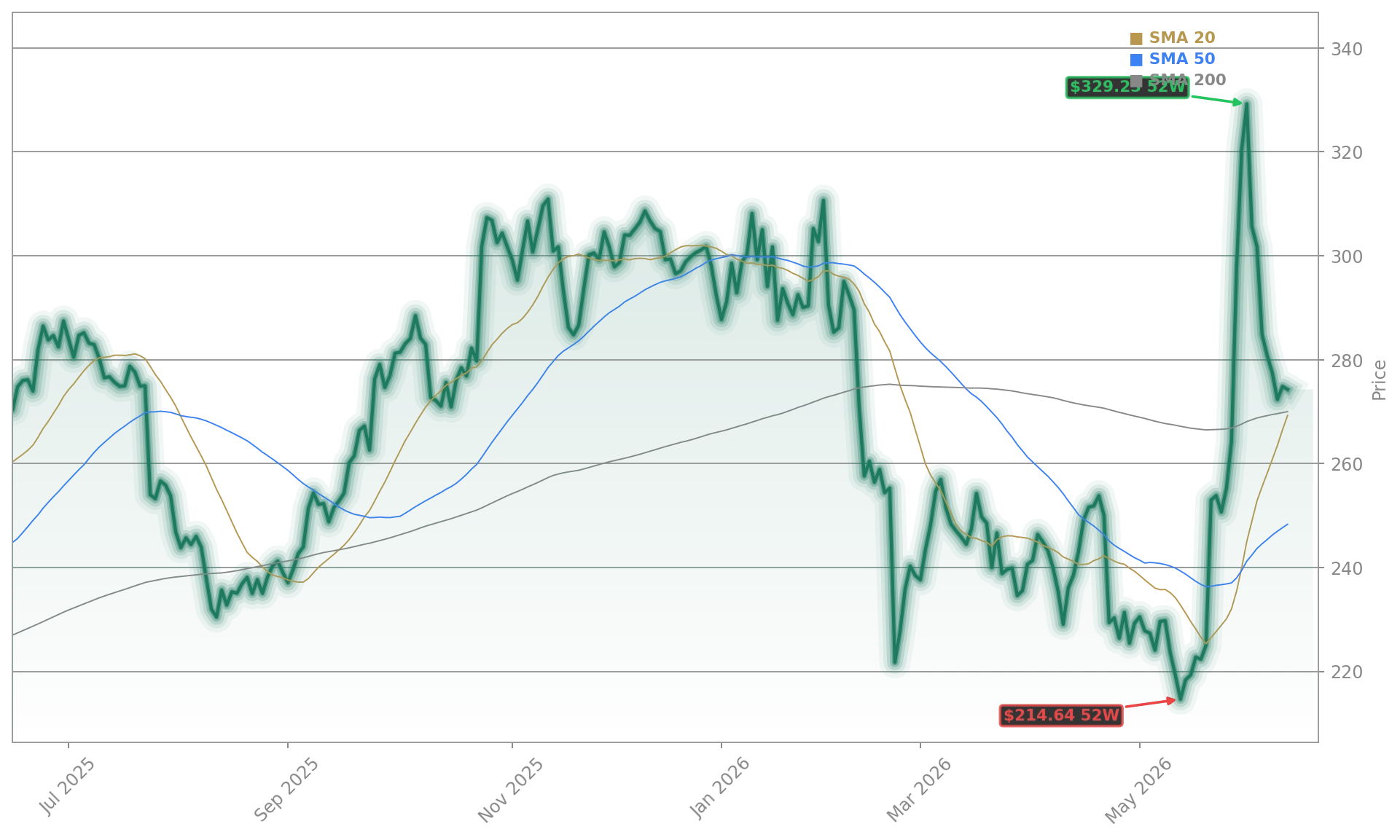
International Business Machines Corporation (IBM) traded at $265.12 on Thursday afternoon, up 3.89% from the previous close of $256.21, as investors reacted to a sweeping capital allocation update. The centerpiece was an IBM Quantum Investment plan of more than $10 billion through 2031, covering research and development, capital expenditures, manufacturing scale-up, ecosystem partnerships, and mergers and acquisitions.
Management said the spending supports its goal of delivering the first large-scale fault-tolerant quantum computer by 2029. IBM also said it has already deployed more than 90 quantum systems and built a network of more than 325 Fortune 500 companies, startups, universities, and government agencies using its quantum fleet. For Wall Street, that matters because it makes IBM one of the few established S&P 500 names with both commercialization claims and a long-dated roadmap in quantum.
Can IBM widen its edge in quantum?
The timing is important. Last week, IBM said it would pair a planned $1 billion federal grant with $1 billion of its own cash to help build the Anderon quantum chip foundry in the United States. That adds a domestic manufacturing angle to the broader IBM Quantum Investment thesis and could improve IBM’s standing with enterprise and government buyers that want a secure U.S. supply chain.
Investor enthusiasm around quantum has often centered on more speculative names, but IBM offers a different profile. It combines legacy cash flow, consulting reach, hybrid cloud exposure, and Red Hat’s software ecosystem with advanced research. Commentators like Jim Cramer have recently argued that IBM has one of the strongest public-market quantum stories, while RBC Capital kept an Outperform rating even after trimming its price target to $300 from $330 following IBM’s Think conference. That target still implies upside from current levels.
Compared with pure AI leaders such as NVIDIA, IBM is pursuing a more enterprise infrastructure-focused route. It is not chasing consumer hype. Instead, it is trying to build durable moats in computing, security, and mission-critical workloads, an approach that could appeal to more conservative institutional investors.
What does Red Hat add for IBM?
IBM and Red Hat separately committed $5 billion to Project Lightwell, a new AI-assisted open-source security model backed by more than 20,000 engineers globally. The platform is designed as a trusted enterprise clearinghouse that identifies, validates, and patches vulnerabilities across massive volumes of open-source code. Early adopters include Bank of America, Citi, Goldman Sachs, Morgan Stanley, Visa, and Wells Fargo.
This matters because more than 90% of Fortune 500 companies rely heavily on open-source software, while newer AI models are making vulnerability discovery easier and faster. For IBM, Project Lightwell strengthens the company’s pitch to large enterprises that already depend on Red Hat products, and it could deepen cross-selling opportunities across software, consulting, and managed security.
In practical terms, IBM is telling investors that the same company making a huge IBM Quantum Investment is also reinforcing the software supply chains that enterprise AI depends on. That combination may help distinguish IBM from rivals such as Apple and Tesla, which are more exposed to consumer hardware and mobility trends than to enterprise infrastructure resilience.
How should investors read the setup?
The stock’s move also reflects a broader re-rating trend. IBM has rebounded sharply from lower levels seen earlier this year, and traders are clearly rewarding strategic spending tied to federal support, domestic chip capacity, and enterprise AI security. The options market has also shown rising bullish activity. Still, investors should remember that quantum timelines remain long and commercial monetization will need proof points beyond research milestones.
Related Coverage: Investors tracking IBM’s latest push may also want to read IBM Quantum Funding $1B Boosts Stock on Foundry Bet. That report explains how the government-backed foundry plan set the stage for today’s larger quantum announcement and why the manufacturing angle could matter for future valuation.
Open source is the backbone of today’s digital economy and the foundation of modern AI, and we are at an inflection point in how it is built, secured and scaled.— Arvind Krishna
IBM Quantum Investment now stands as one of the boldest capital commitments in enterprise tech, while Project Lightwell expands IBM’s AI security footprint at the same time. If management executes on both fronts, IBM could strengthen its case as a differentiated large-cap technology holding, and the next milestones around Anderon, client adoption, and the 2029 quantum roadmap will be key for investors to watch.