
Can IBM Quantum Funding turn a government-backed $1 billion award into a real growth engine for the stock?

Why is IBM Quantum Funding moving the stock?
The biggest driver is scale. The Commerce Department is awarding more than $2 billion across nine quantum companies, with IBM receiving the largest share at $1 billion. IBM plans to match that amount with its own investment to launch Anderon, a standalone business intended to become the first pure-play quantum chip foundry in the United States. That combination of public money, private capital, and manufacturing capacity immediately changed the market narrative around IBM from steady legacy tech to a more direct beneficiary of strategic industrial policy.
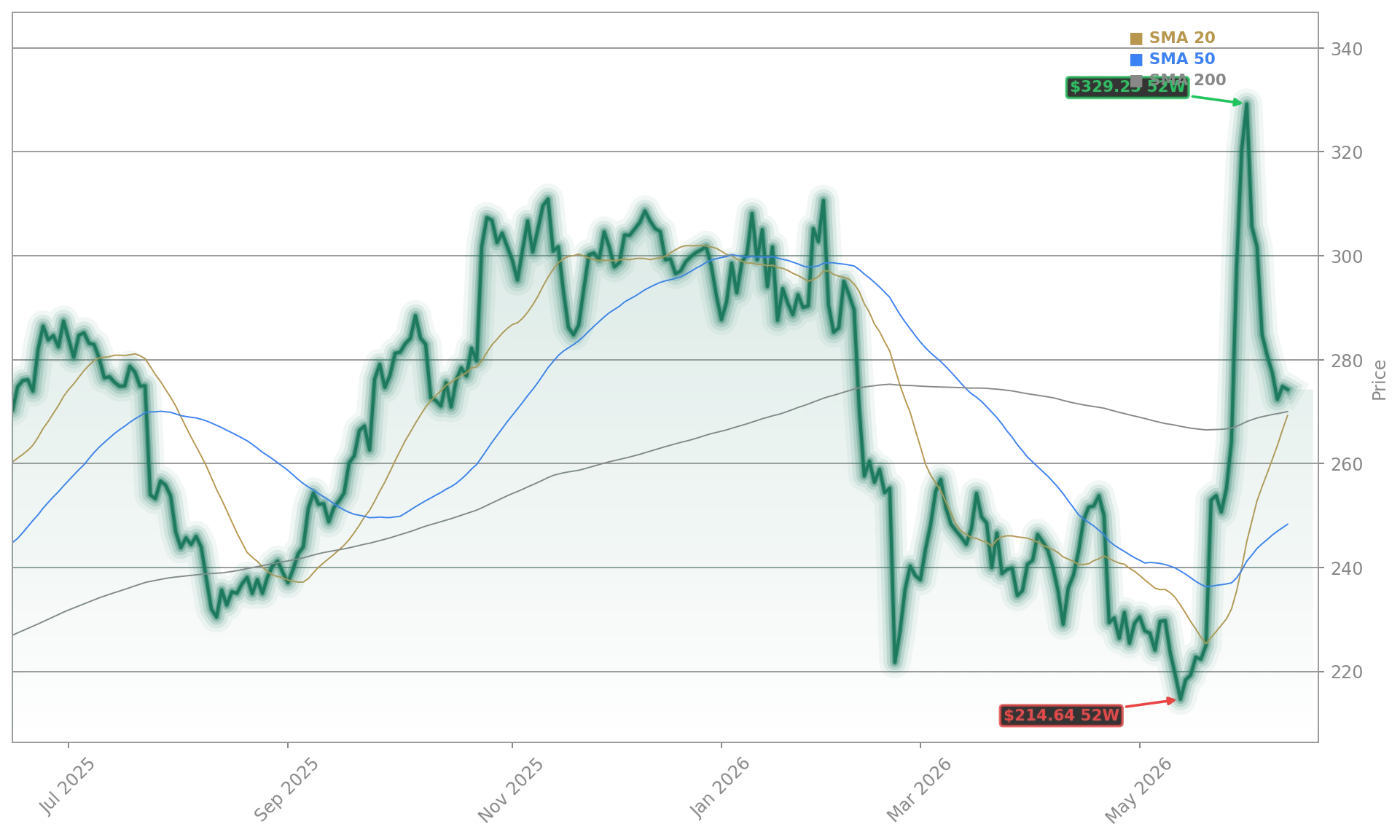
Wall Street reacted quickly. IBM shares gained after the announcement, while broader quantum names also rallied, including NVIDIA ecosystem partners and specialized developers such as Rigetti and D-Wave. Yahoo Finance, Barron’s, and The Wall Street Journal all highlighted that the government will receive minority equity stakes in funded companies, adding a national-security and industrial-policy angle that investors do not often see in large-cap software and services names.
How does IBM compare with rivals?
The new award puts IBM in a different lane from many rivals because it combines quantum research, enterprise distribution, and now a potential domestic manufacturing base. That matters in a market where investors often separate chip design from fabrication. IBM is not trying to mirror Intel or Taiwan’s foundry model at full semiconductor scale, but it is building a more vertically integrated position in quantum hardware than most software-led technology peers.
The backdrop also favors companies tied to strategic computing themes. Recent enthusiasm around NVIDIA in AI, Apple in custom silicon, and Tesla in advanced automation has shown investors will pay for platform control and supply-chain depth. Wedbush analyst Antoine Legault described the IBM move as a blend of innovation and manufacturing scale, framing it as the kind of combination that can support transformative technologies rather than isolated research milestones.
Can IBM turn funding into lasting growth?
That is the core question for investors. IBM Quantum Funding is significant, but the long-term value will depend on execution. The company is not only building a foundry effort; it is also expanding adjacent businesses that could monetize quantum and AI demand sooner. This week, IBM added to its cybersecurity push through Project Glasswing and introduced IBM Autonomous Security, a multi-agent AI service aimed at enterprise defense workflows. Those announcements matter because they suggest IBM is pairing moonshot quantum investments with nearer-term software and security revenue opportunities.
There is also a portfolio effect. The administration’s approach spreads support across multiple companies, including GlobalFoundries and several pure-play quantum firms, rather than betting on a single winner. For IBM, that reduces some headline risk while still leaving it with the largest award. It also gives the company a political and commercial tailwind as enterprise customers increasingly look for secure US-based supply chains in sensitive technologies.
Related Coverage: Investors looking for a deeper breakdown of the market reaction can read this analysis of IBM’s $1 billion quantum foundry award and the stock’s surge. That piece explores whether the government-backed buildout can translate into a broader rerating for IBM shares and why the quantum foundry story is becoming central to the company’s next growth chapter.
These strategic quantum technology investments will build on our domestic industry, creating thousands of high-paying American jobs while advancing American quantum capabilities.— Howard Lutnick
IBM Quantum Funding has clearly improved sentiment around the stock, but the bigger takeaway is strategic: IBM now sits at the intersection of quantum hardware, AI-enabled enterprise software, and US industrial policy. If management can convert this backing into real manufacturing capacity and customer adoption, IBM could strengthen its standing as one of Wall Street’s more credible large-cap quantum plays. The next milestones around Anderon, customer partnerships, and deployment timelines will matter, and investors now have a concrete reason to keep IBM on the watchlist.