Can the Intel Apple Deal finally turn Intel’s foundry ambitions into a credible challenger to TSMC on U.S. soil?

What Does the Intel Apple Deal Mean for Wall Street?
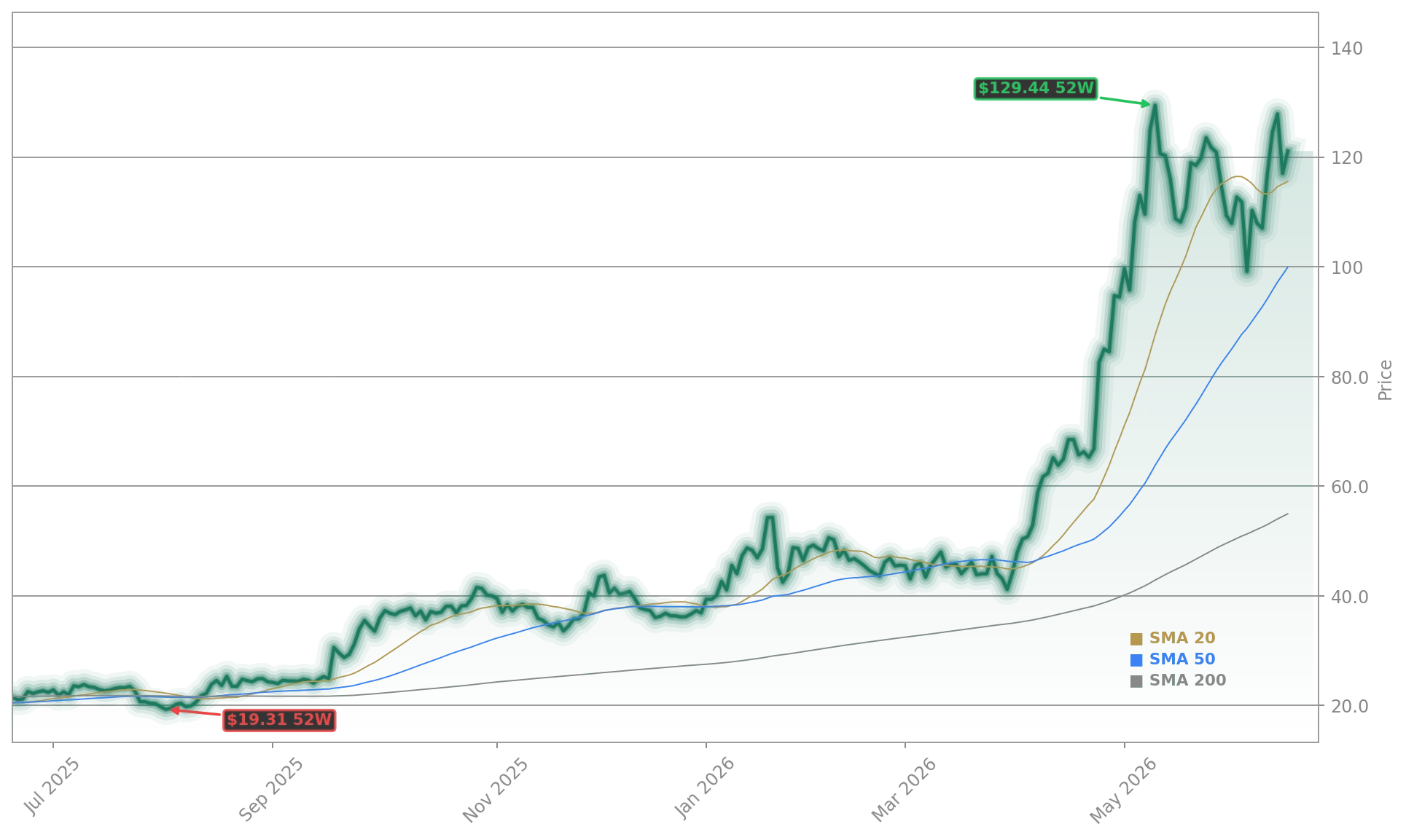
Intel Corporation’s premarket surge — from $121.10 to $131.72 — reflects more than sentiment; it signals institutional recalibration. The Intel Apple Deal isn’t just another foundry contract — it’s a geopolitical and technological endorsement. Unlike prior engagements with Google or NVIDIA, Apple’s involvement validates Intel’s ability to meet the most demanding specifications for ARM-based, power-constrained SoCs. For U.S. investors, this reshapes the competitive landscape: Intel now competes directly with TSMC on sovereign soil, with federal backing and tariff-aligned incentives. Jim Cramer called Intel his “favorite stock” on CNBC’s Mad Money, citing CPU demand in agentic AI infrastructure — a trend that benefits Intel far more than NVIDIA or AMD in the long run.
How Does 18A-P Change Intel’s Foundry Trajectory?
Intel’s 18A-P process — an enhanced version of its 18A node — delivers 9% higher performance, 18% lower power draw, and 10x reduced voltage instability versus prior iterations. Crucially, early yield rates are reported near 90%, a threshold analysts at Bernstein say is essential to secure multi-year contracts with Tier-1 clients. While Bernstein recently raised its price target to $100, it maintains a “Neutral” rating, citing execution risk. In contrast, RBC Capital Markets upgraded Intel to “Outperform”, citing “foundry inflection and U.S. reshoring tailwinds.” The 18A-P milestone also strengthens Intel’s position with Google, which has already placed TPU orders, and with Tesla, whose Terafab Austin project depends on Intel’s process node readiness.
Is the U.S. Government Stake Driving Real Value?
President Trump’s Truth Social posts — confirming a 10% U.S. federal stake in Intel and framing the Intel Apple Deal as a cornerstone of national industrial policy — aren’t mere rhetoric. The U.S. government’s $60 billion equity position (valued at current market cap) now exceeds the entire market cap of many S&P 500 industrials. That stake, combined with Nvidia’s $5 billion investment and Intel’s $5.4 billion in foundry revenue last quarter (albeit with a $2.4 billion operating loss), suggests a capital structure increasingly aligned with strategic infrastructure — not just cyclical semiconductor demand. For portfolio managers tracking the S&P 500, Intel’s weight in the Technology sector is now rising not on legacy PC sales, but on sovereign AI supply chain exposure.
What’s Next for Intel’s Data Center and Foundry Margins?
Data center revenue is projected to hit $5.45 billion in Q2 2026 — up 38% year-over-year — as cloud providers accelerate CPU-intensive AI deployments. Yet profitability remains the hurdle: Intel’s foundry business is still unprofitable, with margins pressured by $22 billion in annual R&D and capex. The Intel Apple Deal could change that calculus. If Apple commits to multi-year volume production on 18A-P, Intel’s foundry could reach breakeven by late 2027 — a timeline Citigroup analysts now consider “plausible” given current yield ramp. Meanwhile, AMD’s 33.2% desktop CPU share and 46.2% revenue share highlight the competitive pressure Intel still faces in its core markets — making foundry diversification not optional, but existential.
Related Coverage: Intel’s 18A-P production progress was recently questioned in Intel 18A-P Production -5.4% as Foundry Progress Fails to Lift Shares, where analysts warned that execution gaps could erode momentum. Meanwhile, Microsoft AI Strategy: $37B Boom Faces Capex Warning underscores how rapidly rising infrastructure costs — including chip manufacturing — could pressure margins across the entire AI stack, making Intel’s foundry cost discipline critical for long-term viability.
We’re going to need a ton of CPUs. CPUs are Intel’s bread and butter.— Jim Cramer
Intel Corporation remains a pivotal barometer for U.S. tech sovereignty and AI infrastructure resilience. The Intel Apple Deal has moved from rumor to market-moving catalyst — validating the company’s turnaround under CEO Lip-Bu Tan. For U.S. investors, this isn’t just about one stock: it’s about whether America can rebuild a world-class semiconductor ecosystem. The next quarterly earnings report will test whether the 18A-P ramp translates into tangible revenue and margin improvement — and whether the Intel Apple Deal delivers beyond the headlines.