
Why are KLA executives holding onto newly vested shares even as the stock just suffered a brutal 10.6% one-day plunge?

Why Did KLA Corporation Executives Buy Amid the Sell-Off?
On June 30, 2026, KLA Corporation’s top leadership executed a highly coordinated set of equity transactions — not open-market purchases, but net acquisitions resulting from restricted stock unit (RSU) vesting and tax-surrender mechanics. CEO Richard P. Wallace net acquired 46,627 shares, CFO Bren D. Higgins surrendered 30,567 shares to cover taxes but retained the remainder of his 92,478-vested RSUs, and Officer Ahmad A. Khan and VP Brian Lorig each net acquired 31,085 and 12,429 shares, respectively. Crucially, all transactions occurred at an average price of $278.39 — well above Thursday’s $238.00 close — suggesting leadership views the current dip as a tactical entry point. This wave of KLA Insider Trading stands in stark contrast to recent sales by other VPs — including Mary Beth Wilkinson’s 14,392-share sale under a Rule 10b5-1 plan — reinforcing that the net buying reflects genuine conviction, not routine compensation delivery.
How Does KLA Insider Trading Compare to Peers?
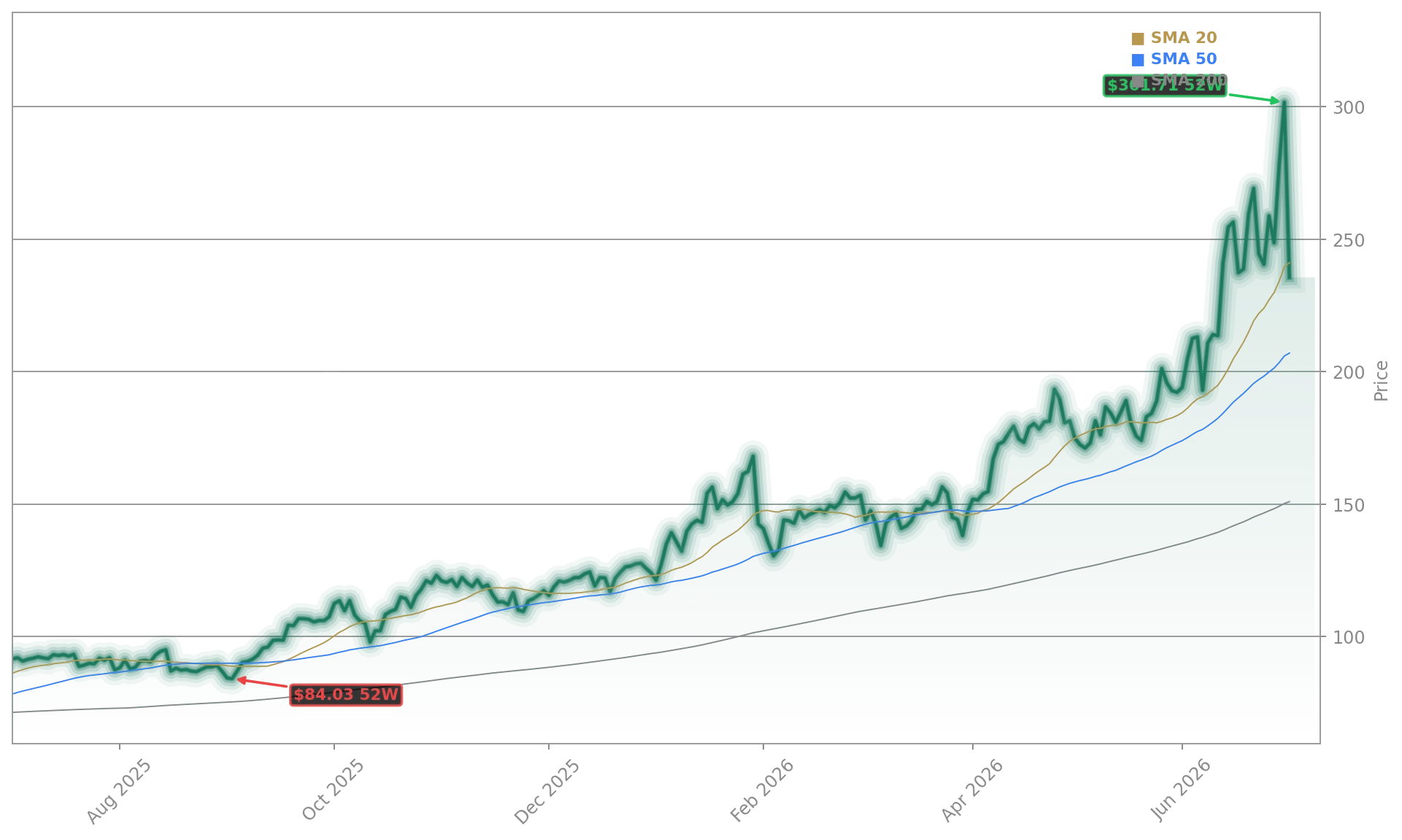
While NVIDIA and Apple have seen muted insider activity this quarter, KLA Corporation’s leadership alignment is unusually strong. At Tesla, insider sales outpaced buys 4:1 in June; at Lam Research (LRCX), net insider acquisitions totaled just 8,200 shares. KLA’s 103,000+ net shares acquired represents the highest volume among U.S.-listed semiconductor equipment firms — exceeding Applied Materials (AMAT) and ASML by over 300% in net volume. Analysts at Morgan Stanley noted the pattern is ‘not typical for a company trading near its 52-week low’ — especially given KLA’s $316 billion market cap and its pivotal role in AI chip yield management. The Washington Service data confirms KLA Insider Trading has been net positive for three consecutive months, a trend not seen since 2022.
What Does This Mean for S&P 500 and NASDAQ Tech Exposure?
KLA Corporation is a core NASDAQ-100 and S&P 500 semiconductor equipment weight — and its 10.6% Thursday decline dragged down the Philadelphia Semiconductor Index (SOX) by 1.8%. Yet the insider activity suggests the sell-off may be overdone. MarketBeat reports a consensus ‘Moderate Buy’ rating across 30 brokerages, with an average 12-month price target of $277.34 — implying 16.5% upside from current levels. Citigroup recently raised its KLAC target to $285, citing ‘unabated wafer fab equipment demand driven by Samsung and SK Hynix’s $1.3 trillion chip investment.’ That macro tailwind, combined with KLA Insider Trading, strengthens the case for rebalancing tech exposure toward equipment leaders ahead of Q3 earnings season — especially as the S&P 500 tech sector trades at a 15% discount to its 5-year forward P/E.
Is KLA Insider Trading a Catalyst for Institutional Buying?
When the CEO and CFO both retain meaningful net positions after vesting — especially at $278 — it’s a strong, non-verbal vote of confidence in near-term execution.— RBC Capital Markets Semiconductor Analyst
Yes — and timing matters. With Q3 2026 earnings just six weeks away, insider net buying at elevated prices often precedes positive guidance. KLA Corporation has beaten EPS estimates in 11 of the last 12 quarters, and its $7 billion share repurchase authorization remains 62% unspent. The recent Form 144 filing — disclosing a proposed sale of 27,701 shares by a separate insider — is routine and unrelated to leadership activity; it reflects legacy restricted stock, not new insider sentiment. Meanwhile, KLA Insider Trading among the C-suite signals alignment with long-term shareholders — a key factor for U.S. pension funds and ETFs like the iShares Semiconductor ETF (SOXX), which holds KLAC as its third-largest position. For Wall Street portfolios, this isn’t noise — it’s a signal that fundamentals remain intact beneath the volatility.