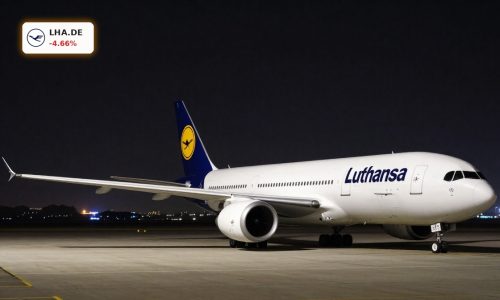
Is the Lufthansa Cityline shutdown a smart cost reset or a warning sign that the flag carrier’s business model is under real stress?

How does the Lufthansa Cityline shutdown hit investors?
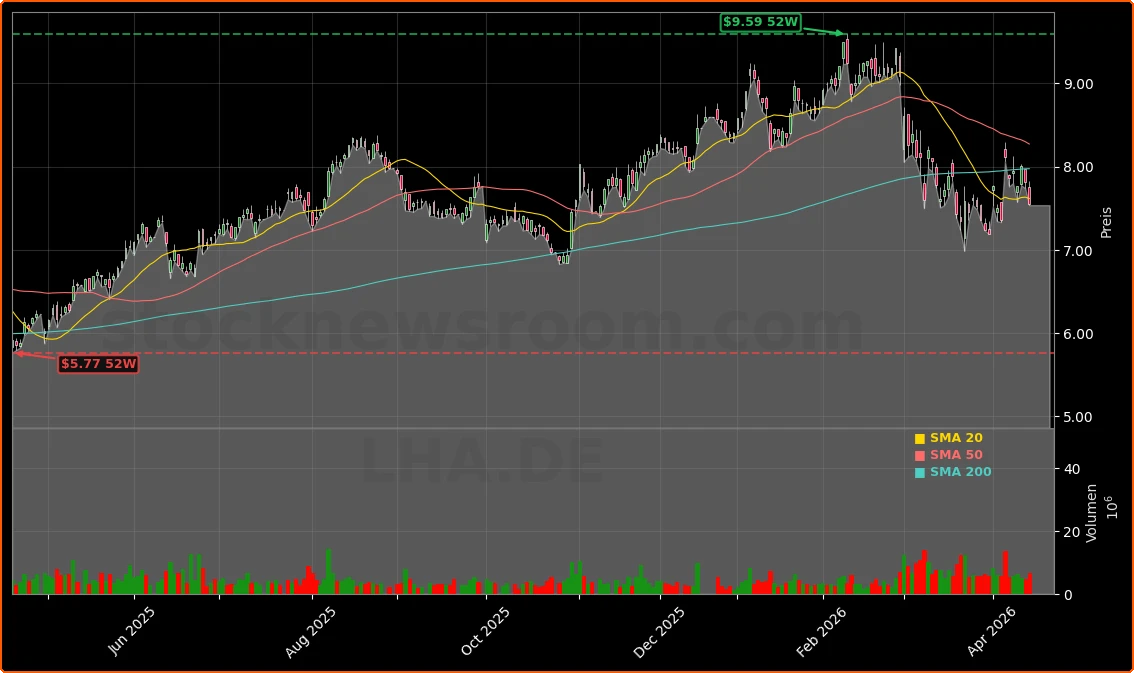
The Lufthansa Cityline shutdown lands at a sensitive time for airline stocks, just as U.S. investors are re‑risking into cyclicals on hopes of steady consumer demand. Shares of Lufthansa (LHA.DE) slipped about 3.4% to EUR 7.55 by late Thursday in Frankfurt, pulling further away from the 52‑week high of EUR 9.59 and hovering only modestly above the EUR 6.05 year low. The group framed the decision as a cost‑cutting acceleration, targeting a loss‑making regional unit suffering from higher kerosene prices and rolling strikes by flight attendants and pilots.
Management is parking all 27 operational Lufthansa Cityline aircraft and effectively freezing scheduled flights previously feeding hubs such as Frankfurt and Munich. Around 800 flight attendants and roughly 500 pilots are being released from active duty with revocable leave, with only a small number kept in place. For equity holders, the central question is whether the shutdown contains structural losses or signals deeper operational fragility just weeks after geopolitical tensions forced long‑haul route cuts.
What is driving Lufthansa’s drastic Cityline move?
The company cited two main pressures behind the Lufthansa Cityline shutdown: sharply higher fuel costs and the financial drag from prolonged labor disputes. Lufthansa says its passenger airlines have about 80% of kerosene needs hedged based on crude benchmarks, but the remaining exposure to market prices has become painful enough that it is retiring particularly inefficient jets early. The Cityline fleet includes aging Canadair regional jets and a handful of Airbus A319s that are nearing the end of their technical lifespan and carry comparatively high operating costs.
At the same time, strikes have escalated. The UFO flight attendants’ union and the Vereinigung Cockpit pilots’ union have staged repeated walkouts, including actions that disrupted the group’s 100‑year celebrations and caused hundreds of flight cancellations across German airports. UFO accuses the board of waging “war against its own people” and views the shutdown as punishment for industrial action, while Cockpit plans to continue strikes at both Lufthansa and Cityline. From a balance‑sheet perspective, the group is not just trimming a small subsidiary; it is accelerating a broader fleet and capacity package that also includes retiring four long‑haul Airbus A340‑600s and two Boeing 747‑400s by the end of October.
How will Lufthansa restructure capacity after Cityline?
Lufthansa insists that most former Cityline routes will be absorbed into its existing network system rather than abandoned outright. The company aims to redesign feeder traffic to its European hubs, not only Frankfurt and Munich but also Zurich, Brussels, Vienna and Rome, where partner and group airlines help funnel passengers onto long‑haul services. Management sees scope to operate with up to five fewer aircraft by optimizing which hubs are fed at what times, instead of serving all six simultaneously with the same intensity.
Still, the Lufthansa Cityline shutdown will not be frictionless for travelers or staff. The group is preparing a new winter schedule starting late October, indicating that marginal and particularly inefficient routes could be cut, and late‑night or early‑morning frequencies reduced. For employees, Lufthansa says all staff groups have been offered onward employment options inside the group, but unions argue conditions are inadequate and demand a binding social plan. Formal talks on an interest reconciliation and social plan are now expected, but with strike hardliners entrenched, transition risk remains high.
How does Lufthansa compare to U.S. and European peers?
For international investors, the Lufthansa Cityline shutdown is another reminder that European flag carriers face a tougher labor and cost environment than many U.S. airlines. While U.S. majors such as American Airlines (AAL), Delta and United have their own union challenges, they are not currently dismantling regional subsidiaries at this scale. In Europe, KLM has responded to the same fuel shock by cutting around 160 flights, rather than shuttering an entire feeder airline. Low‑cost carriers like Ryanair and Wizz Air remain structurally advantaged on unit costs, even as they contend with higher fuel and regulatory expenses.
On valuation, LHA.DE trades well below pre‑pandemic levels and is not in the same investor spotlight as mega‑cap travel beneficiaries or AI‑linked names like NVIDIA or Apple. The stock is also off the radar compared with high‑beta EV plays such as Tesla. Yet events like the Lufthansa Cityline shutdown can inject short‑term volatility that opportunistic traders on Wall Street may seek to exploit, particularly if future cost savings show up in margins. The absence of fresh rating changes from major houses such as Goldman Sachs, Citigroup or RBC Capital Markets on Thursday leaves the market to trade mostly on headlines and macro sentiment.
What are the broader risks and opportunities now?
For long‑only funds and diversified U.S. portfolios, Lufthansa remains a relatively small European cyclical exposure, but the situation carries read‑across for the sector. The combination of fuel inflation, refinery bottlenecks in Europe and constrained kerosene supply – roughly half of EU jet fuel imports come from the Gulf region – raises the bar for airline profitability just as demand normalizes. Management has repeatedly warned unions that continued strikes erode the cost base and ultimately weaken job prospects; this week’s decision shows those warnings were not empty.
Looking ahead, investors will watch closely how quickly Lufthansa can redeploy capacity, negotiate social plans and stabilize operations around its core hubs. Any sign that feeder connectivity to long‑haul networks is degrading could pressure yields and load factors, while a smooth transition could support the cost‑saving narrative. For now, LHA.DE’s slide toward the lower half of its 12‑month range signals skepticism, but not capitulation, among European and U.S. holders.
Related coverage
For a deeper look at how geopolitical shocks intersect with Lufthansa’s strategy, including route cuts in sensitive regions, readers can review this analysis of Lufthansa’s Middle East crisis and route reductions, which examines whether these disruptions are a temporary headwind or a structural drag on global airline valuations. Investors interested in how executive moves can drive sentiment in cyclical, capital‑intensive industries may also want to read our coverage of Caterpillar’s CFO transition and the stock’s $24 rally, highlighting how financial leadership and capex strategy can reshape Wall Street narratives.
The current crisis forces us to implement these fleet and capacity measures earlier than planned.— Till Streichert, Lufthansa CFO
In conclusion, the Lufthansa Cityline shutdown crystallizes management’s decision to sacrifice a troubled regional arm in order to protect group profitability amid fuel and labor headwinds. For investors, the episode adds execution risk but also opens the door to cost savings if capacity can be efficiently realigned. The next quarters will show whether Lufthansa can convert this painful step into a leaner, more resilient network that justifies renewed interest in LHA.DE from global portfolios.