
Can Marvell AI Strategy turn custom silicon and optical networking into the next must-own AI infrastructure trade?

What Does Marvell AI Strategy Mean for Wall Street?
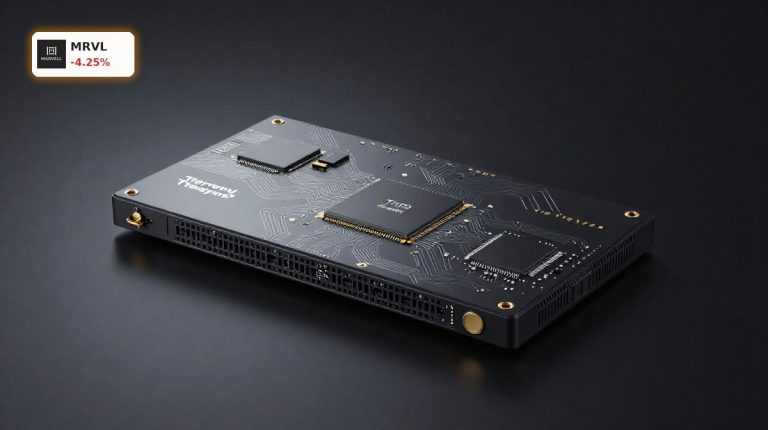
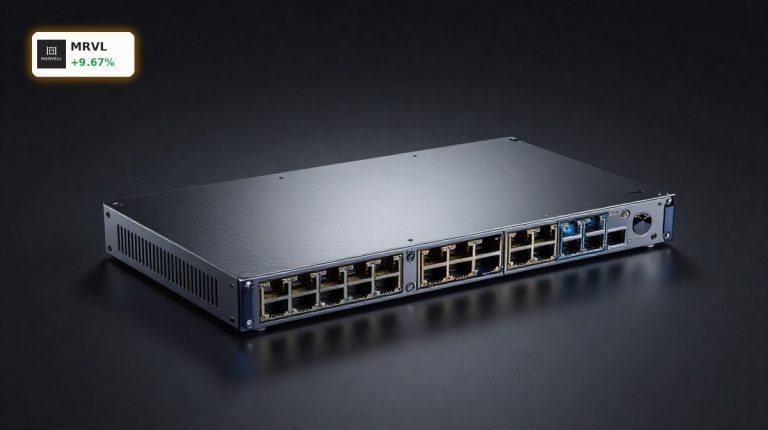
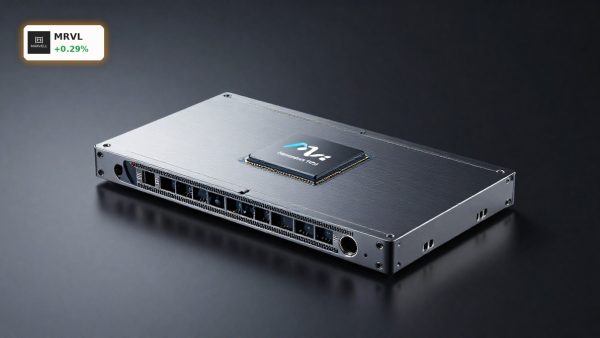
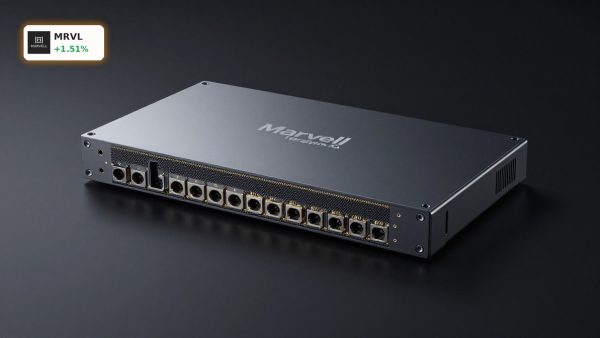
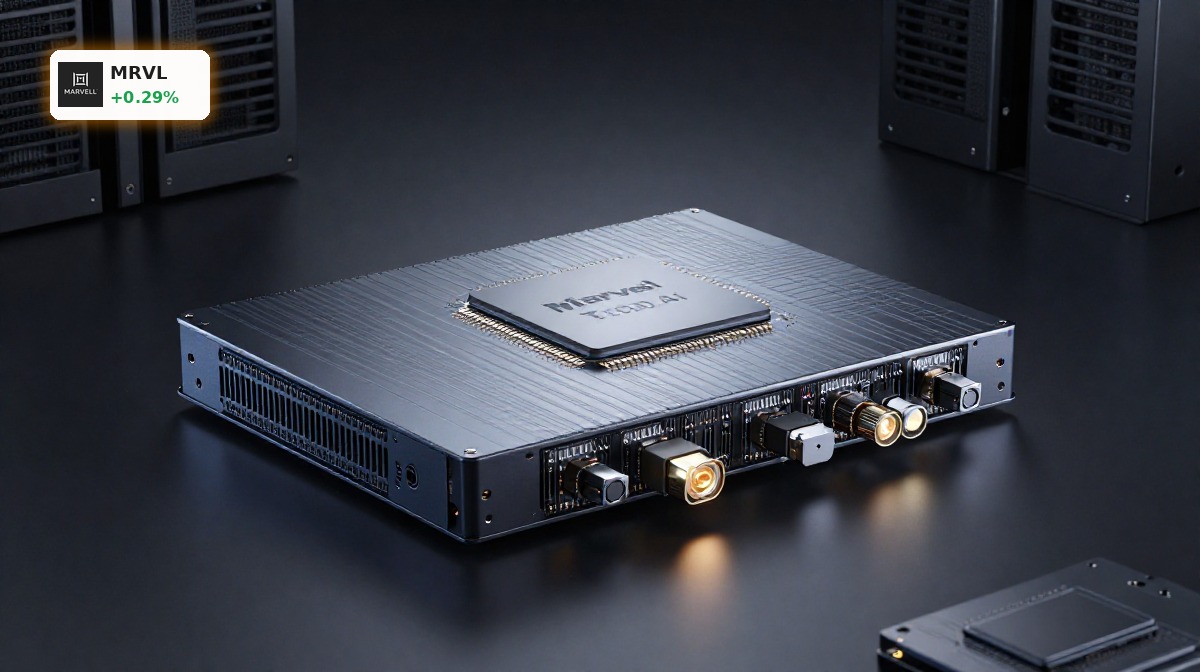
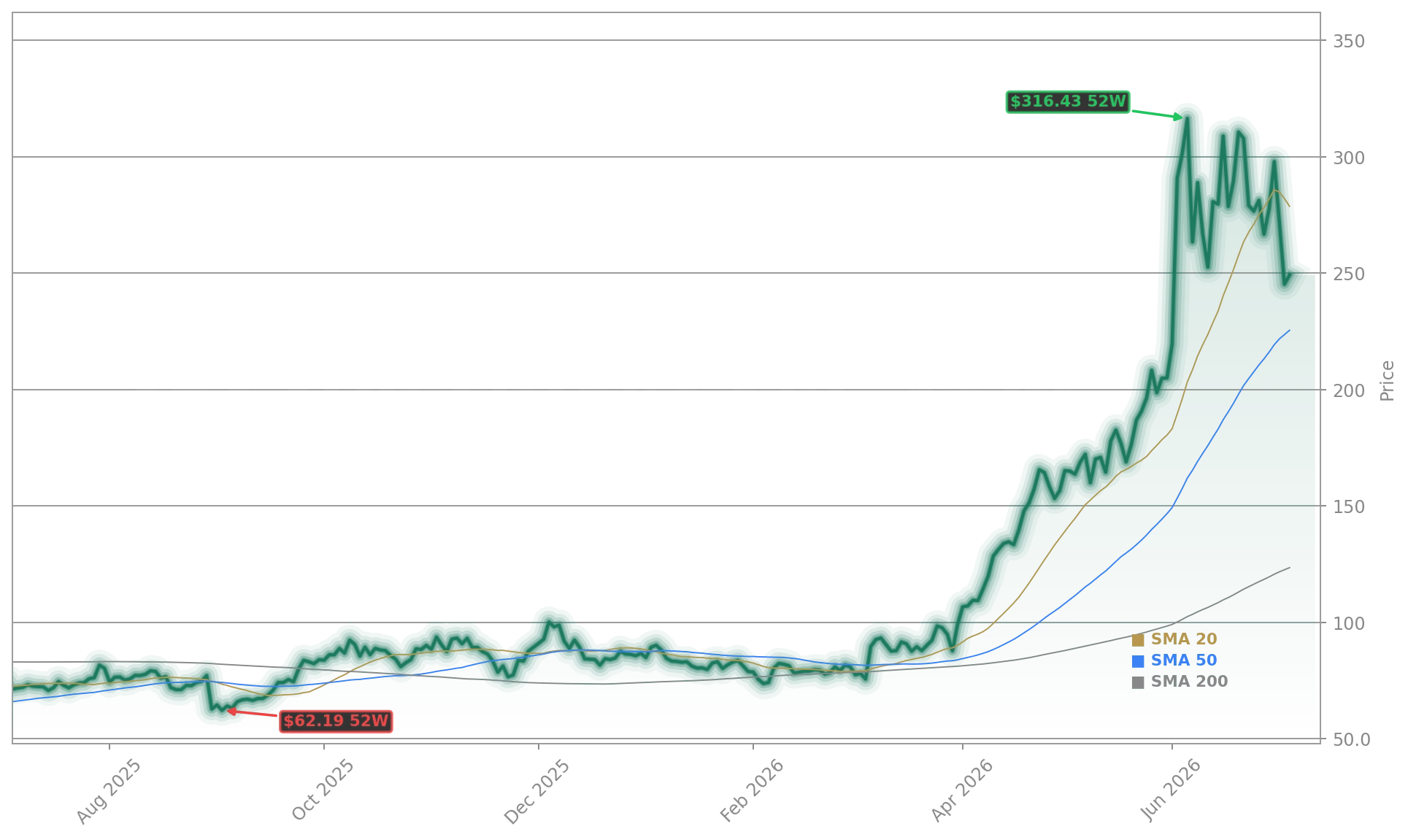
Marvell Technology, Inc. closed Tuesday, July 7, 2026, at $246.00 — up 0.29% — rebounding from a 15% three-day selloff that hit chip stocks broadly at the start of July. That pullback, while sharp, failed to dent long-term investor conviction: UBS raised its price target to $340 from $230, citing the Teralynx T100 — a 102.4 Tbps switch silicon purpose-built for AI clusters. Stifel followed with a $350 target, and Cantor Fitzgerald lifted its outlook to $300, all affirming that Marvell AI Strategy is now a durable catalyst, not just a narrative. Unlike cyclical memory or PC-centric chipmakers, Marvell’s pivot targets structural growth: optical interconnects, custom ASICs, and DPUs embedded directly into hyperscaler AI racks — making it a quieter but increasingly indispensable counterpart to NVIDIA and Apple’s AI hardware stacks.
How Is Marvell Winning in the AI Infrastructure Arms Race?
Marvell Technology, Inc. no longer competes on volume or consumer specs — it competes on physics. Its silicon photonics roadmap, co-developed with NVIDIA, targets eliminating data-transfer bottlenecks at scale. That’s why NVIDIA invested $2 billion earlier this year and deepened integration across NVLink — embedding Marvell’s custom accelerators and electro-optic interfaces directly into next-gen AI infrastructure. The Teralynx T100 switch, launched in Q2 2026, delivers 40% lower latency and 30% less power than prior-gen solutions — critical advantages as Meta and other hyperscalers scale multimodal LLM training. Marvell’s revenue mix has shifted: over 75% now comes from data center infrastructure — up from just 35% five years ago — and its custom silicon engagements with top-tier cloud providers now span multi-year, multi-hundred-million-dollar contracts.
Are Institutional Investors Buying the Marvell AI Strategy?
Yes — aggressively. Tensor Edge Capital LLC initiated a $51.1 million position in Q1 2026, acquiring 515,400 shares — now its fourth-largest holding. PFG Investments LLC and QRG Capital Management Inc. both increased stakes by over 23%, while Sierra Summit Advisors LLC launched a $9.4 million new position. Even amid $26.8 million in insider selling over 90 days — led by CEO Matthew J. Murphy and COO Chris Koopmans — institutional ownership remains at 83.51%, signaling strong external confidence. The consensus rating remains ‘Moderate Buy’ with an average price target of $239.81, per MarketBeat data, though bullish outliers like Stifel and UBS now price the stock above $340 — implying ~38% upside from current levels.
What’s the Competitive Edge Against Broadcom and Intel?
Marvell Technology, Inc. avoids head-on competition with Broadcom’s broad portfolio or Intel’s CPU-centric AI ambitions. Instead, it owns the analog, mixed-signal, and photonic ‘plumbing’ — the layer that moves data *between* GPUs, CPUs, and memory. While Broadcom dominates enterprise networking and Intel struggles with foundry execution, Marvell’s strength lies in high-speed optical connectivity and domain-specific silicon — a niche that’s growing faster than the broader semiconductor market. Analysts project Marvell’s revenue and adjusted EBITDA will grow at 41% and 43% CAGRs, respectively, from fiscal 2026 through fiscal 2029. That outpaces both the NASDAQ Composite’s 12% average annual growth and the S&P 500’s 9% — positioning Marvell as a high-beta AI infrastructure play with structural moats.
What’s Next for Marvell AI Strategy in Q3 2026?
With Q2 2026 results already reported and exceeding expectations, attention now turns to Q3 2026 guidance and early shipments of the Teralynx T100 into AI-optimized data centers. Marvell Technology, Inc. has confirmed design wins with two top-three hyperscalers for its next-gen optical interconnect platform — expected to ramp in late Q3. The company also recently declared a $0.06 quarterly dividend, reinforcing financial discipline amid rapid expansion. As AI infrastructure capex accelerates globally — projected to exceed $120 billion in 2026 — Marvell AI Strategy is no longer about potential. It’s about execution, integration, and infrastructure that’s already live in the world’s most advanced AI clusters.
Related Coverage: Marvell’s AI infrastructure pivot is accelerating — Marvell AI Strategy: 38% Revenue Surge Powers AI Push details how custom silicon and optics are forging a durable edge over bigger semiconductor rivals. The article explores Marvell’s role in reshaping the physical layer of AI data centers — and why Wall Street is finally pricing in its second act.
Marvell is quietly building the physical layer of AI infrastructure — and Wall Street is finally waking up to its strategic value.— Timothy Arcuri, UBS Analyst
Marvell Technology, Inc. remains a pivotal AI infrastructure enabler — not just a supplier, but a co-architect of next-generation data centers. For U.S. investors, its Marvell AI Strategy offers concentrated exposure to AI’s physical layer, with scalable margins and deepening hyperscaler ties. The next quarterly earnings will confirm whether Teralynx T100 adoption is accelerating — and whether Marvell AI Strategy continues to outpace expectations.