Can Meta AI Restructuring justify massive spending and deep job cuts before investor patience finally runs out?

What’s Driving Meta’s 10% Workforce Cut?
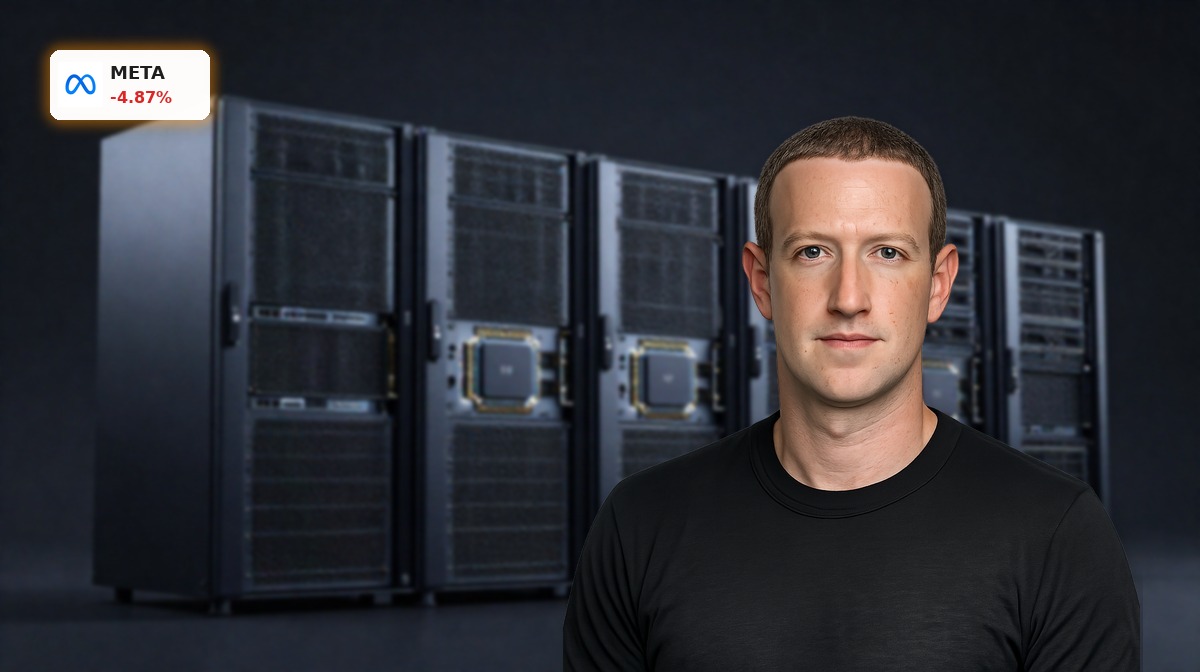
Meta Platforms, Inc. eliminated 8,000 jobs—10% of its global workforce—in May 2026, canceled 6,000 open roles, and internally reassigned over 7,000 employees to AI-focused teams. This follows earlier cuts in Reality Labs (down $90 billion cumulatively since 2021) and January layoffs targeting 1,000 roles in that division alone. According to a Reuters-exclusive report, Zuckerberg acknowledged in a newly leaked internal memo that the pace of change has led to ‘mistakes’—including inconsistent manager oversight and employee morale at historic lows, worse even than during the Cambridge Analytica crisis. He pledged no further companywide layoffs in 2026 but emphasized structural agility: ‘By creating important new roles for people, this also allowed us to shrink the size of teams knowing that if we make mistakes in some places, then we could transfer some people back.’
How Does Meta AI Restructuring Compare to Rivals?
While NVIDIA surges on AI chip demand and Tesla pivots toward autonomous agent software, Meta’s Meta AI Restructuring stands apart in scale and risk profile. Unlike Alphabet or Amazon—which are still balancing legacy cloud and search businesses—Meta has fully redirected capital: Reality Labs’ budget was slashed by 30%, freeing up an estimated $56 billion for AI data centers and custom silicon. Morgan Stanley analysts note Meta’s 2026 capex guidance ($125–$145 billion) implies a 100%+ YoY increase—and exceeds the combined capex of Apple (AAPL) and Microsoft (MSFT) in the same period. Meanwhile, Micron Technology (MU), now up 257% YTD, is projected by Perplexity CEO Aravind Srinivas to surpass Meta in market cap within 6–12 months if HBM memory remains the binding constraint for AI inference.
Is Meta Still a Value Play Among the Magnificent Seven?
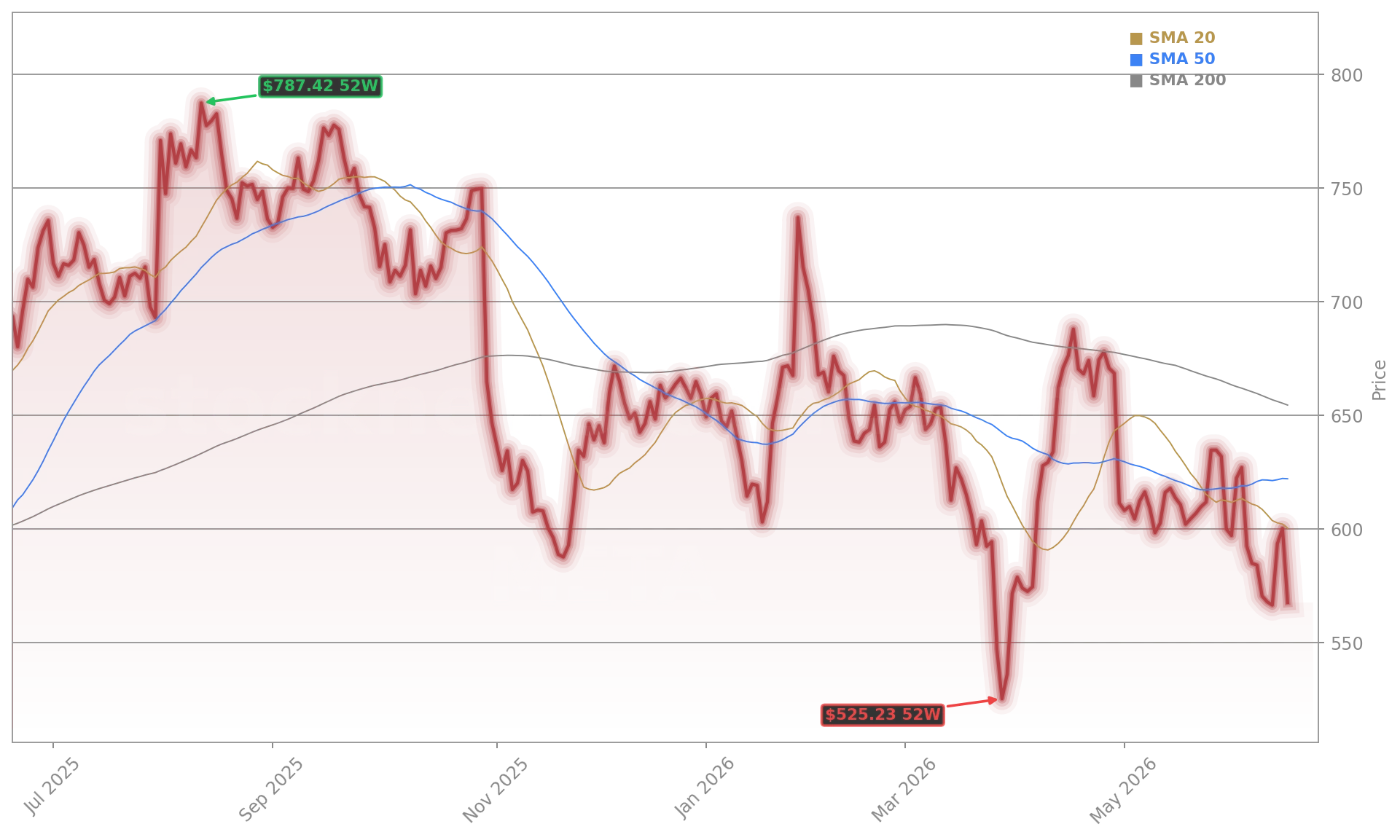
Yes—but with growing caveats. At a P/E of 20.6, Meta carries the lowest valuation among the Mag 7, well below Apple (P/E 32.1) and Microsoft (P/E 36.8). Its Q1 2026 results delivered 33% YoY revenue growth and a near-50% net profit margin—powered by a 12% YoY jump in average ad price. Yet Impax US Sustainable Economy Fund exited its position entirely, citing ‘below-average scores on social risk management and governance.’ Citigroup recently reiterated its ‘Neutral’ rating on Meta, lowering its 12-month price target to $585 from $620, citing ‘uncertainty around AI ROI timing and execution risk in the Meta AI Restructuring.’ Conversely, RBC Capital Markets upgraded Meta to ‘Outperform,’ highlighting WhatsApp paid messaging and Meta One subscription growth—up 74% YoY to $885 million in Q1.
What’s Next for Meta AI Restructuring?
Zuckerberg confirmed a July company-wide hackathon to accelerate cross-team AI model development—and announced plans to reduce managerial surveillance tools following backlash over keystroke tracking. Crucially, Meta is shifting toward off-balance-sheet financing: hyperscaler debt issuance is expected to top $400 billion in 2026 (per Morgan Stanley), with Meta’s share of that pool expanding rapidly. The $99.4 billion disclosed revenue backlog—including a $21 billion Meta commitment—now serves as collateral for lenders. As Vistra (VST) secures long-term nuclear-powered PPAs with Meta, and Williams Companies (WMB) ramps gas delivery to AI campuses, infrastructure partners are becoming de facto extensions of Meta’s restructuring playbook.
Related Coverage
Given the complexity of these changes, we’ve made mistakes and will almost certainly make more.— Mark Zuckerberg, CEO of Meta Platforms, Inc.
For deeper context on Meta’s generative AI roadmap, Meta AI Strategy: $16B AI Push Reshapes Products and Risk examines how product integration lags behind infrastructure spending—and whether regulation could stall momentum. Meanwhile, Marvell AI Infrastructure Jumps 9.7% as AI Bets Build shows how semiconductor peers are capturing upside from Meta’s capex wave—even as hardware scarcity pressures valuations across the stack.