
Can Micron’s AI memory story finally break the brutal boom-and-bust cycle that has defined the sector for decades?

Why is Micron Record momentum accelerating?
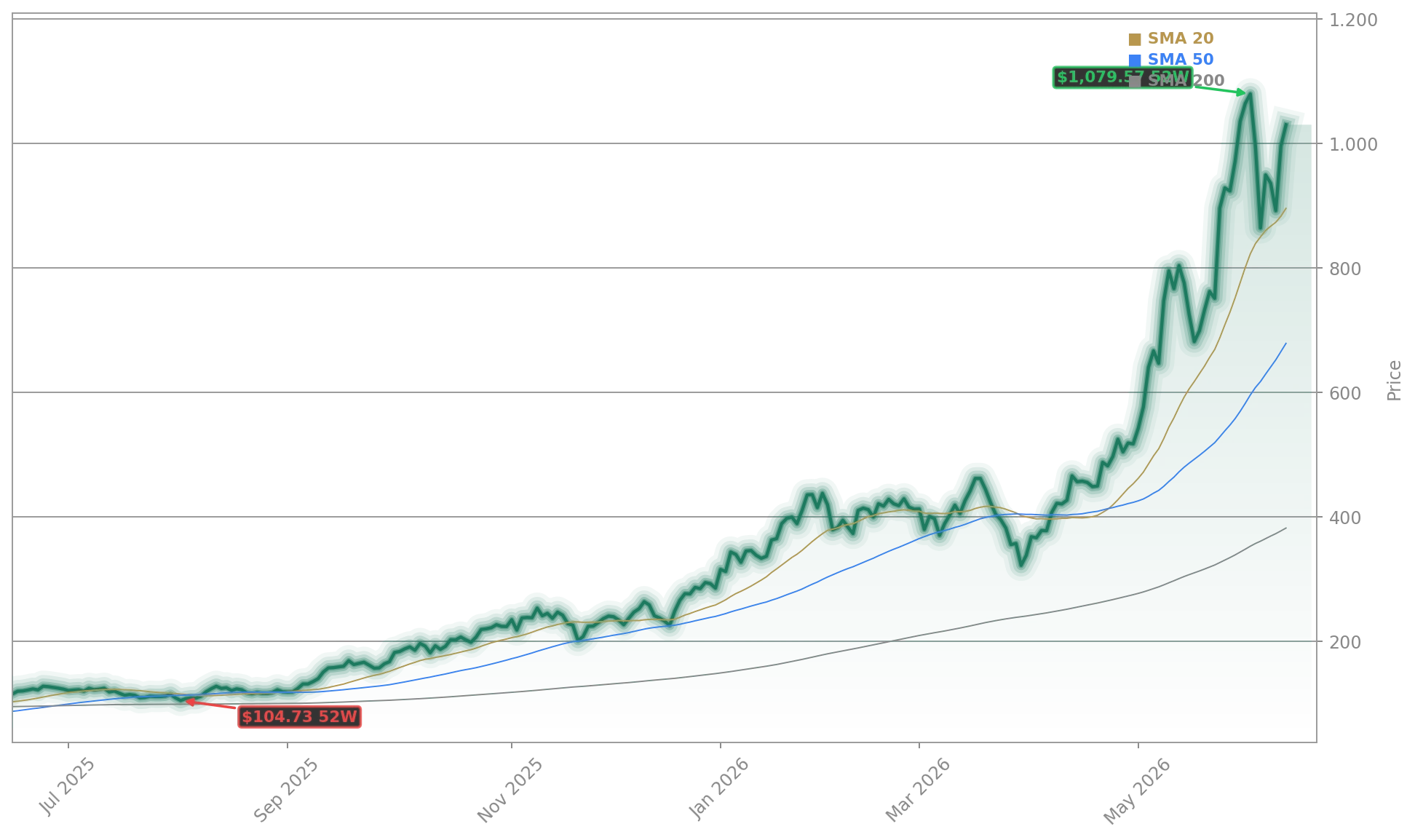
Micron Technology, Inc. has become one of the clearest AI infrastructure trades on Wall Street. UBS analyst Timothy Arcuri lifted his price target to $1,625 from $535, while DA Davidson set a target of $1,500, underscoring how dramatically expectations have shifted around high-bandwidth memory, or HBM. The stock’s move has also reignited discussion around whether memory producers deserve higher valuation multiples than they historically received.
That debate matters for U.S. investors because Micron is no longer being viewed simply as a cyclical DRAM and NAND supplier. Instead, it is increasingly seen as a strategic supplier to AI server buildouts led by hyperscalers including Amazon, Microsoft, and Meta. As training clusters and inference systems scale, memory bandwidth and capacity have become bottlenecks, giving top suppliers more pricing power than in past cycles.
Can Micron break the old memory cycle?
For years, investors discounted memory stocks because supply expansions often ended in oversupply, collapsing prices and margins. The current bull case argues that AI changes that pattern. Hyperscalers are racing to secure components for data centers, and memory supply is being locked in earlier through longer-term agreements that include committed volumes and partial price protection.
That visibility is central to the Micron Record narrative. Bulls such as Deepwater’s Gene Munster argue the AI infrastructure cycle is still in its early stages for memory names like Micron, SK Hynix, and Samsung Electronics. Intelligent Alpha’s Doug Clinton has also argued that Micron’s rally can be justified if future earnings continue to expand faster than the stock price. Even after the run, several investors still frame the stock as inexpensive on forward earnings compared with many AI-linked semiconductor peers.
There is also a practical reason Wall Street is paying up. AI systems built around NVIDIA GPUs require massive amounts of HBM, and that memory is not easily interchangeable at scale. If customers prioritize supply certainty over short-term pricing negotiations, Micron’s revenue and margin profile becomes structurally more stable.
What are the risks for Micron Technology?
The biggest risk is that today’s tight market eventually invites too much capacity. Morningstar analyst William Kerwin has warned that oversupply could emerge by late 2027, reviving the same cyclical pressures that long kept memory valuations low. That is why some investors remain cautious even as the company approaches the trillion-dollar market cap conversation.
Trading dynamics also show signs of overheating. Options activity has been elevated, and some tactical traders have started fading the move with defined-risk bearish strategies. That does not invalidate the long-term case, but it suggests expectations are now extremely high. If AI data-center spending slows, or if competitors like Samsung Electronics and SK Hynix ramp output faster than demand grows, the Micron Record trade could become more vulnerable to sharp pullbacks.
Still, the current market data do not support calling the stock a fresh high based on the figures available here. Investors should separate a major rerating story from claims of a new peak and instead focus on execution, supply discipline, and customer commitments.
How should Wall Street read the setup?
For portfolio managers, Micron now sits at the intersection of semiconductors, AI infrastructure, and valuation rerating. Compared with richly valued software and accelerator names, Micron still looks relatively inexpensive on forward earnings, which helps explain continued institutional interest. The key question is whether earnings durability can finally outweigh the sector’s cyclical reputation.
Related Coverage: Our earlier report, Micron Record +19.3%: UBS Target Shock Lifts MU Again, examined how UBS’s dramatic target increase reshaped the valuation debate almost overnight. That piece also explored whether AI demand is powerful enough to keep Micron’s rally detached from the classic memory downcycle that investors have feared for years.
Micron Record remains one of Wall Street’s most important semiconductor stories because it tests whether AI can permanently change how investors value memory makers. If pricing discipline and HBM demand hold, the rerating case stays alive. The next phase will depend on whether Micron can turn extraordinary demand into durable earnings power.