Can Microsoft AI Strategy turn sovereign cloud demand into a lasting edge as spending rises and rivals close in?

Why is Microsoft expanding AI infrastructure in Germany?
Microsoft Corporation is building its fourth AI data center in Germany’s Rheinische Revier — this time in Grevenbroich — acquiring a 23-hectare site pending regulatory approval. The move follows earlier commitments to data centers in Bedburg, Bergheim, and Elsdorf, part of a $3.2 billion investment in German AI infrastructure announced in 2024. While the Grevenbroich site’s total capex remains undisclosed, estimates range from high hundreds of millions to nearly $1 billion. Crucially, these facilities are designed for sovereign cloud operations — enabling customers like German financial institutions and healthcare providers to meet strict EU data residency and regulatory requirements. The first operational capacity in Bedburg and Bergheim is expected by 2028, with Grevenbroich likely coming online in the early 2030s. This expansion reinforces Microsoft’s positioning as the preferred sovereign AI partner in Europe — directly competing with Amazon Web Services and Google Cloud on regulatory compliance, not just scale.
How does the Kyndryl partnership strengthen Microsoft AI Strategy?
Microsoft Corporation has deepened its collaboration with Kyndryl to embed Microsoft’s sovereign cloud capabilities — including Azure and Microsoft 365 — directly into Kyndryl’s Sovereignty Solutioning platform. The alliance enables enterprises to assess, design, and operate cloud architectures compliant with jurisdiction-specific legal frameworks, a rapidly growing demand among regulated industries like banking and pharma. Unlike generic cloud offerings, this integration targets ‘cloud sovereignty’ — ensuring data residency, processing control, and governance alignment with national laws. For Microsoft, the Kyndryl deal is a force multiplier: it extends Azure’s reach into mission-critical legacy environments without requiring full migration, accelerating AI adoption in sectors traditionally wary of hyperscaler lock-in. Analysts at RBC Capital Markets note that such partnerships are becoming critical differentiators as margins compress across the hyperscaler stack.
What does the Haleon deal reveal about AI monetization?
Microsoft Corporation’s five-year agreement with Haleon — the global consumer health giant — marks a strategic pivot toward AI-driven operational transformation in non-tech verticals. Haleon will deploy Azure as its primary cloud platform, scale Microsoft 365 Copilot across its workforce, and co-develop agentic AI tools for consumer insights, supply chain forecasting, and clinical content development. The goal: reach one billion additional consumers by 2030 while improving decision velocity and personalization. This deal signals Microsoft’s ability to move beyond infrastructure-as-a-service into outcome-based AI — directly competing with NVIDIA’s enterprise software partnerships and challenging Meta’s emerging AI infrastructure ambitions. JMP Securities reaffirmed its Market Outperform rating and $550 price target on June 23, citing Copilot Cowork’s global rollout and Haleon-style vertical integrations as proof of monetization traction.
Is Microsoft AI Strategy sustainable amid job cuts and capex pressure?
Nordrhein-Westfalen ist für Microsoft eine strategisch wichtige Cloud- und KI-Region— Agnes Heftberger, Microsoft Germany CEO
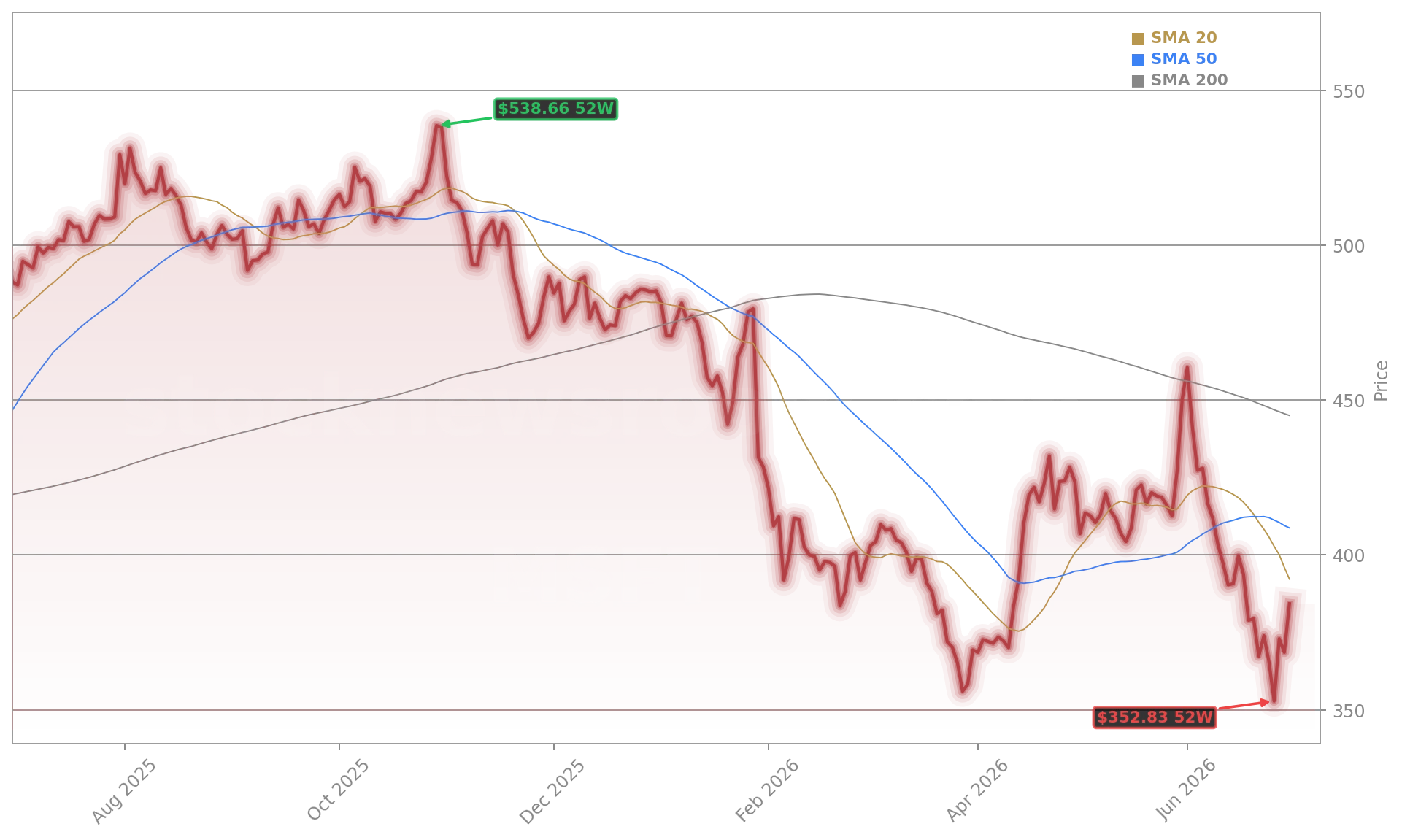
Yes — but with recalibration. Microsoft Corporation plans to cut approximately 2.5% of its 220,000-person workforce — roughly 5,500 roles — across sales, consulting, and Xbox divisions, according to Business Insider. The move follows two prior rounds in 2025 totaling 15,000 positions and aligns with fiscal-year timing (Microsoft’s FY2026 ends June 30). These reductions are not a retreat from AI but a reallocation: freeing up resources to fund AI infrastructure, R&D, and high-growth cloud units. While the company’s AI capex surge has contributed to a 21% YTD stock decline — its worst start to a year since 2000 — Goldman Sachs analyst Sarah Dong notes corporate AI adoption now stands at 20.6% and rising. Stifel maintains its Hold rating and $415 price target, emphasizing that Project Kilby — Microsoft’s 20-year power agreement with Chevron — remains on track for first delivery in 2028. The message is clear: Microsoft AI Strategy prioritizes long-term infrastructure dominance over short-term headcount growth.