Can Oracle’s multibillion‑dollar AI infrastructure bet really justify today’s sharp stock rally after weeks of bruising losses?

Why is Oracle jumping today?
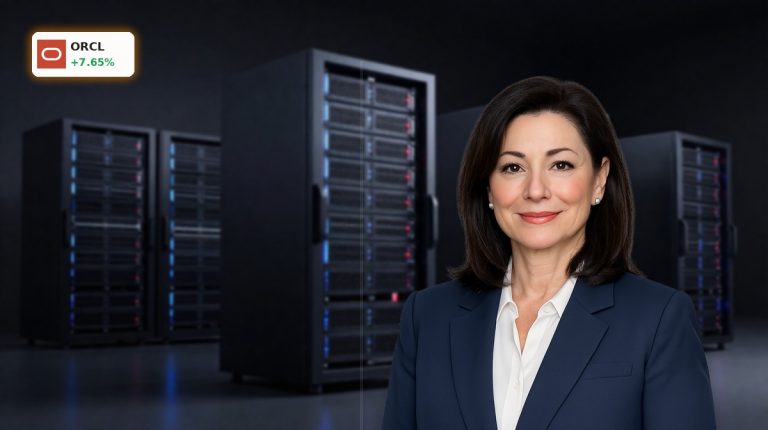
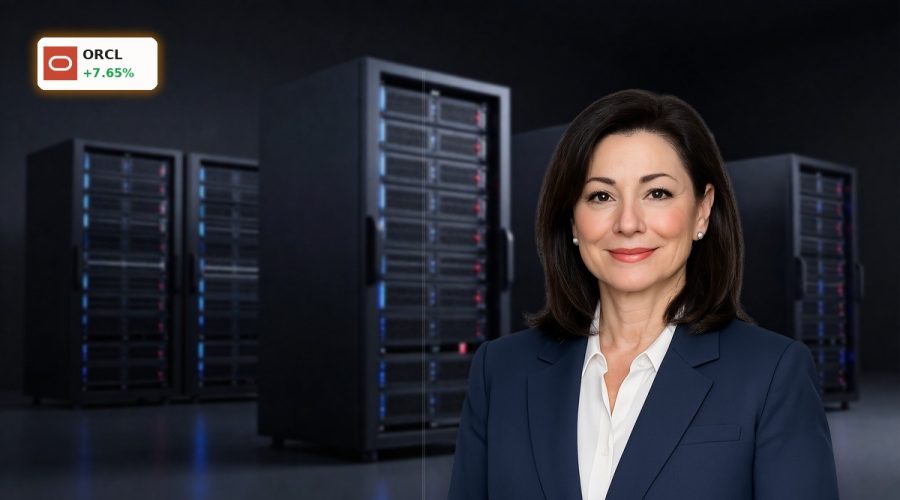
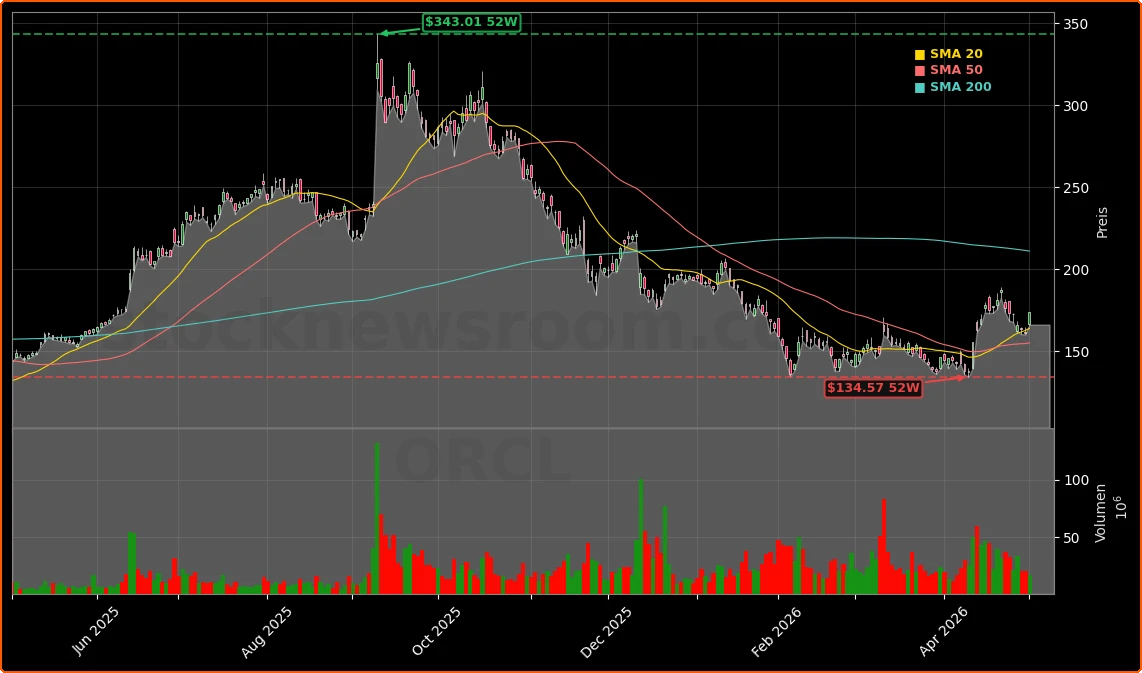
With Oracle up 7.65% to $173.75 in Friday’s intraday trade, the stock is clawing back recent losses that had unnerved many investors. The move stands out against a mixed backdrop for large-cap tech on the NYSE and NASDAQ, and follows growing attention on the company’s aggressive commitment to Oracle AI Infrastructure as a core growth engine. The rebound comes after a six-session losing streak in which the stock slid about 14%, extending a drawdown that had previously left it more than 50% below its September peak.
The renewed buying interest is being framed less as a short-term technical bounce and more as a reaction to improving conviction in Oracle’s cloud and AI roadmap. A key driver is a fresh look at a long-term data center expansion strategy that seeks to position Oracle alongside hyperscale players and AI infrastructure leaders such as NVIDIA in serving surging demand for AI training and inference capacity.
How big is the new data center deal?
At the heart of the current narrative is a six-year supply agreement with Australian modular data center specialist Datapod valued at roughly $1.65 billion. Under the deal, Datapod will supply, deploy, and maintain hardware for Oracle AI Infrastructure across the United States and Europe, using modular facilities that can be rolled out faster than traditional brick-and-mortar data centers. For investors, the headline number underscores just how aggressively Oracle is willing to invest to scale capacity for AI workloads.
This commitment dovetails with Oracle’s broader effort to raise up to $50 billion in capital to finance data center and cloud expansion. Wedbush analyst Daniel Ives has described the recent sell-off in Oracle shares as a “way overreaction,” arguing that Oracle has both the funding and customer demand to utilize its expanded Oracle AI Infrastructure footprint over at least the next three years. Wedbush maintains an Outperform rating and a $225 price target, implying solid upside from current levels if execution remains on track.
What is Wall Street saying about Oracle?
Despite the recent volatility, Wall Street remains broadly constructive. Ratings compiled from 45 analysts show that about 80% carry a Buy rating on Oracle Corporation, while roughly 18% rate the shares Hold. The median price target sits near $222.50, indicating potential double-digit upside from recent prices around the mid-$160s to low-$170s range. Firms such as Wedbush see Oracle’s AI and cloud businesses as underappreciated relative to mega-cap peers, even as concerns linger around debt and legacy software exposure.
For U.S. investors, the key debate is whether Oracle AI Infrastructure can offset cyclical pressure and competition in traditional enterprise software. While Oracle lacks the consumer-device ecosystem of Apple or the EV narrative of Tesla, its pitch is a more focused, enterprise-grade AI stack running on its own vertically integrated cloud. If AI-driven workloads scale as expected, bulls argue that Oracle’s capital-intensive build-out could support higher long-term margins and stronger free cash flow once the current investment wave normalizes.
How do layoffs fit into the strategy?
In parallel with its spending on Oracle AI Infrastructure, Oracle has begun cutting jobs globally, with layoffs starting March 31 and affecting employees across regions. In an internal email, the company told impacted staff that their roles were being eliminated as part of a “broader organizational change” and that the day of notification would be their last working day. As of May 2025, Oracle employed around 162,000 full-time workers, so even modest percentage cuts translate into thousands of roles.
From a market perspective, the layoffs are being interpreted as an attempt to reallocate resources from slower-growth legacy operations to high-priority cloud and AI segments. While job cuts can improve short-term operating leverage, they also raise questions about execution risk if critical capabilities are thinned out. Investors will be watching upcoming earnings for commentary on restructuring costs, savings, and how much of the workforce reduction is concentrated in back-office versus product and sales functions.
Does political trading change the risk profile?
Adding to the crosscurrents, an April filing showed U.S. Representative Jared Moskowitz reported selling between $62,020 and $405,000 worth of Oracle stock on March 23, 2026. The trade, disclosed under the STOCK Act framework that governs congressional transactions, coincided with a broader period of weakness in the shares. Moskowitz has been an active trader across multiple names, including Qualcomm, Tractor Supply, and financials, suggesting the sale may reflect portfolio rebalancing rather than a targeted negative call on Oracle specifically.
For institutional and retail investors, such congressional trades are typically viewed as a sentiment data point rather than a core fundamental driver. The move does, however, highlight how polarized views on Oracle have become: some political insiders and fast-money traders are taking profits or reducing exposure just as many Wall Street analysts double down on Buy ratings anchored in the long-term potential of Oracle AI Infrastructure.
Related Coverage
Readers who want a deeper dive into how AI demand and partner dynamics are influencing the stock can explore the analysis in this detailed look at the Oracle and OpenAI relationship. That piece explores whether the partnership is still a golden ticket for Oracle’s AI ambitions or an early stress test of the broader AI infrastructure boom, and it provides additional context around investor worries after OpenAI reportedly missed internal growth targets.
In summary, Oracle is aggressively cutting costs in some areas while committing billions of dollars to Oracle AI Infrastructure, leaving the stock at the center of a high-stakes transformation story. For U.S. investors weighing the 7.65% price pop against lingering risks from debt, restructuring, and political scrutiny, the key question is whether the Datapod deal and broader data center build-out can unlock the upside envisioned by bullish analysts. The next few quarters of execution on Oracle AI Infrastructure build plans and cloud customer wins will be crucial in determining whether today’s optimism on Wall Street is justified.