
Is the Oracle Server Cancellation a smart reset of AI spending or an early warning sign that the boom is peaking?

Why is Oracle under pressure today?
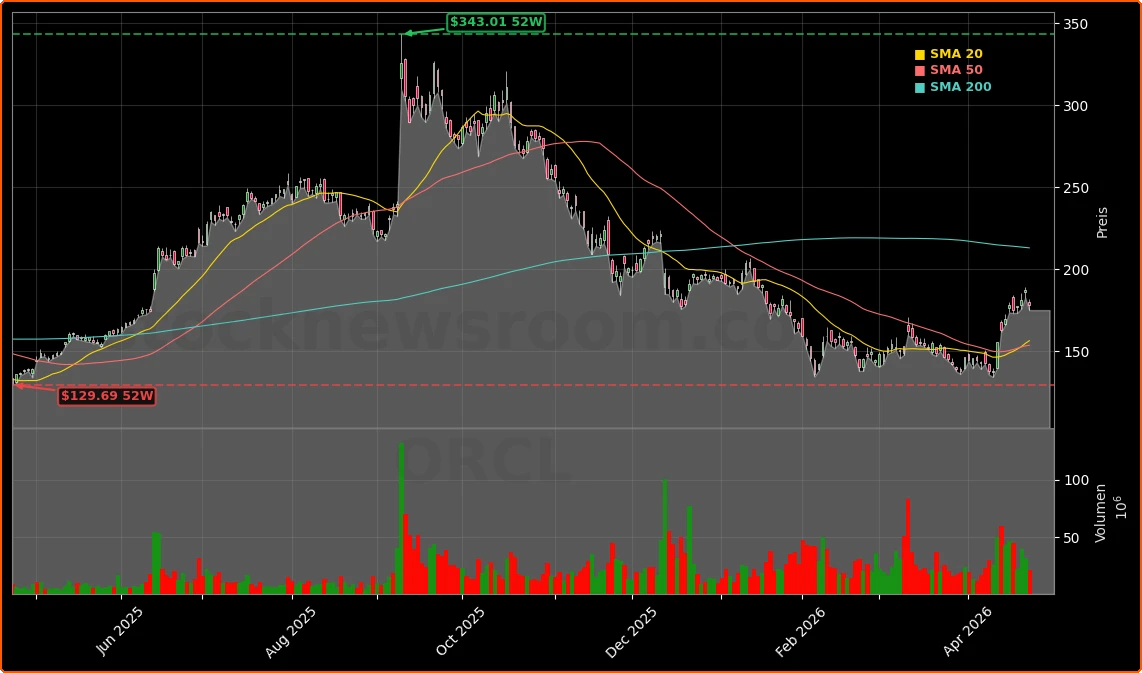
Oracle Corporation slipped on Thursday as traders digested reports that the company has backed out of a major AI server purchase from Super Micro Computer. Bluefin Research estimated the canceled order at 300 to 400 Super Micro GB300 NVL72 racks loaded with high‑end NVIDIA GPUs, with a price tag of roughly $3.5 million per rack. That puts the value of the Oracle Server Cancellation in a range of about $1.05 billion to $1.4 billion, a meaningful chunk of Oracle’s ongoing capex for Oracle Cloud Infrastructure (OCI) and its AI push.
The move hit both sides of the trade: Oracle stock traded lower alongside software peers like ServiceNow and IBM, while Super Micro shares skidded in pre‑market action as investors priced in the potential loss of a “significant” hyperscale customer. The selling also came against a broader backdrop of rotation out of richly valued software and AI beneficiaries after a sharp multi‑month run‑up.
Does the Oracle Server Cancellation change the AI thesis?
The Oracle Server Cancellation lands at an awkward moment for Oracle’s AI story. Over recent months, the company has positioned OCI as a key alternative cloud platform for GPU‑hungry AI workloads, winning headlines for power generation deals and big infrastructure commitments that helped lift AI‑focused funds like the ALPS O’Shares Global Internet Giants ETF. At the same time, Oracle has been touting its AI‑ready database and a deepening collaboration with Google Cloud, including the new Oracle AI Database Agent for Gemini that lets users query enterprise data in plain English via the Google Cloud Marketplace.
Those initiatives were meant to show Oracle can compete in next‑generation AI cloud against giants such as Apple’s ecosystem partners, Microsoft, Amazon and Google’s parent Alphabet. By contrast, a billion‑dollar plus Oracle Server Cancellation suggests a recalibration of how fast Oracle wants to scale GPU capacity, or which vendors it is willing to rely on, just as demand for AI compute continues to surge globally.
Compliance risk or overextension on AI spend?
Two explanations are circulating for the Oracle Server Cancellation. One is regulatory and reputational risk: Super Micro’s co‑founder has been linked to alleged illicit exports of Nvidia chips to China, and hyperscalers are under intense scrutiny to comply with U.S. export controls on advanced AI semiconductors. From that angle, walking away from a high‑profile Super Micro deal could be a pre‑emptive risk‑management move while Oracle reassesses its supply chain and governance standards.
The other explanation is financial discipline. Oracle has embarked on an aggressive AI infrastructure build‑out at the same time that its traditional software growth is moderating and debt has risen. TradingKey highlighted concerns that heavy AI capex, combined with high leverage and execution risk around converting large performance obligations, could pressure Oracle’s balance sheet if revenue ramps slower than expected. A decision to trim or re‑route part of that spend through an Oracle Server Cancellation may be a signal that management wants to avoid being caught overextended if the AI cycle cools or if enterprise budgets tighten.
How are Wall Street and competitors positioned?
Despite Thursday’s drop, Wall Street remains broadly constructive on Oracle’s long‑term AI and cloud prospects. TradingKey notes that the stock still carries an overall “Buy” rating from the analyst community with an average price target near $246, implying sizable upside from current levels. Large banks such as Goldman Sachs and Morgan Stanley have previously emphasized Oracle’s entrenched database base and growing cloud backlog as key pillars of the bullish case, even as they flag execution risks around scaling AI workloads profitably.
Competition, however, is intensifying. Newer AI‑focused cloud players like Nebius are targeting high‑performance GPU compute with leaner cost structures, while established hyperscalers Microsoft, Amazon and Alphabet are pouring tens of billions into AI infrastructure. On the application side, fast‑growing names like Palantir are trying to capture the higher‑margin AI platform layer that sits atop infrastructure provided by Oracle and others. For U.S. investors, the Oracle Server Cancellation raises the question of whether Oracle will be able to keep pace with these rivals while still protecting margins and credit quality.
Related Coverage
Investors who want a deeper dive into Oracle’s collaborative AI strategy can revisit our earlier analysis, “Oracle Google Cloud Partnership: ORCL’s 3.4% AI Surge”. That piece examines how Oracle’s expanded Google Cloud partnership and database‑embedded AI tools aim to turn its legacy enterprise footprint into a durable AI advantage, a context that is essential when evaluating the impact of the latest Oracle Server Cancellation on the broader AI roadmap.
In sum, the Oracle Server Cancellation of the Super Micro GPU order has shaken confidence in the near‑term AI build‑out but does not yet break the long‑term investment case for Oracle Corporation. For U.S. portfolios, the key will be whether Oracle can redirect spending toward more trusted suppliers, keep leveraging partnerships like Google Cloud, and prove that AI‑driven database and cloud revenues can justify the capex. The next few quarters of guidance and booking trends will show whether Thursday’s sell‑off was a buying opportunity or an early warning, but disciplined investors should watch closely and stay prepared to reassess as new data arrives.