
Can the Palantir Partnership with Surf Air prove that vertical AI is where real enterprise monetization finally begins?

What Does the Palantir Partnership Mean for AI Monetization?
Palantir Technologies Inc. and Surf Air Mobility are scaling their Palantir Partnership to accelerate SurfOS — an AI-powered operating system built on Palantir’s AIP and Foundry platforms — across private aviation. The collaboration now includes dedicated engineering teams and joint go-to-market initiatives for OperatorOS, OwnerOS, and SurfOS Enterprise Solutions. Unlike legacy aviation software, SurfOS replaces siloed, manual workflows with real-time demand-supply matching, predictive maintenance, and dynamic pricing engines. This isn’t a pilot project: Surf Air has already integrated BrokerOS across its brokerage division, and the next-phase rollout targets 12 regional operators by Q3 2026. For Wall Street, the Palantir Partnership validates a high-margin, vertical-specific AI monetization playbook — one that diverges sharply from the broad-based SaaS models dragging down peers like Apple-adjacent cloud vendors.
Why Is Wall Street Skeptical Despite Strong Fundamentals?
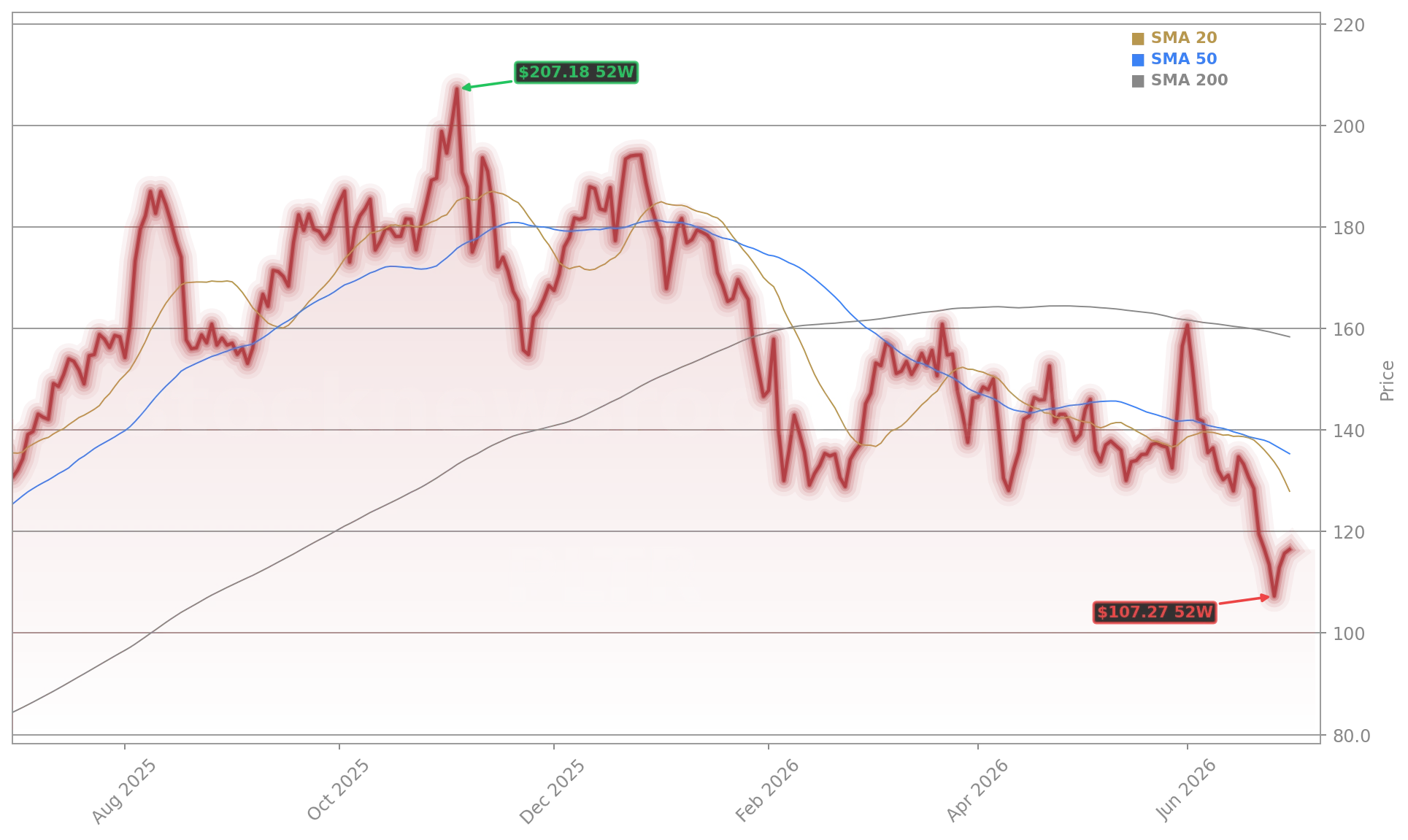
Despite delivering $1.63 billion in Q1 2026 revenue — up 85% year-over-year — Palantir Technologies Inc. has underperformed the S&P 500 by 43.7 percentage points year-to-date. Its shares are down 35% from 2026 highs and 45% off their 52-week peak. Analyst Dan Ives of Wedbush Securities called the selloff ‘dislocated,’ noting that Palantir has become collateral damage in the so-called ‘SaaS apocalypse’ — a narrative he dismisses as fictional. The real pressure points: sustained insider selling (100% of recent insider activity tracked by Yahoo Finance AlphaSpace has been net sales), slower-than-expected international commercial traction, and investor rotation into semiconductor enablers like Micron (MU) and memory infrastructure plays. Still, five consecutive Buy ratings — including from Citigroup, which reiterated its ‘Buy’ with a $135 price target last week — underscore confidence in PLTR’s long-term AI integration moat.
How Does SurfOS Compare to Broader AI Infrastructure Trends?
SurfOS stands apart from generic AI platforms by embedding domain-specific logic — FAA regulations, aircraft maintenance cycles, broker commission structures — directly into its AIP agents. That contrasts with horizontal AI tools from companies like Microsoft or Google, which require heavy customization. Palantir’s approach mirrors the vertical AI strategy gaining traction among institutional buyers: think defense logistics (Palantir Gotham), energy grid optimization (with NVIDIA-accelerated digital twins), or semiconductor fab yield management. RBC Capital Markets recently highlighted this trend in its June 2026 AI Infrastructure Report, noting that ‘vertical AI stacks with embedded compliance and operational logic command 3.2x higher enterprise willingness-to-pay than horizontal LLM wrappers.’ SurfOS is Palantir’s clearest commercial proof point to date — and a key reason Goldman Sachs raised its 2027 EPS estimate by 12% last Friday.
What’s Next for Palantir’s Commercial Expansion?
With SurfOS Enterprise Solutions entering beta this month, Palantir Technologies Inc. is laying groundwork for expansion beyond aviation. Early discussions with two major helicopter OEMs and a Tier-1 defense contractor suggest cross-vertical reuse of SurfOS architecture — particularly its real-time air traffic coordination and predictive maintenance modules. Meanwhile, the company’s government revenue remains resilient, growing 72% YoY in Q1, and now represents 58% of total revenue — a stable base for commercial experimentation. The Palantir Partnership with Surf Air isn’t just about one industry; it’s a template for AI commercialization in capital-intensive, regulation-heavy sectors where speed-to-value matters more than model size. For investors, that means PLTR’s valuation may hinge less on quarterly SaaS growth metrics and more on tangible ROI per deployed AIP agent — a metric Palantir plans to disclose in its Q2 earnings call on August 5, 2026.
Palantir is going to be at the epicenter of the AI revolution of monetization. I think this is probably one of the most dislocated tech stocks [around].— Dan Ives, Wedbush Securities
Related coverage: Can Palantir Partnership wins in aviation and defense finally prove that PLTR’s premium valuation is more than just AI hype? Palantir Partnership +4.4% Drives AI Aviation Expansion. Meanwhile, AI infrastructure demand is broadening beyond software — as seen in AMD Forecast +3.4% as AI Target Hikes Fuel Fresh Optimism, where chip-level AI acceleration continues to lift the entire stack.