Can Qualcomm Acquisition momentum in AI offset smartphone weakness before Investor Day resets Wall Street expectations?

What Does Modular Bring to Qualcomm?
Modular’s platform enables AI models to run efficiently across CPUs, GPUs, NPUs, and custom chips — without requiring code rewrites for each architecture. That vendor-neutral approach directly challenges NVIDIA’s CUDA ecosystem, which has locked in developer loyalty across the $5 trillion AI chip market. Modular co-founder and CEO Chris Lattner stated the acquisition gives his team ‘the scale and platform reach to accelerate that mission.’ For Qualcomm, it delivers a critical software foundation to complement its upcoming data center processors — including inference-optimized chips slated for shipment before year-end. The move also shores up Qualcomm’s ‘megawatt end’ of its compute continuum, extending its reach from mobile devices into cloud-scale AI deployments.
How Does This Fit Qualcomm Acquisition Strategy?
This Qualcomm Acquisition is not isolated — it follows Qualcomm’s 2025 purchase of AlphaWave Semi, a high-speed interconnect specialist now supporting its custom chip design efforts for clients like ByteDance. Reuters confirmed Qualcomm is in active talks with ByteDance to develop video-processing units (VPUs) for TikTok’s AI infrastructure, with mass production targeted by December. Those negotiations — still early-stage but strategically vital — underscore Qualcomm’s dual-track AI play: building hardware for hyperscalers while layering in modular, portable software. Unlike legacy chipmakers stuck in hardware silos, Qualcomm now controls both silicon IP and the AI orchestration stack — a combination Citigroup analysts call ‘a rare, vertically integrated advantage in the inference layer.’
Why Now? Investor Day Looms Amid Smartphone Headwinds
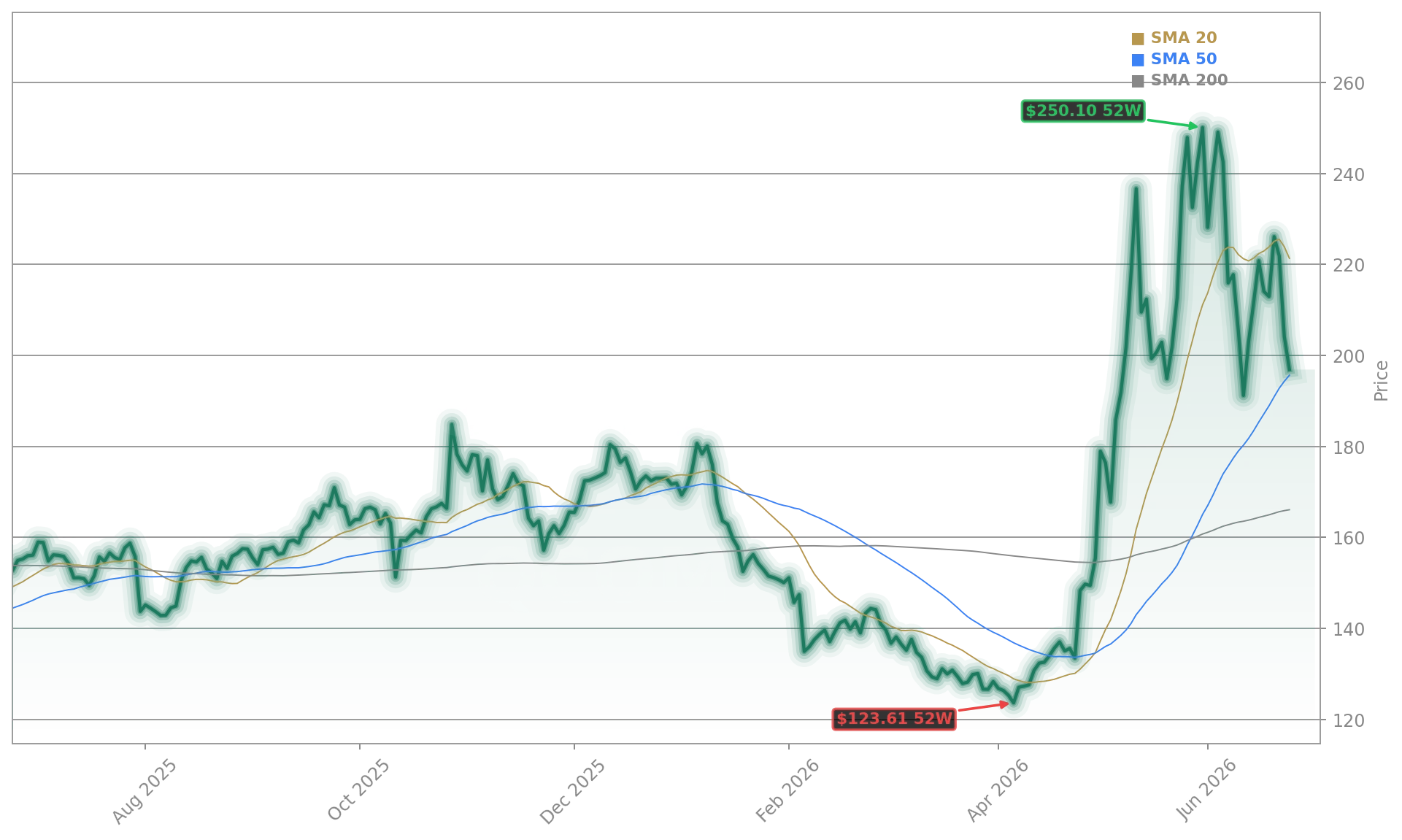
Qualcomm’s timing is deliberate. With smartphone shipments projected to post the steepest annual decline in history — pressured by rising memory costs and weak global demand — the company’s core revenue engine is under strain. Today, over 70% of Qualcomm’s revenue still flows from mobile, a dependency Wall Street increasingly views as a valuation drag. Ahead of its June 24 investor day in New York, the Modular deal serves as tangible proof of execution on CEO Cristiano Amon’s ‘agent-centered world’ vision. Morgan Stanley analysts note the acquisition ‘de-risks Qualcomm’s data center roadmap by solving the software fragmentation problem before silicon ships.’ The stock rose 1.6% in premarket trading — reversing Tuesday’s 8% drop — as investors priced in accelerated AI monetization.
How Does Modular Compare to Competitors?
Modular competes not with chipmakers, but with software stacks like NVIDIA’s Triton Inference Server and AMD’s ROCm. Its differentiation lies in architecture-agnostic deployment: it supports chips from Apple, Tesla, and Marvell alongside Qualcomm’s own. That flexibility matters as hyperscalers — including Meta and Microsoft — shift toward heterogeneous, multi-vendor AI infrastructures. RBC Capital Markets recently upgraded Qualcomm to ‘Outperform,’ citing ‘a credible path to $2B+ in data center AI revenue by 2028.’ Broadcom and Marvell dominate custom ASIC design today, but Modular gives Qualcomm the developer tools to win design wins without needing to replicate their decades-long ecosystem lock-in. As one Wall Street Journal source put it: ‘This isn’t about beating NVIDIA on raw compute — it’s about beating them on developer velocity.’
What’s Next for Qualcomm Acquisition Execution?
As agentic AI scales across data centers and edge environments, the industry is moving toward disaggregated, multi-vendor architectures that demand a more open and modern software foundation.— Cristiano Amon, President and CEO of Qualcomm Incorporated
Regulatory approvals and customary closing conditions remain — but the path forward is clear. Qualcomm expects Modular’s team to integrate into Qualcomm Technologies’ AI software division, accelerating development of its next-generation AI compute layer. The company also confirmed plans to disclose its first major hyperscaler customer at today’s investor day — a potential catalyst for further upside. With $3.9 billion in strategic capital now deployed, Qualcomm is no longer waiting for AI demand to mature. It’s building the stack — from silicon to software — that will define how AI scales across data centers and edge devices for the next decade.