Why is Wall Street cheering Robinhood Layoffs instead of punishing the stock for cutting roughly 290 jobs?

Why Robinhood Layoffs Now?
Robinhood Markets, Inc. announced a 10% headcount reduction — roughly 290 roles — effective immediately, citing a strategic pivot toward operational efficiency and organizational flattening. CEO Vlad Tenev confirmed the move was ‘proactive,’ not reactive to weakness, emphasizing that ‘Robinhood’s business has never been stronger.’ The company ended 2025 with approximately 2,900 employees, meaning the Robinhood Layoffs align with a deliberate shift from rapid scaling to disciplined execution. Affected staff are receiving severance packages and transitional support, while leadership signals aggressive hiring for AI and wealth management roles later in Q2 2026.
How Does This Fit With Q1 2026 Results?
Financially, Robinhood Markets, Inc. delivered robust Q1 2026 performance: net revenue rose 15% year-over-year to $1.07 billion, net income climbed 3% to $346 million, and adjusted EBITDA increased 14% to $534 million. These results — reported in early May — validate Tenev’s claim of strength. The Robinhood Layoffs are not a cost-cutting emergency but a structural recalibration timed to accelerate investments in Robinhood Cortex, its AI-powered insights engine, and international rollout of Digests by Robinhood Cortex. Unlike peers such as Block (which cut 40% of staff in February), Robinhood Markets, Inc. is trimming selectively while doubling down on AI and wealth management — positioning itself closer to Apple’s ecosystem strategy than to legacy brokerages.
What Does Argus See in the $110 Target?
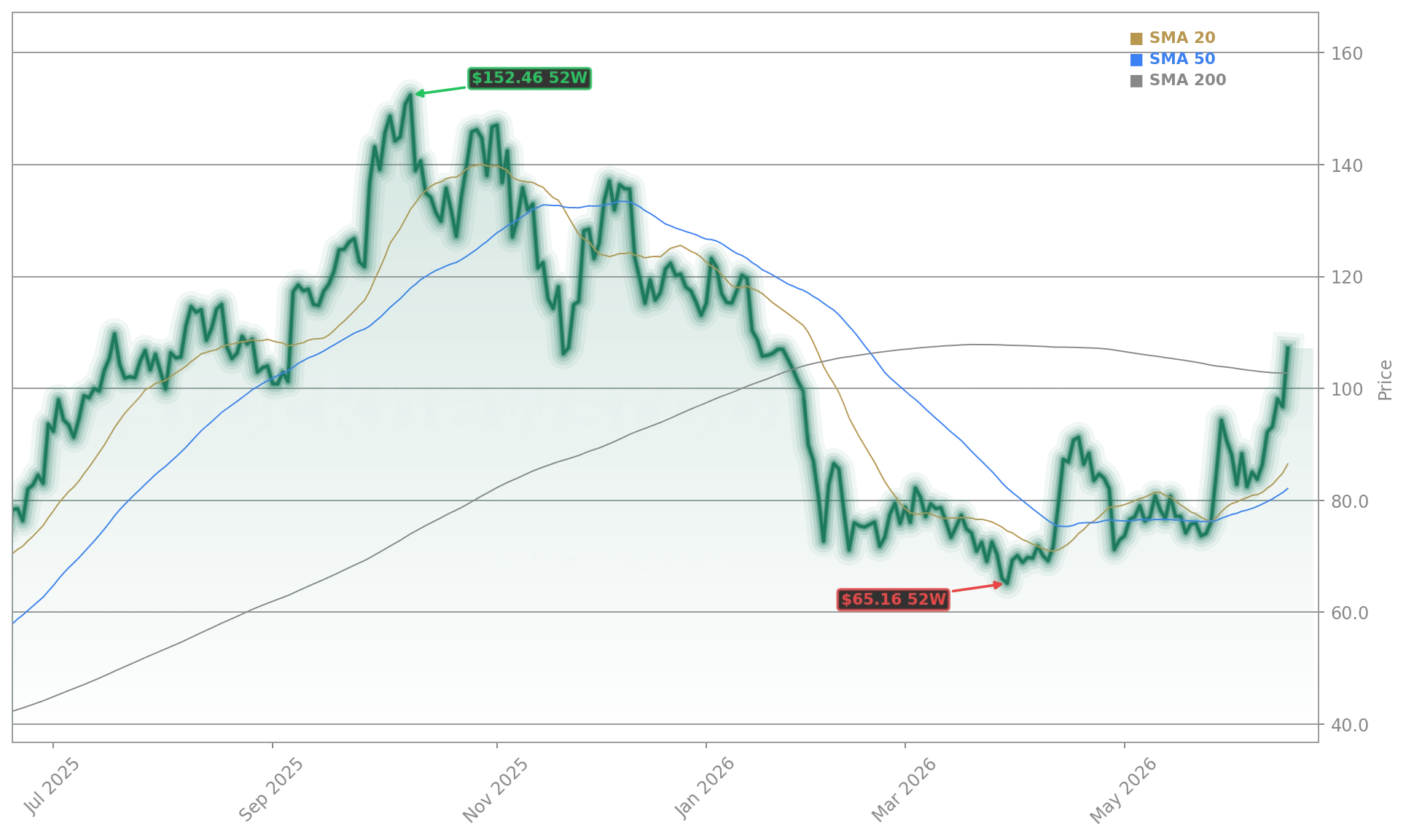
Argus Research, led by Director of Financial Institutions Research Stephen Biggar, raised its price target on Robinhood Markets, Inc. from $90 to $110 and maintained its Buy rating on June 17, 2026. The firm highlighted ‘improved capital allocation discipline’ and ‘accelerating monetization of non-trading revenue streams’ — particularly subscription-based services and AI tools — as key catalysts. Argus notes Robinhood’s margin expansion potential is now clearer post-Robinhood Layoffs, with EBITDA margins expected to climb toward 35% by Q4 2026. This contrasts with analyst sentiment on Tesla and NVIDIA, where AI infrastructure demand drives valuation, while Robinhood Markets, Inc. is monetizing AI at the retail financial services layer — a less crowded but high-stakes frontier.
How Does This Affect Broader Fintech and S&P 500 Sentiment?
Robinhood Markets, Inc. is now one of only three U.S. fintech names in the NASDAQ-100 with a Buy rating from Argus — alongside PayPal and SoFi. Its 10.8% intraday gain on June 17 contributed meaningfully to the NASDAQ’s 0.9% advance — the index’s strongest single-day performance since April. That momentum comes amid broader market optimism tied to geopolitical de-escalation, including the reported U.S.-Iran memorandum of understanding expected to be signed June 19. While energy names like Exxon Mobil and Chevron benefit from Strait of Hormuz reopening, fintech stocks are gaining from renewed confidence in consumer financial engagement. Robinhood Layoffs, therefore, are being interpreted by Wall Street not as distress but as a signal of maturation — a necessary step before the next leg of platform monetization, including tokenized stock access and expanded Prediction Markets.
What’s Next for Robinhood Markets, Inc.?
With earnings due August 5, 2026, the focus shifts to guidance on AI adoption metrics, international user growth (especially in the UK and EU), and progress on Robinhood Banking and mortgage-related services. The company has already launched perpetual futures and retirement account integrations — features designed to increase average revenue per user (ARPU) beyond commission-free trading. Analysts at Argus expect ARPU to rise 22% year-over-year in Q2, driven by cross-selling. Meanwhile, the Robinhood Layoffs have cleared bandwidth for faster integration of frontier technologies — including real-time sentiment analysis and predictive trade alerts powered by Robinhood Cortex. That positions Robinhood Markets, Inc. to compete not just with traditional brokerages, but with embedded finance platforms like those offered by Apple.
Related Coverage: For deeper analysis on how record trading volume coexists with the 290-job cut, see Robinhood Layoffs -2% as Record Trading Meets 290 Job Cuts. On the broader crypto-finance convergence, MicroStrategy Bitcoin Purchase: $100M Buy Sparks Debate explores how institutional Bitcoin adoption continues reshaping capital allocation norms across the sector.
Robinhood’s business has never been stronger. But to achieve the massive scale of our mission, we cannot default to operating as a heavily-layered organisation.— Vlad Tenev, CEO of Robinhood Markets, Inc.
Robinhood Layoffs reflect a deliberate, investor-friendly pivot toward scalability and AI monetization — not retrenchment. For U.S. portfolios, HOOD now represents a rare blend of growth optionality and margin discipline in the fintech space. The next catalyst is Q2 earnings guidance on August 5, where management is expected to detail how the leaner team accelerates platform revenue. Long-term investors should view the current $107.19 level as a launchpad, not a peak.