
Why did SanDisk plunge even as analysts lifted targets and backed its long-term AI memory story?

Why Did SanDisk Plunge Amid Analyst Upgrades?
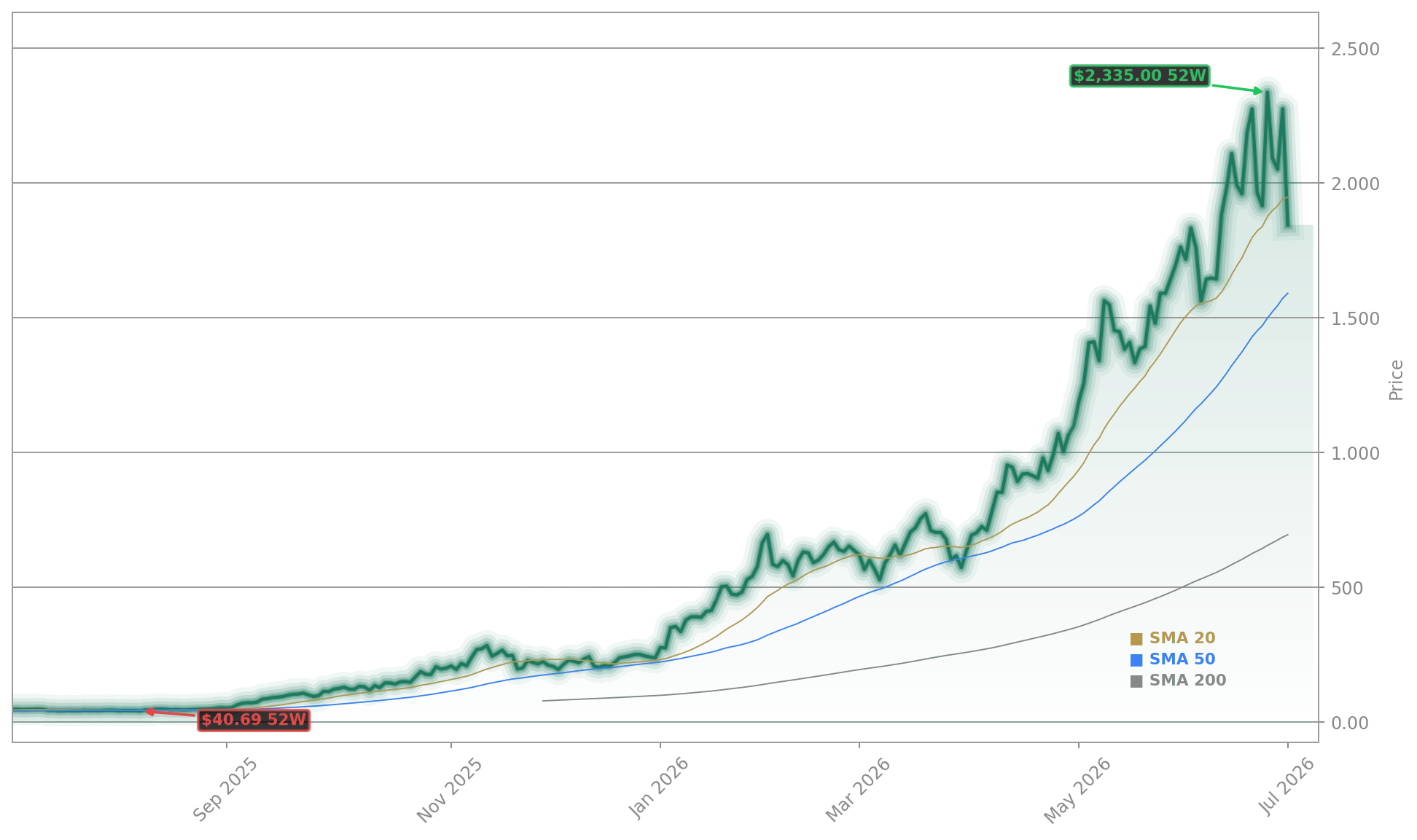
The SanDisk Plunge defies near-unanimous Wall Street optimism. Bernstein raised its target to $3,000, citing $42 billion in newly signed long-term contracts — including a floor price of $0.29 per gigabyte for NAND flash, well above Micron’s. Citigroup followed with a $2,500 target, while BofA and Mizuho also upgraded. Yet the stock collapsed — not on earnings weakness, but on macro-driven rotation. Retail sentiment on Stocktwits remains bullish, but institutional flows turned decisively negative as the S&P 500’s tech-heavy NASDAQ Composite pulled back 2.1% in early Thursday trading. The SanDisk Plunge reflects a broader recalibration: investors are pricing in less certainty around AI capex sustainability and tighter liquidity ahead of July’s Core PCE data.
How Does SanDisk Compare to Micron and NVIDIA?
SanDisk’s 857% YTD surge dwarfs even NVIDIA’s 26.8% one-year gain — but valuation tells a stark story. With a forward P/E of 31.7, SanDisk trades at more than four times Micron’s 7.5 — despite Micron’s $37.3 billion revenue base versus SanDisk’s $7.3 billion. Micron’s diversified DRAM/NAND portfolio and 16 long-term contracts provide earnings stability SanDisk’s flash-centric model lacks. Meanwhile, Apple’s reported talks with CXMT — a Chinese memory supplier — rattled confidence in NAND pricing floors, directly pressuring SanDisk and Western Digital. That dynamic separates SanDisk from Tesla and other hardware names: its margins hinge entirely on memory scarcity, not system integration or brand power.
What’s Driving the Memory Sector Sell-Off?
The memory sell-off isn’t isolated — it’s systemic. SK Hynix’s Nasdaq listing plans signal expanded global supply capacity, threatening current pricing power. Korean Exchange trading shows SK Hynix down 14% over three sessions, triggering contagion. Simultaneously, Lam Research (LRCX), trading at a 55 forward P/E, dropped 8% — confirming investor skepticism toward semiconductor equipment valuations. Profit-taking is undeniable: SanDisk’s 857% YTD gain and Western Digital’s 271% surge created outsized exposure for many quant and momentum funds. The rotation into cyclicals — energy, industrials — accelerated Thursday as bond yields spiked on inflation fears. This isn’t a fundamental breakdown, but a technical correction within a bull market — albeit one testing the limits of AI memory euphoria.
Is SanDisk’s AI Growth Story Still Intact?
SanDisk’s contracts provide meaningful downside protection — but they don’t immunize the stock from macro-driven sentiment shifts.— Mark Newman, Bernstein Analyst
Absolutely — and that’s what makes the SanDisk Plunge so paradoxical. Fiscal Q3 data center revenue jumped 610% to $1.4 billion; edge segment revenue — critical for AI inference chips and intelligent devices — soared 288% to $3.6 billion. SanDisk’s Q4 revenue guidance ($7.7–$8.2 billion) implies a 300%+ jump year-over-year and would exceed its entire fiscal 2025 revenue. Long-term contracts lock in pricing and volume through 2028. Yet investors are discounting near-term risks: NAND oversupply fears, OpenAI capex delays, and China’s growing memory ambitions. The stock’s 17x revenue multiple leaves little margin for error — unlike NVIDIA, whose ecosystem moat and software stack provide durable pricing power beyond silicon alone.