Did Samsung just expose a deeper NAND slowdown that could derail SanDisk’s AI storage narrative?

How Did Samsung’s Report Trigger This?
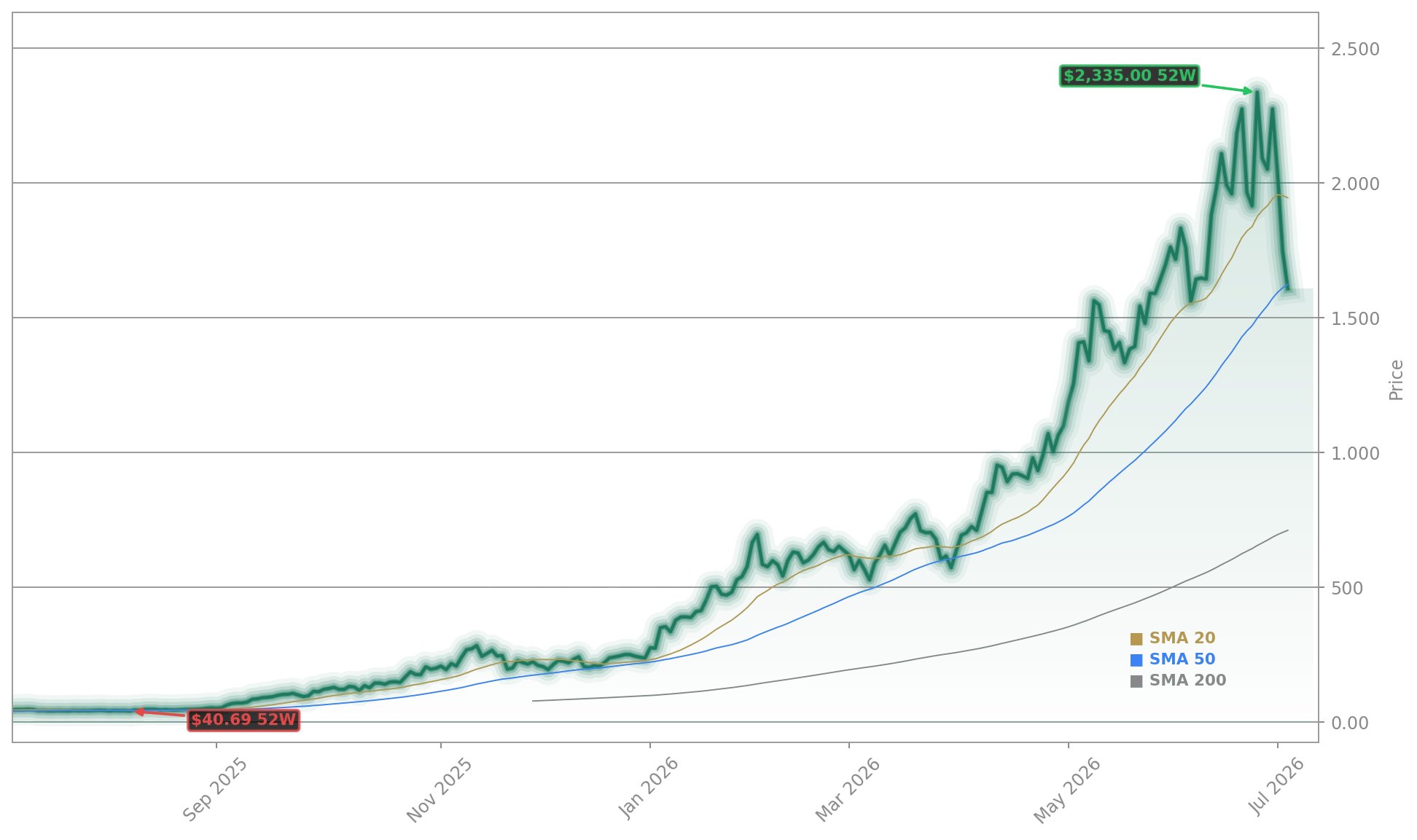
Samsung Electronics’ Q2 2026 results—released after Asian market close and digested during U.S. pre-market hours—delivered softer-than-expected NAND revenue and a cautious outlook for Q3. While the company confirmed continued AI-related SSD demand, it flagged slower-than-anticipated ramp-ups in enterprise SSD adoption and elevated inventory at key OEMs. That directly undermined investor confidence in near-term NAND pricing power—especially for pure-play NAND suppliers like SanDisk (Western Digital). Morgan Stanley analysts noted the ‘disconnect between AI hype and actual channel absorption’—a sentiment echoed in Tuesday’s 9.8% intraday drop in SNDK before the close. The selloff wasn’t isolated: Micron (MU) fell 3.2%, and SK Hynix ADRs slid 4.1%, confirming broad sector repricing.
What Does This Mean for SanDisk Samsung Impact?
The SanDisk Samsung Impact is structural—not cyclical. Samsung remains the world’s largest NAND supplier (33% market share), while SanDisk (Western Digital) holds 13%—making it the second-largest pure NAND vendor. When Samsung signals pricing pressure or demand deceleration—even marginally—it forces recalibration across the entire supply chain. Citigroup slashed its NAND price forecast for Q3 and Q4 2026 by 12% and downgraded SanDisk (Western Digital) to ‘Neutral’ with a $1,420 price target, citing ‘reduced visibility into AI-driven enterprise SSD pull-through.’ RBC Capital Markets followed with a ‘Sector Perform’ rating, warning that ‘valuation multiples no longer reflect current supply-demand fundamentals.’
Is This a Buying Opportunity—or a Warning Sign?
At 9.3x forward earnings, SanDisk (Western Digital) trades well below its 35x peak—but still at a significant premium to Micron (6.3x) and SK Hynix (23x). That gap reflects lingering belief in its AI storage moat. Yet the SanDisk Samsung Impact reveals a critical vulnerability: SNDK lacks Samsung’s DRAM diversification and SK Hynix’s integrated foundry leverage. Unlike NVIDIA, which controls its own AI inference stack, or Apple, which vertically integrates storage controllers, SanDisk (Western Digital) remains exposed to external demand signals—and Samsung’s voice carries outsized weight. With NAND spot prices down 18% from June highs, the market is clearly pricing in a near-term pause in the memory supercycle.
Where Do Competitors Stand?
Micron continues to outperform in DRAM and is gaining NAND share via its joint venture with Intel—now fully operational. SK Hynix, meanwhile, is executing on its high-bandwidth memory (HBM) roadmap, positioning itself as the AI infrastructure play—not just the NAND play. That contrast matters: while SanDisk (Western Digital) rose 3,650% over the past year, SK Hynix gained 210% and Micron 420%, both with lower volatility and stronger forward guidance. Goldman Sachs recently highlighted SK Hynix’s ‘superior margin trajectory in AI-optimized NAND’—a direct challenge to SanDisk (Western Digital)’s pricing power narrative. And with Tesla ramping custom SSDs for its Dojo supercomputers, even end-market diversification is slipping from SNDK’s grasp.
What’s Next for the NAND Sector?
Analysts now expect NAND industry utilization to fall to 79% in Q3—down from 87% in Q2—per Bloomberg Intelligence. That implies modest price stability through Q4, but no rebound. The real test comes in early August, when SanDisk (Western Digital) reports its own Q2 2026 results (ending June 30). Wall Street expects revenue of $6.2 billion and EPS of $23.40—down 9% sequentially—but the guidance call will dominate reaction. If management echoes Samsung’s caution, the SanDisk Samsung Impact could extend across the S&P 500’s tech hardware group. If it doesn’t, the stock may rebound—but only if it can prove its AI storage thesis remains intact beyond Samsung’s shadow.
The SanDisk Samsung Impact isn’t about fundamentals—it’s about leadership signaling. When Samsung pauses, the entire NAND ecosystem recalibrates.— Morgan Stanley Semiconductor Analyst
Related Coverage: For context on SNDK’s recent momentum, see SanDisk Record +5.2%: AI Storage Boom Powers Breakout, which analyzed how data center SSD demand drove its explosive Q1 rally. That article remains relevant—but Tuesday’s selloff shows how quickly the narrative can shift when supply-chain leaders speak. Investors should also review SanDisk Record +5.2%: AI Storage Boom Powers Breakout to understand the underlying AI storage tailwinds still in place beneath today’s volatility.