
Can Snap’s bold SPECS bet turn a struggling social platform into a real spatial computing contender?

What Does Snap SPECS Launch Mean for Wall Street?
At AWE USA 2026 in Long Beach, Snap Inc. CEO Evan Spiegel unveiled SPECS — a fully standalone, untethered AR glasses platform priced at $2,195 and available for pre-order with a $200 refundable deposit. Unlike Meta’s Ray-Ban glasses or Apple’s rumored Vision Pro 2, SPECS feature true see-through optics, dual Snapdragon processors (one for computer vision, one for Lenses), and a 51-degree field of view — equivalent to a 115-inch screen at 10 feet. The device weighs just 132–136 grams and delivers 7-millisecond motion-to-photon latency, positioning Snap as a serious contender in the spatial computing stack. Crucially, Snap carved out Specs Inc. as a wholly owned subsidiary in January — a structural move analysts say could facilitate outside funding or even a future spin-off, as urged by Irenic Capital Management.
How Does Snap SPECS Launch Compare to Competitors?
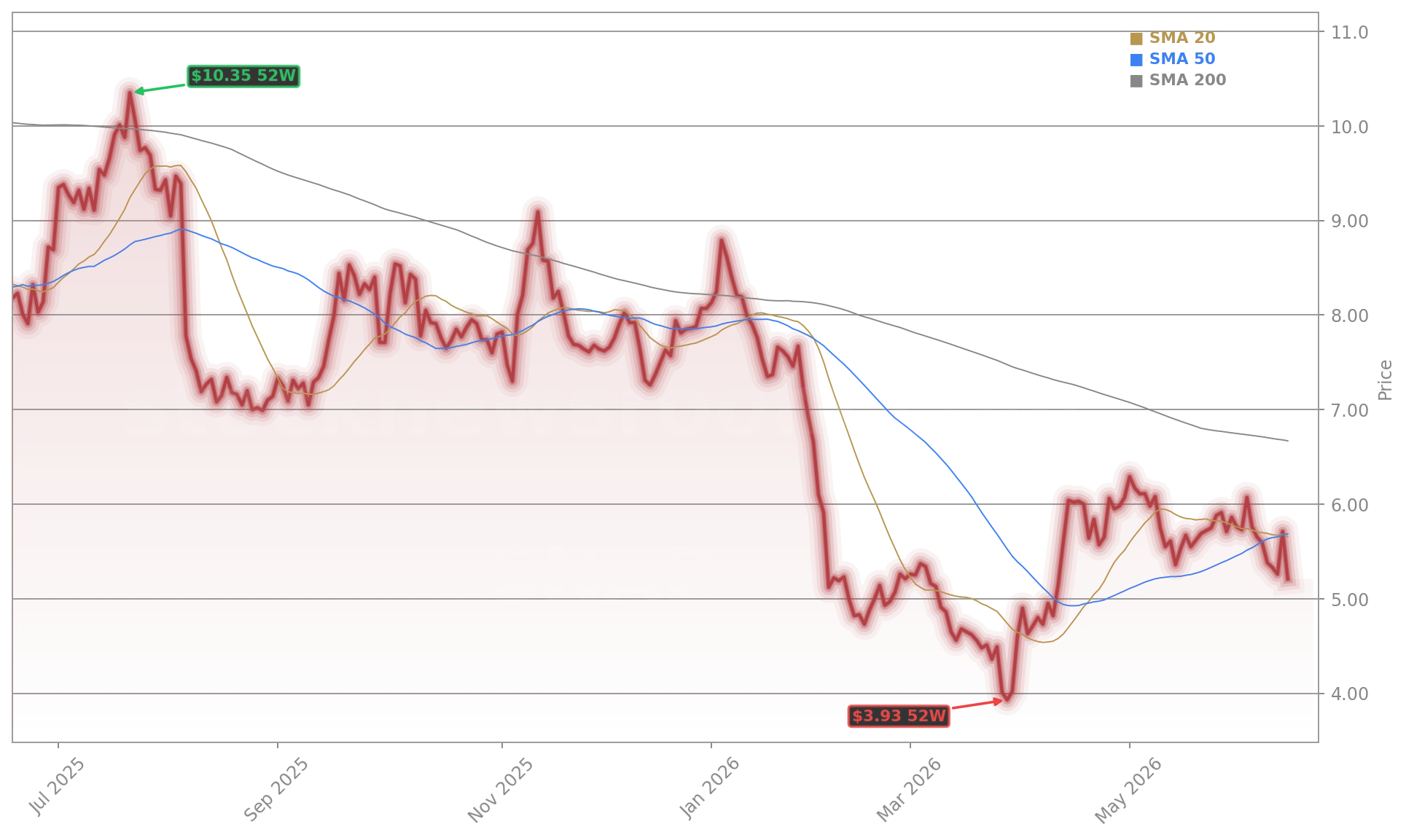
While Meta’s Ray-Ban glasses lack displays and require a phone, and NVIDIA’s AI infrastructure powers backend compute for many AR developers, Snap’s SPECS are designed as end-to-end spatial computers — running Snap OS, supporting agentic Lens development, and enabling on-device AI assistance without cloud dependency. That differentiation matters to institutional investors tracking the S&P 500’s tech-weighted indices: Snap’s 7,000+ AR-related patents and proprietary liquid crystal on silicon display set it apart from hardware-focused peers. Still, Citigroup maintains a ‘Neutral’ rating on Snap Inc., citing ‘unproven monetization’ and warning that ‘SPECS must achieve >100K units shipped in Q4 to justify current valuation.’ RBC Capital Markets echoes caution, downgrading Snap Inc. to ‘Underperform’ last week — citing ‘advertising headwinds persisting into Q2 2026’ and ‘no near-term path to hardware profitability.’
Is Snap SPECS Launch a Catalyst for the Core Business?
Yes — but only if adoption drives Lens ecosystem growth. Snap reported 28% year-over-year growth in Lens creation for SPECS ahead of launch — a signal developers are betting on the platform. The company also announced the SPECS Spatial Benchmark and Native Development Kit, lowering barriers for enterprise and edtech integrations. That matters for U.S. portfolios holding Snap Inc. alongside companies like Tesla (which uses AR for service diagnostics) and Apple (where Vision Pro adoption remains sub-1% of Mac install base). Yet the $2,195 price point remains a hurdle: for context, Meta’s Ray-Ban glasses sell for $299, and Apple’s Vision Pro starts at $3,499. Snap’s strategy hinges on early adopters valuing privacy-first design, real-time AI assistance, and spatial whiteboarding — features Bloomberg notes ‘align with hybrid work trends accelerating across NASDAQ-listed SaaS names.’
What’s Next After the Snap SPECS Launch?
Shipments begin this fall in the U.S., U.K., and France — with global expansion dependent on developer traction and carrier partnerships. Snap Inc. confirmed Qualcomm will power future SPECS generations via multi-year Snapdragon SoC licensing, reinforcing long-term silicon strategy. Analysts at Morgan Stanley project SPECS could contribute $420M in hardware revenue by FY2027 — but only if gross margins exceed 45%, a threshold Snap has yet to achieve in hardware. Meanwhile, the company’s advertising business remains under pressure: Q1 2026 guidance flagged ‘geopolitical uncertainty in the Middle East’ and the end of its Perplexity AI partnership as headwinds. For investors, the Snap SPECS Launch isn’t just about glasses — it’s about whether Snap Inc. can become a spatial infrastructure play, not just a social media relic.
SPECS are the beginning of a new era in computing. For decades, computers have asked us to look down, sit still, or step out of the moment. SPECS bring computing into the world around us where we live, work, learn, create, and connect.— Evan Spiegel, co-founder and CEO of Snap Inc.
Related Coverage: The latest Snap Earnings Warning: Ad Slowdown Tests Investor Nerves highlights mounting pressure on Snap’s core revenue engine, while Netflix Merger +3.95%: Lionsgate Deal Buzz Builds Fast shows how media-tech convergence is reshaping Wall Street’s appetite for platform-scale bets — a dynamic that could lift SPECS if Snap secures content partnerships with streaming leaders.