Can Snap’s AI ambitions survive a $400 million partnership setback just as activists and cost cuts reshape the company’s future?

Is Wall Street losing faith in Snap Inc.?
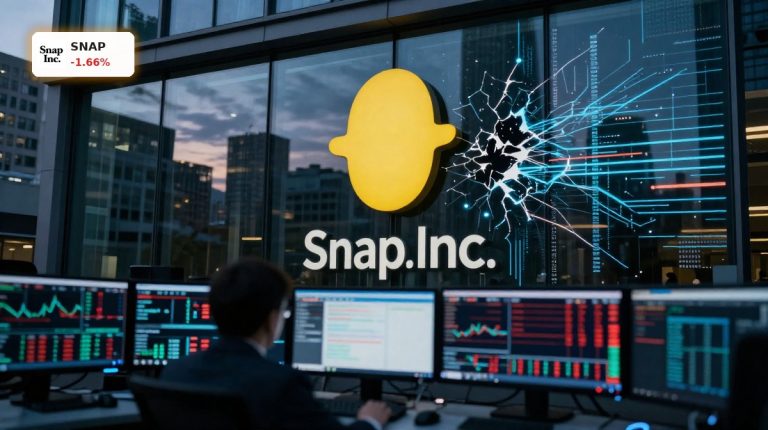
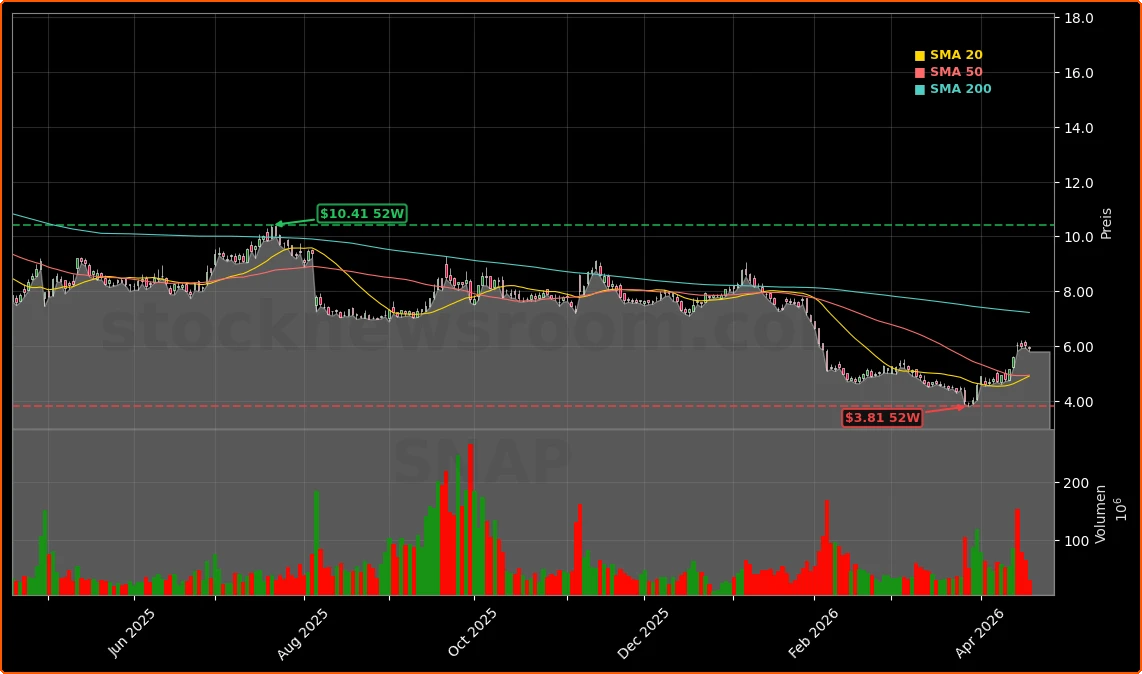
Snap Inc. (SNAP) shares slipped about 1.7% to $5.93 on Monday on the NYSE, extending a difficult year in which the stock is down sharply from its 2026 highs and remains well below its 52‑week peak around EUR 8.93 in Europe. The latest pressure comes from doubts around a key Snap AI partnership that was expected to underpin a new answer‑engine inside Snapchat and open up fresh monetization opportunities.
Rosenblatt Securities has removed roughly $400 million in anticipated AI‑related payments from its forecasts after indications that the Perplexity agreement may have been unwound before it truly scaled. For a company that is still fighting to consistently generate operating profits, losing a potential multi‑year, high‑margin revenue stream is a material setback, even if the precise economics were never fully disclosed.
The AI uncertainty lands just as activist fund Irenic Capital is pressing management to radically improve returns. Irenic, which holds about 2.5% of Snap’s Class A shares, has floated a “6 Steps to 7X” blueprint that argues the stock could be worth more than $26 if Snap can better monetize its audience with AI, slash costs and rethink non‑core projects such as its smart‑glasses line.
How does the Snap AI partnership fit into the turnaround?
The Snap AI partnership with Perplexity was designed to give Snapchat users richer, conversational answers inside the app, building on the company’s existing My AI chatbot and its work with large language models. The idea was straightforward: if users spend more time in AI‑enhanced chats and discovery, Snap can serve more ads, capture better intent signals and potentially build premium AI features.
With the Perplexity deal apparently on ice, management must now prove that its in‑house AI stack, combined with other partners, can still deliver those gains. Trading ideas compiled on TradingView show investors split between long‑term optimism about AI and AR optionality and short‑term caution about execution, monetization and competitive pressure from giants like Meta and Apple.
Despite the partnership wobble, some analysts remain constructive. TradingKey recently characterized Snap as fairly valued with solid growth potential, noting that the strategic emphasis on AI and automation could structurally lift ad yields over time if execution improves. Others are more guarded, keeping “Hold” or “In Line” ratings until there is clearer evidence that AI‑driven products translate into higher revenue per user and better margins.
Are layoffs enough to stabilize Snap Inc.?
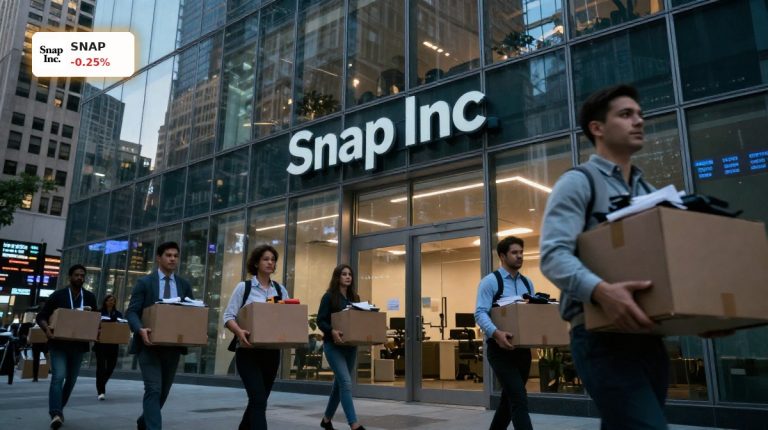
Alongside the AI narrative, Snap is in the middle of one of its deepest restructurings to date. Management plans to cut roughly 1,000 jobs worldwide, or around 16% of its workforce, aiming for about $500 million in annualized cost savings from 2026 onward. For investors in the NASDAQ tech complex who have watched similar moves at NVIDIA’s ecosystem partners and social platforms, Snap’s actions fit a broader pattern of Silicon Valley tightening after years of aggressive hiring.
Early signs from operations are mixed but not uniformly negative. Snap recently pre‑announced that its Q1 2026 revenue and EBITDA should come in ahead of prior expectations, even with the restructuring noise. That update helped fuel a short‑lived rally earlier in April, especially as activist pressure and AI ambitions created a catalyst‑rich trading environment. However, the stock has since given up part of those gains as doubts about the Snap AI partnership resurfaced and insider selling drew scrutiny.
Filings show that CEO Evan Spiegel, through an irrevocable trust, sold about 1 million Class A shares at an average price near $5.04 in early April under a pre‑planned Rule 10b5‑1 program, while still retaining a substantial overall stake. More recently, Chief Business Officer Ajit Mohan and General Counsel Zachary Briers sold shares largely to cover tax obligations on equity awards. The sales do not necessarily signal a bearish view from management, but with sentiment fragile, any insider disposal tends to be read cautiously by Wall Street.
Can AR hardware and Qualcomm offset AI risk?
Even as one Snap AI partnership stumbles, CEO Evan Spiegel is doubling down on another major bet: augmented‑reality hardware. New AR glasses with integrated on‑device AI are slated for release around the end of 2026, developed in close collaboration with chip supplier Qualcomm. The vision is to create lightweight wearables that blend Snapchat’s AR lenses with generative AI, potentially challenging initiatives from Apple’s Vision Pro ecosystem and Tesla’s broader AI‑powered hardware ambitions in other domains.
Activist Irenic has questioned whether the long‑running Spectacles and AR hardware efforts, which it estimates have consumed more than $3.5 billion, truly earn their keep. Its presentation calls either for a spin‑off of the hardware business or an outright shutdown if it cannot prove clear economic returns. For now, management is signaling that AR glasses remain strategic, especially as AI‑infused devices emerge as a new battleground in consumer tech.
Investors will get a clearer data point when Snap reports full Q1 2026 results in May. The focus will be on whether ad revenue growth can offset any lost economics from the Snap AI partnership, how quickly the cost base is resetting after layoffs, and whether guidance suggests accelerating engagement from AI features across the app. Against a backdrop where former PayPal and current Verizon CEO Dan Schulman has warned that AI and humanoid robots could drive 20%–30% unemployment within a few years, Snap’s decision to both cut staff and invest heavily in automation crystallizes a core tension of the AI era for growth stocks.
Related coverage
For a deeper look at how the restructuring and automation push fit into the broader investment case, readers can review this detailed analysis of Snap’s 16% job cuts and AI profit strategy, which examines whether the latest round of layoffs and AI bets can finally convert Snapchat’s scale into durable profitability.
In summary, the Snap AI partnership setback with Perplexity, sweeping layoffs and an ambitious AR hardware roadmap leave Snap at a pivotal crossroads for U.S. tech investors. The stock’s depressed valuation reflects skepticism, but also embeds optionality if AI‑enhanced ads and new devices begin to hit at scale. The upcoming Q1 2026 earnings and any updated commentary on AI collaborations will be crucial in determining whether Snap can rebuild confidence and re‑rate alongside faster‑growing peers on Wall Street.